
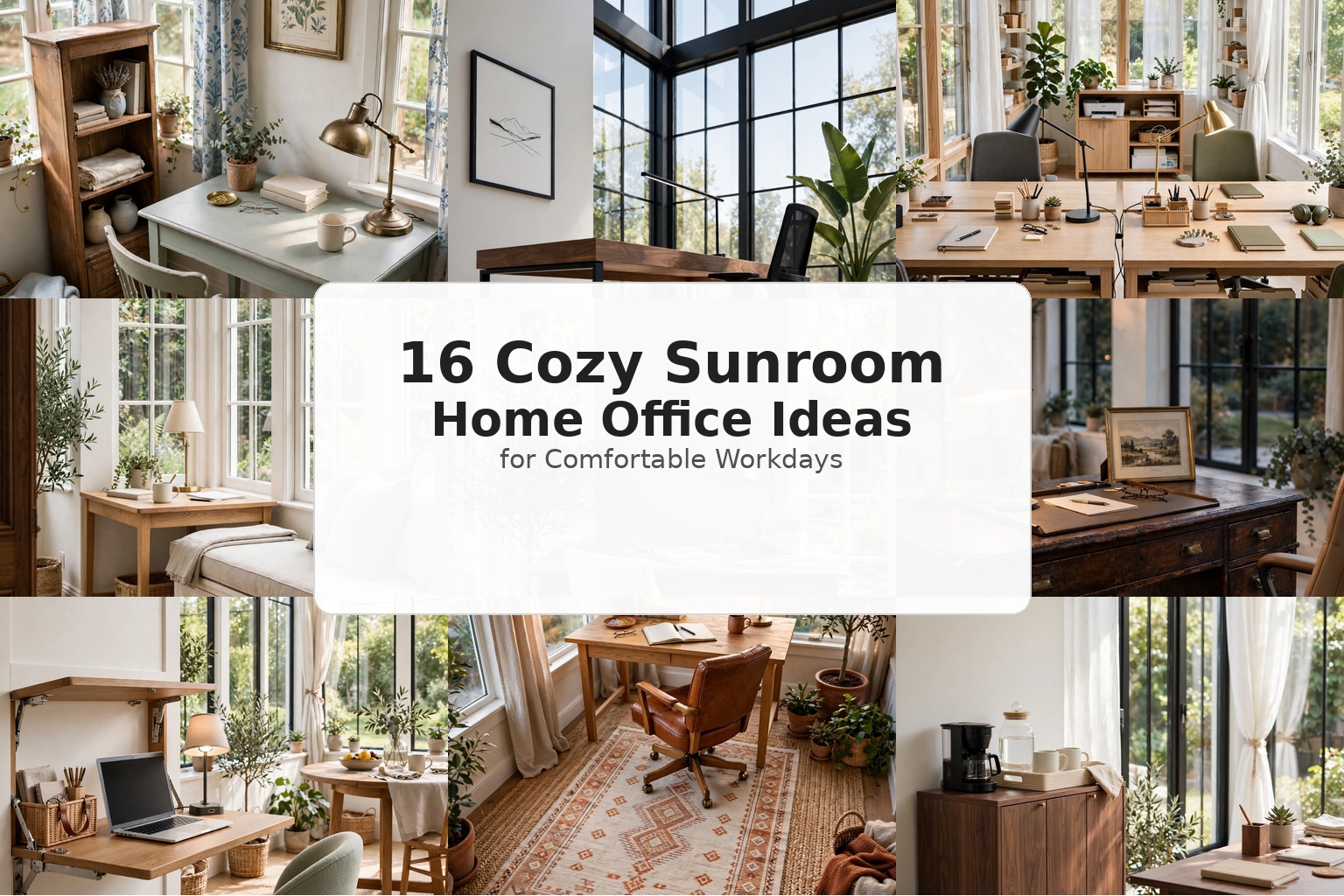
16 Cozy Sunroom Home Office Ideas for Comfortable Workdays
Working from home feels much harder when your desk is squeezed into a dark corner or surrounded by household distractions. Even a bright sunroom can become uncomfortable when glare hits your screen, furniture blocks the windows, or the space turns too hot and cluttered. The good news is that a few thoughtful choices can transform this overlooked room into a calm, productive workspace without sacrificing its relaxed character. These sunroom home office ideas combine practical desk layouts, comfortable furniture, controlled natural light, attractive storage, and inviting materials. Whether your sunroom is compact, shared, modern, or traditionally styled, you will find realistic ways to create an office that makes everyday work feel lighter and more comfortable.
1. Create a Warm Neutral Sunroom Office

Warm, understated colors make a sunroom office feel comfortable without competing with the outdoor view. Start with warm white walls, a medium-oak desk, an oatmeal-colored chair, and a softly textured beige rug.
Place the desk perpendicular to the windows rather than directly in front of them. This arrangement provides natural light while reducing screen glare. Add linen curtains, a ceramic lamp, and one or two leafy plants for a relaxed, cohesive finish. Keep darker accents limited to small details such as a bronze lamp, black picture frame, or charcoal desk organizer.
Quick Win: Replace cool white bulbs with warm LED bulbs between 2700K and 3000K. This small adjustment softens the office after sunset and prevents the sunroom from feeling harsh or overly clinical.
2. Position the Desk to Enjoy the Garden View

An airy garden-facing workspace can make long workdays feel less enclosed. Rather than pushing your desk against a solid wall, position it where you can look outside without placing your monitor directly against a bright window.
A slim desk works especially well because it preserves sightlines and leaves walking space around the room. Choose a low-backed office chair so the furniture does not visually block the garden. If sunlight becomes distracting, install light-filtering roller shades that reduce glare without hiding the greenery.
Keep the windowsill mostly clear. A pair of small plants or a simple ceramic object is enough when the outdoor landscape already provides the room’s focal point.
3. Design a Small Sunroom Home Office Corner

A compact sunroom does not need a full-size executive desk to become useful. The trick is to select furniture with shallow proportions and take advantage of vertical space.
Choose a desk between 18 and 24 inches deep, then install two narrow floating shelves above it. A wall-mounted task light frees additional surface space, while a small rolling pedestal can provide concealed storage without making the area feel crowded.
Use a chair that slides completely beneath the desk when the office is not in use. Painting the shelves the same color as the walls also helps them recede, allowing the room to feel open rather than overfilled.
Quick Win: Use adhesive cable clips along the back edge of the desk to gather charging cords. Keeping cables off the floor instantly makes a small home office look cleaner and more spacious.
| Item | What to Look For | Approx. Price Range |
| Compact desk | 18–24-inch depth with slim legs | $80–$250 |
| Floating shelves | Narrow wood or wall-colored finish | $30–$120 |
| Wall task light | Adjustable arm with warm LED bulb | $35–$150 |
4. Add a Comfortable Reading Chair Beside the Desk

A layered sunroom office feels more inviting when it supports activities beyond computer work. Place a compact reading chair near the windows to create a separate spot for reviewing documents, joining informal calls, or taking a screen break.
Select a chair with supportive arms and a seat deep enough for comfort but small enough to preserve circulation. A rounded side table, lightweight floor lamp, and washable throw complete the area without turning it into a second living room.
Use upholstery that relates to the desk area—such as camel leather with walnut or sage fabric with pale oak—to connect both zones visually.
5. Use Woven Shades to Control Sunlight

Sun-washed rooms are appealing until direct light creates screen glare and uncomfortable heat. Woven shades solve this problem while adding organic texture that suits the relaxed character of a sunroom.
Choose lined bamboo or natural-fiber shades when you need stronger light control. Unlined designs are better when privacy is less important and you want to preserve the room’s brightness. Mount every shade at the same height to keep multiple windows visually orderly.
Pair the natural brown tones with warm whites, muted greens, or soft clay accents. If the room receives intense afternoon sun, add discreet solar shades behind the decorative woven layer.
Quick Win: Lower only the shade nearest your screen instead of darkening the entire sunroom. You will control the most disruptive glare while retaining natural light around the rest of the workspace.
6. Build Storage Beneath the Windows

A refined built-in storage wall can make a busy sunroom office appear calmer. Low cabinets beneath the windows provide space for files, technology, craft supplies, and household paperwork without blocking valuable daylight.
Keep the cabinetry below sill height and choose flat or lightly detailed fronts. Paint it the same warm white as the walls for a seamless effect, or use natural oak to introduce contrast. Closed cupboards should hold unattractive essentials, while a few open shelves can display books and baskets.
A continuous wood top can double as a plant ledge or occasional work surface. Avoid filling every inch; some empty space keeps the installation from looking heavy.
7. Try a Cozy Cottage-Style Sunroom Office

A cottage-inspired office brings softness and personality to a highly practical room. Begin with a painted wood desk, a spindle-back chair with a seat cushion, and softly patterned curtains in muted blue, sage, or dusty rose.
Instead of relying on matching furniture, combine a vintage-style bookcase with a newer ergonomic desk chair or supportive cushion. A small floral print, pleated lamp shade, and woven basket introduce character without crowding the windows.
The result should feel collected rather than themed. Limit patterns to two coordinated designs and repeat one color across the textiles, artwork, and desk accessories to keep the room harmonious.
Quick Win: Give an existing wooden desk a cottage update with muted sage or warm cream furniture paint. Finish it with aged-brass knobs for an affordable change that feels intentional.
| Item | What to Look For | Approx. Price Range |
| Painted desk | Simple wood shape with drawers | $100–$400 |
| Patterned curtains | Small-scale botanical or stripe | $40–$160 |
| Woven basket | Structured design for files or throws | $20–$70 |
8. Choose a Modern Black-and-Wood Workspace

For a cleaner and more architectural approach, combine warm wood with restrained black accents. This modern sunroom office idea creates definition without making the room feel cold.
Use a simple walnut or oak desk with black metal legs, a supportive black chair, and a slim linear task lamp. Keep walls and window treatments pale so sunlight remains the dominant feature. One graphic print or black-framed noticeboard is enough to repeat the darker tone.
The key is proportion: black should outline the room, not overwhelm it. Natural wood, woven flooring, and greenery soften the contrast and prevent the office from looking corporate.
9. Create a Shared Sunroom Office for Two

A balanced two-person office works best when both users receive equal access to daylight and storage. Place a long desk along an interior wall or use two matching desks arranged back-to-back in the center of a wider sunroom.
Give each workstation its own chair, task light, charging point, and drawer unit. A shared cabinet between the desks can hold the printer and common supplies. Repeating finishes creates order, but different pinboards or desk accessories can give each person a distinct area.
Leave at least 36 inches behind each chair whenever possible. Comfortable circulation matters more than squeezing in oversized desks.
Quick Win: Assign each workstation a different storage color. Coordinated charcoal and olive organizers, for example, make shared supplies easier to return without disturbing the room’s overall palette.
10. Add a Window Bench for Hidden Storage

A calm window bench can provide seating, storage, and architectural character in one feature. Build or place a fitted bench beneath a window that does not interfere with the primary desk location.
Use lift-up seats or deep drawers to store spare office supplies, files, seasonal textiles, and equipment. A firm bench cushion is more practical than several oversized pillows; add only two or three cushions so the seat remains usable.
Repeat the desk’s wood tone or the wall color on the bench base. This creates a visual connection while keeping the workspace organized. It also offers a comfortable place for a child, partner, or client to sit briefly.
11. Introduce Earthy Green for a Grounded Office

Earthy green can connect an indoor workspace to the landscape beyond the windows. Use a muted olive, moss, or gray-green rather than a highly saturated shade, which may become intense in strong sunlight.
Paint an interior wall green and keep the window walls warm white. Pair it with an oak desk, linen upholstery, woven storage, and aged-brass accents. A few plants can reinforce the natural palette, but vary their height instead of covering every available surface.
What makes this work is the balance between solid color and abundant daylight. The green wall visually anchors the desk while the pale surroundings keep the room open.
Quick Win: Test your green paint on two different walls and observe it morning and afternoon. Sunrooms change color dramatically throughout the day, so a movable sample board can prevent an expensive mistake.
| Item | What to Look For | Approx. Price Range |
| Interior paint | Muted olive or gray-green finish | $35–$85 per gallon |
| Desk accessories | Aged brass or warm wood | $20–$100 |
| Storage baskets | Natural seagrass or rattan | $20–$80 |
12. Use a Vintage Desk as the Focal Point

A character-rich antique or vintage desk can prevent a glass-heavy sunroom from feeling impersonal. Look for a compact writing desk with useful drawers rather than a massive piece that overwhelms the windows.
Pair the desk with a modern ergonomic chair in leather or neutral fabric. This mix gives you contemporary comfort while allowing the older furniture to provide warmth. Add a traditional brass lamp, a small landscape painting, and one simple tray for daily essentials.
Allow marks and natural variations in the wood to remain visible. They contribute depth that factory-matched furniture cannot easily reproduce. The surrounding decor should stay restrained so the desk remains the unmistakable focal point.
13. Make the Office Flexible With a Foldaway Desk

A flexible sunroom office is ideal when the room must also function as a breakfast area, reading room, or family space. A wall-mounted foldaway desk provides a proper work surface without permanently occupying the floor.
Install it on a solid interior wall, then add a nearby shelf or narrow cabinet for supplies. Choose a comfortable chair attractive enough to remain in the sunroom after the desk is closed. A cordless rechargeable lamp avoids exposed wiring and makes the setup easier to rearrange.
Check the desk’s weight capacity before placing a large monitor on it. Foldaway designs are often best suited to laptops, notebooks, and light administrative work.
Quick Win: Store your laptop charger, notebook, and mouse in one portable handled basket. When work ends, you can clear the foldaway desk in less than a minute.
14. Layer Rugs for Extra Warmth and Sound Control

A soft, layered floor treatment can make a glass-lined sunroom feel warmer and acoustically calmer. Start with a large natural-fiber rug, then position a smaller low-pile wool rug beneath the desk and chair.
The bottom rug adds texture and defines the wider office zone, while the upper layer provides softness and helps absorb sound during calls. Choose a subtle pattern that hides chair marks without creating visual noise.
Make sure the top rug is large enough for the chair to roll without catching an edge. A low-profile rug pad prevents movement and protects the floor beneath.
15. Add a Compact Coffee and Refreshment Station

A practical refreshment corner can make a sunroom office more comfortable, especially when it is located away from the kitchen. Use a narrow cabinet or bar cart for a coffee maker, kettle, mugs, and a covered water carafe.
Keep liquids separate from electronics and place the station against a solid wall where outlets are safely accessible. Closed cabinet storage prevents packets and supplies from creating clutter. A small tray contains spills and helps the arrangement look deliberate.
Match the cabinet finish to the desk or built-ins. This makes the station feel like part of the office rather than an appliance temporarily placed in the room.
Quick Win: Assemble frequently used coffee or tea supplies on one washable tray. It simplifies cleanup and lets you move the entire setup when you need extra surface space.
| Item | What to Look For | Approx. Price Range |
| Narrow cabinet | Closed storage and moisture-resistant top | $100–$350 |
| Serving tray | Washable, raised-edge design | $20–$60 |
| Water carafe | Covered glass or insulated style | $20–$70 |
16. Finish With Evening-Friendly Layered Lighting

A luminous sunroom needs more than daylight if you work early in the morning or after sunset. Layered lighting keeps the room functional while preserving its cozy mood.
Begin with soft overhead lighting, then add an adjustable task lamp at the desk and a shaded floor lamp near a chair or storage unit. Select bulbs with matching warm color temperatures so the fixtures do not cast conflicting tones.
Position the task light on the side opposite your writing hand to reduce shadows. Dimmers are useful for overhead fixtures, while smart bulbs can shift from brighter working light to a softer evening setting. This final layer allows the office to remain comfortable long after the sun disappears.
Quick Win: Turn on all existing fixtures after dark and photograph the room. The image will reveal gloomy corners and overly bright areas more clearly, helping you decide exactly where another lamp is needed.
Conclusion
A sunroom offers something an ordinary home office often cannot: abundant daylight, outdoor views, and a natural sense of separation from the busiest parts of the house.
You do not need to apply all 16 ideas to make the room work.
Begin with the change that addresses your biggest problem, whether that is glare, uncomfortable seating, insufficient storage, poor lighting, or limited floor space.
Then introduce colors, materials, and decorative details that make the office feel connected to the rest of your home.
Even a compact desk, controlled sunlight, and one comfortable chair can create a meaningful improvement.
Choose solutions that suit your work habits, available space, and budget, and explore the related home office and sunroom articles for more focused inspiration.
Frequently Asked Questions
1. Is a sunroom a good place for a home office?
Yes, a sunroom can provide excellent natural light, outdoor views, and separation from household activity. Proper temperature control, screen positioning, and window treatments are essential for year-round comfort.
2. Where should a desk be placed in a sunroom?
Position the desk perpendicular to the brightest windows whenever possible. This lets you benefit from natural light while reducing screen reflections, eye strain, and direct glare.
3. How can I prevent screen glare in a sunroom office?
Use adjustable woven shades, solar shades, or light-filtering roller blinds. You can also reposition the monitor at a right angle to the windows and add a matte screen filter.
4. How do I keep a sunroom office cool?
Install heat-control window treatments, use a ceiling or circulating fan, and seal gaps around windows. Solar-control film can also reduce heat, but check whether it is compatible with your glass.
5. What colors work best in a sunroom home office?
Warm whites, soft beige, muted green, pale blue, natural wood, and gentle earth tones respond well to changing daylight. Test paint samples throughout the day before selecting the final shade.
6. How can I make a small sunroom office feel larger?
Choose a shallow desk, low-backed chair, wall-mounted lighting, and vertical shelves. Keeping windowsills clear and using furniture with visible legs will preserve open sightlines.
7. What window coverings are best for a sunroom office?
Light-filtering roller shades offer a clean, modern look, while woven shades add warmth and texture. Rooms receiving intense sun may benefit from lined shades or layered solar blinds.
8. How can I add storage without blocking the windows?
Install low cabinets or a window bench beneath the sills. Narrow rolling drawers, wall shelves on solid walls, and storage baskets can provide additional organization without reducing daylight.
9. What type of office chair should I use?
Choose an adjustable ergonomic chair with proper lumbar support and a breathable or upholstered finish. A low-backed design is particularly useful when you want to preserve outdoor views.
10. How can I make a sunroom office feel cozy?
Introduce warm lighting, natural wood, linen, woven textures, a comfortable rug, and restrained earthy colors. Avoid filling every surface, as visual breathing room contributes to a calmer atmosphere.
11. Can a sunroom office serve another purpose?
Yes. A foldaway desk, portable supply basket, attractive office chair, and concealed storage can allow the room to function as a reading area, breakfast room, or family space after work.
12. How do I protect office furniture from sunlight?
Use UV-filtering window treatments and avoid placing delicate furniture in constant direct sun. Rotate accessories occasionally and select fade-resistant fabrics for chairs, cushions, and curtains.
13. What lighting does a sunroom office need at night?
Combine soft overhead lighting with a focused desk lamp and an ambient floor lamp. Matching warm bulb temperatures creates a comfortable, unified appearance without harsh contrast.
14. Can two people work comfortably in one sunroom?
They can if each person has adequate desk space, storage, lighting, and chair clearance. Back-to-back desks or a long shared workstation often use the room more efficiently than separate bulky desks.
15. How can I decorate a sunroom office on a budget?
Repaint an existing desk, add a secondhand chair, organize supplies in matching baskets, and replace harsh bulbs with warm LEDs. Prioritize comfort and light control before purchasing decorative accessories.


One Comment