
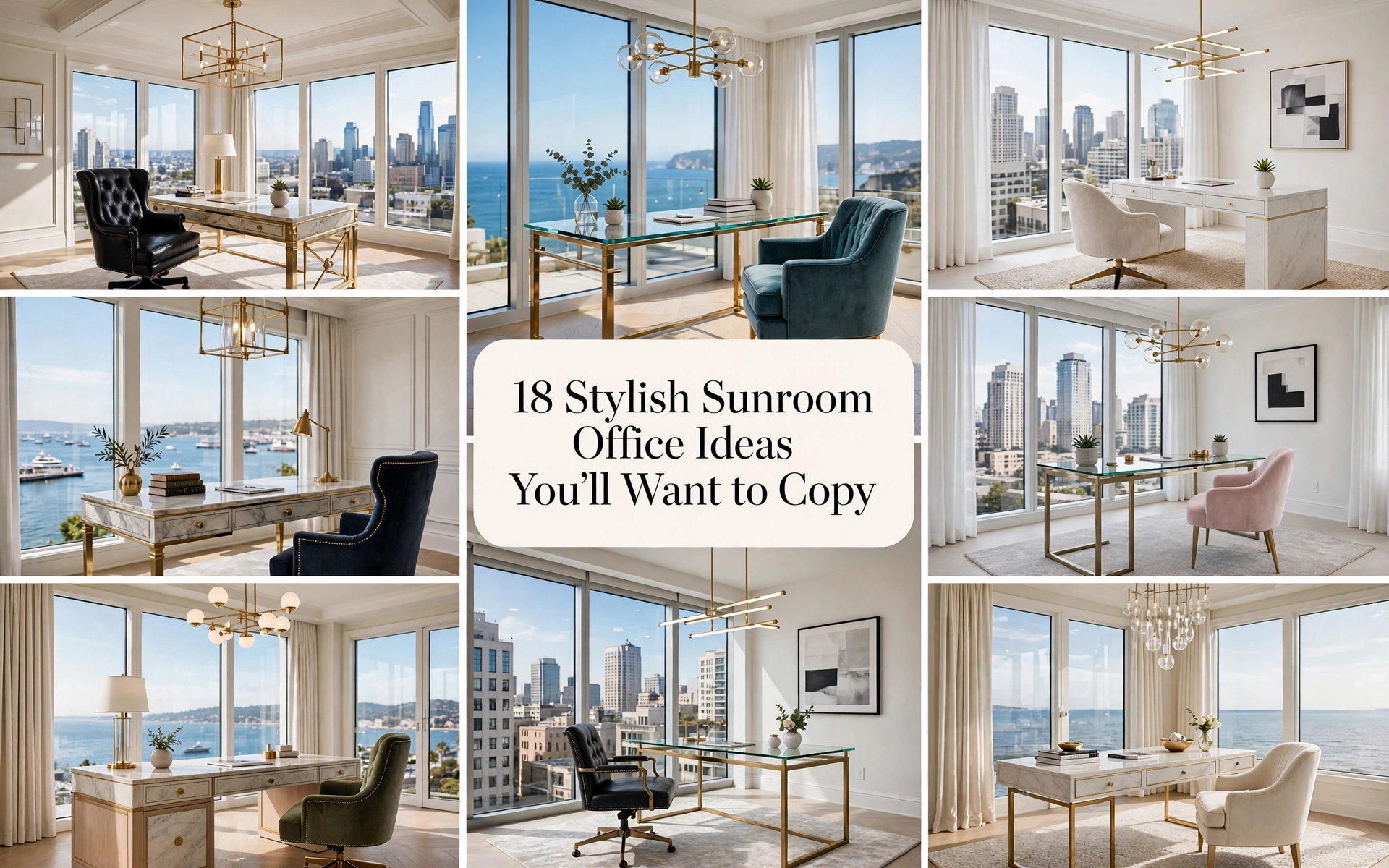
18 Stylish Sunroom Office Ideas You’ll Want to Copy
Your sunroom has the light, the view, and all the potential—yet turning it into an office can be surprisingly tricky. A desk pushed against the nearest window may leave you squinting at your screen, while too much furniture can make the room feel cramped and disconnected from the outdoors. The good news is that a successful sunroom workspace does not require a full renovation. With the right desk position, window treatments, storage, and a few comfort-focused layers, you can create a room that feels inspiring and genuinely practical. These sunroom office ideas cover compact layouts, cozy styles, built-ins, shared workstations, glare control, and budget-friendly upgrades, so you can find an approach that fits your space and the way you work.
1. Float the Desk Toward the Best View

Airy and intentional, a floating desk layout makes the view part of the workspace instead of treating the sunroom like a spare corner. Position the desk a few feet from the windows, facing the garden, but leave enough clearance behind the chair for an easy walkway. A slim oak desk, low-profile task chair, and pale flat-weave rug keep sightlines open.
The trick is to angle the monitor slightly away from direct sun and conceal cords in a floor cable cover that matches the rug. Keep accessories low so they do not compete with the scenery. This arrangement works especially well in a long sunroom with windows on three sides.
| Item | What to Look For | Approx. Price Range |
|---|---|---|
| Slim writing desk | 42–55 inches wide, shallow profile, cable opening | $150–$600 |
| Supportive task chair | Adjustable height, compact base, light upholstery | $120–$500 |
| Floor cable cover | Low profile in a floor-matching neutral | $15–$40 |
2. Build a Small Sunroom Office Into One Corner

Compact but polished, a corner workstation preserves the open feeling of a small sunroom. Choose an L-shaped desk with one shallow return, or join a narrow writing desk to a matching wall shelf. Placing the tallest element against the only solid wall prevents storage from blocking valuable daylight.
Use the shorter side for a laptop and the longer side for paperwork, then add one wall-mounted sconce instead of a floor lamp. Warm white, light ash, and muted sage make the setup feel calm without visually shrinking it. For more compact-room strategies, see [Internal Link: Small Home Office Ideas That Maximize Every Inch].
Quick Win: Measure an unused corner and mark a possible desktop outline with painter’s tape. Sit inside the footprint before buying anything to check chair clearance, reach, and whether nearby doors can still open comfortably.
3. Add a Built-In Desk and Wall-to-Wall Storage

Refined and highly functional, built-ins turn a pass-through sunroom into a proper home office. Run a desktop along the room’s solid wall and frame it with closed base cabinets, shallow drawers, and upper shelves. Painting the entire unit soft putty or warm white helps it read as architecture rather than bulky furniture.
What makes this work is the balance between concealed and open storage: hide printers, cables, and supplies below, then display only a few books and sculptural pieces above. Stop upper cabinets short of adjacent window trim so the original character remains visible. If you are planning cabinetry, [Internal Link: Stylish Home Office Storage Ideas] can help refine the details.
4. Create a Cozy Sunroom Library Office

Layered and cocooning, a library-style office softens the brightness of a glass-filled room. Start with a walnut desk and a comfortable upholstered chair, then use a low bookcase beneath the windows so the shelves add storage without interrupting the view. A rust-and-cream wool rug, linen curtains, and one aged-brass lamp bring warmth after sunset.
Keep the palette grounded with tobacco brown, warm ivory, and a touch of deep olive. Books should be arranged loosely with a few horizontal stacks rather than packed into every inch. The result feels personal, but the restrained styling keeps it from becoming visually busy.
Quick Win: Replace a cool white bulb with a warm 2700K LED in your desk lamp and add one washable lumbar cushion in rust, olive, or caramel. Those two changes make an exposed sunroom feel noticeably more comfortable after dark.
5. Use Natural Materials for an Organic Office

Earthy and sun-washed, an organic sunroom office echoes the landscape outside. Pair warm white walls with a medium-oak desk, woven cane chair, jute rug, and linen shade. Repeating two or three natural materials creates cohesion; adding every woven texture at once can make the room feel themed.
Choose a desk with simple lines, then add a stone catchall, a matte ceramic planter, and one soft wool throw for contrast. Plants with sculptural leaves can frame the workstation, but keep them away from chair paths and computer vents. This natural look is forgiving, tactile, and easy to build over time.
| Item | What to Look For | Approx. Price Range |
| Oak or oak-look desk | Simple profile with a matte natural finish | $180–$800 |
| Jute-blend rug | Low pile and large enough for the chair zone | $90–$350 |
| Linen Roman shade | Light filtering with a neutral lining | $80–$300 per window |
6. Frame the View With Modern Black Accents

Graphic and streamlined, black accents give a bright sunroom office definition without taking away its openness. Use a slim black metal desk, a charcoal task chair, and one linear pendant or adjustable wall light. Against white window frames and pale flooring, those dark lines act like punctuation.
Limit black to roughly three repeated elements so it feels deliberate rather than severe. A cognac leather desk pad or warm wood drawer unit will keep the scheme from turning cold. This approach is especially effective in modern home offices where clean geometry matters more than decorative layering.
Quick Win: Gather small accessories—cord clips, pen cups, frames, and trays—in one consistent matte-black finish. Repeating that single finish across the room creates a sharper, more coordinated look without replacing your main furniture.
7. Turn Vintage Furniture Into a Character-Filled Workspace

Collected and soulful, a vintage sunroom office offers an appealing alternative to a matching furniture set. Let an antique writing table serve as the anchor, then pair it with a newly upholstered chair and a traditional patterned rug. The mix feels intentional when the wood tones share a similar warm undertone.
Give older furniture practical upgrades: place a clear protective mat beneath writing equipment, add felt pads to the legs, and route cords along the back edge with removable clips. A pleated fabric shade and framed botanical print can reinforce the story without making the space feel like a period room. One strong antique is often more effective than several competing pieces.
8. Combine a Home Office With a Reading Nook

Relaxed and multipurpose, this layout lets the sunroom work beyond office hours. Keep the desk on one side of the room and place a compact lounge chair diagonally opposite it, using a shared rug to visually connect both zones. A small C-table can hold coffee during calls and a book later in the day.
Choose pieces with open legs so the floor remains visible, and leave a clear path between the door and windows. Matching the chair cushion to one color in the rug makes the two functions feel related. The setup is ideal when you want a focused desk without giving up the sunroom’s restful character.
Quick Win: Pull an occasional chair from another room into the sunroom for a one-week trial. If the walkway still feels comfortable and you actually use the reading spot, you have confirmed the layout before spending money.
9. Bring In a Garden-Inspired Color Palette

Fresh and expressive, a garden palette makes the transition between indoors and outdoors feel seamless. Begin with leafy green on a desk chair or base cabinet, then add clay, pale yellow, and warm cream in smaller amounts. Natural wood keeps these colors grounded while preventing the scheme from feeling too sugary.
Pull your exact shades from what is visible through the windows—silvery foliage, terracotta pots, or flowering plants—rather than choosing colors in isolation. A botanical-patterned cushion can unite the palette, but keep larger surfaces quiet. When the garden changes with the seasons, the interior will still feel connected rather than overly matched.
10. Make a Budget Sunroom Office With a Console Desk

Lightweight and adaptable, a console-style desk is an affordable solution for a narrow sunroom. Look for a secondhand table or simple flat-pack console between 16 and 20 inches deep, then add a chair that can tuck completely underneath. Two matching storage boxes on a nearby shelf can replace a bulky filing cabinet.
Make the setup feel more finished by painting the desk and shelf the same muted color, such as dusty blue or mushroom. A large corkboard covered in neutral linen creates an inexpensive planning zone while softening sound. You do not need custom furniture to make awkward dimensions work convincingly.
Quick Win: Refresh a basic desk with peel-and-stick cable clips and a new drawer pull in aged brass or matte black. Keep the original finish if it is sound; one coordinated hardware detail can make an inexpensive piece feel considered.
11. Position the Desk to Reduce Screen Glare

Calm and practical, a glare-smart layout can make more difference than any decorative purchase. Place the desk perpendicular to the brightest window so daylight falls from the side rather than directly behind or in front of the monitor. If you write by hand, put the window on the opposite side of your dominant hand to reduce shadows across the page.
Add an adjustable light-filtering shade and a monitor arm that lets you fine-tune height and angle throughout the day. Avoid glossy desktops, glass desk surfaces, and mirrors opposite strong sunlight; matte finishes are much easier on the eyes. This design decision keeps the room bright while making longer work sessions more comfortable.
12. Add Layered Window Treatments for Year-Round Comfort

Soft and adaptable, layered window treatments help a sunroom office respond to changing light without hiding its architecture. Install woven or solar shades inside the window frames for daytime control, then hang linen-blend curtain panels at the room’s outer edges for warmth and softness. Mount rods close to the ceiling to make the glazing feel taller.
Choose a light-filtering fabric for general use and reserve blackout lining for windows that receive intense direct sun. Before ordering, test fabric samples at morning, midday, and late afternoon; color and opacity can change dramatically. For more guidance, see [Internal Link: Window Treatment Ideas for Bright Rooms].
Quick Win: If new treatments are not in the budget, add removable light-filtering film to the single window causing the most glare. Covering the problem pane first can improve screen visibility while preserving the brighter views elsewhere.
| Item | What to Look For | Approx. Price Range |
| Light-filtering shade | Custom-width fit with glare-reducing openness | $70–$300 per window |
| Curtain panels | Linen blend with weighted hems | $50–$180 per pair |
| Adjustable task light | Dimmable, directional head, warm-neutral output | $40–$180 |
13. Design a Two-Person Sunroom Office

Balanced and collaborative, a shared sunroom office works best when each person has a defined zone. Place two matching desks on opposite walls for privacy, or use one long desktop with separate drawer units when floor space is tight. Give each seat its own task light, charging point, and reachable storage so shared surfaces stay clear.
Use a central rug to unify the room, then repeat one material—such as white oak or black metal—at both workstations. For video calls, orient at least one desk toward a calm interior wall rather than a bright window. Acoustic curtains or fabric shades can also reduce the hard, echoing quality common in glass-heavy rooms.
| Item | What to Look For | Approx. Price Range |
| Long desktop | 72–96 inches wide with a durable matte surface | $180–$650 |
| Drawer units | Two matching units sized to support the top | $100–$350 each |
| Fabric shade or curtain | Dense weave to soften reflections and echo | $60–$250 per opening |
14. Add a Window Bench With Hidden Office Storage

Tailored and space-efficient, a built-in window bench gives the sunroom a reason to stay inviting while concealing office overflow. Run the bench beneath a bank of windows and use deep drawers for paper, tech accessories, and seldom-used equipment. A seat cushion in a durable neutral fabric turns the top into a comfortable break spot.
Keep the desk opposite or perpendicular to the bench so drawer fronts can open fully. For a simpler version, place two low storage cabinets side by side and top them with a made-to-measure cushion. Match the cabinet color to the window trim to create a convincing built-in effect without major construction.
15. Try a Breezy Coastal Sunroom Office

Breezy and relaxed, a coastal office relies on light, texture, and faded color rather than obvious nautical decor. Combine a white or pale oak desk with a washed-blue rug, woven shade, and warm white walls. Small accents in sea-glass green or sandy beige add depth without turning the room into a theme.
Choose relaxed linen, matte ceramics, and light-toned wood instead of anchors, rope motifs, or rows of shells. A striped cushion can introduce pattern while keeping the mood crisp. If this palette suits the rest of your home, [Internal Link: Coastal Home Office Ideas That Feel Fresh] offers more ways to carry it beyond the sunroom.
Quick Win: Swap dark desk accessories for a white tray, pale ceramic cup, and soft blue notebook cover. Keeping everyday items within the same light palette produces a coastal lift without repainting or buying furniture.
16. Ground the Glass With a Moody Accent Wall

Deep and sophisticated, a moody accent wall can anchor a sunroom that otherwise feels visually weightless. Paint the room’s solid wall charcoal blue, forest green, or warm aubergine, then position a pale wood desk against it. The contrast gives video calls a strong backdrop and makes surrounding greenery appear more vivid.
Use the dark color on one uninterrupted plane rather than chopping it around multiple windows. Repeat it once in the rug or desk accessories, and bring in aged brass or cream upholstery to soften the effect. Because the room receives abundant daylight, it can handle richer color without losing its bright character.
17. Color-Drench a Creative Sunroom Studio

Playful and energizing, a color-drenched studio suits writing, crafting, and design work that benefits from personality. Paint the solid wall, base cabinets, and open shelving in one softened hue—dusty terracotta, muted teal, or ochre—while leaving window frames light. Using one color across connected surfaces reduces visual fragmentation.
Include a generous worktable, shallow supply drawers, and a rail for frequently used tools. Limit displayed materials to a controlled palette and store backups behind doors, because strong color plus open clutter can become distracting. A pale floor and simple white task lights keep the creative scheme fresh rather than heavy.
Quick Win: Paint the back panels of existing shelves before committing to the entire wall. This small dose of color is easy to reverse, frames books and supplies neatly, and reveals how the hue behaves in changing sunroom light.
18. Finish With a Polished Executive Sunroom Office

Confident and composed, an executive-style sunroom office proves that a bright room can still feel substantial. Center a generously sized wood desk on a wool rug, add a supportive leather or performance-fabric chair, and place a low credenza on the solid wall. The furniture should have presence without rising high enough to block the windows.
Keep the styling disciplined: one sculptural lamp, a lidded document box, and a pair of large planters are enough. Conceal power strips behind the desk and choose a matte desktop to manage reflections. This is the most formal of these sunroom office ideas, yet natural light keeps it approachable rather than corporate.
| Item | What to Look For | Approx. Price Range |
| Substantial desk | Matte wood top, cable access, proportionate depth | $500–$2,000 |
| Supportive chair | Adjustable support in leather or performance fabric | $300–$1,200 |
| Low credenza | Closed storage that sits below the window line | $350–$1,500 |
Conclusion
A sunroom can become an exceptional office when its light and views support the way you work.
You do not need to copy a complete room or invest in every upgrade at once.
Start with the decision that affects comfort most—usually desk placement, glare control, or temperature—and build from there.
Then choose a palette and storage approach that feel consistent with the rest of your home.
Even one focused change can make the space calmer, more useful, and more personal.
Save your favorite ideas, measure carefully, and explore the related guides below when you are ready to refine the details.
Frequently Asked Questions About Sunroom Offices
1. Can a sunroom be used as a home office year-round?
Yes, if the room has adequate heating, cooling, insulation, and glare control for your climate. Layered shades, a rug, weather sealing, and a suitable fan or HVAC solution can improve comfort without changing the room’s open character.
2. Where should a desk go in a sunroom?
Place the desk perpendicular to the strongest window whenever possible so light reaches the workspace from the side. Preserve a clear walkway and avoid positioning the monitor directly in front of or opposite intense sunlight.
3. How do I reduce glare on my computer screen?
Use light-filtering or solar shades, choose a matte desktop, and mount the monitor on an adjustable arm. Test the screen position at different times of day because the strongest reflection may shift as the sun moves.
4. What window treatments work best in a sunroom office?
Inside-mounted solar or woven shades provide precise light control without hiding the window frames. Linen-blend curtain panels can add softness, privacy, and another layer of protection during the brightest hours.
5. How can I protect furniture from strong sunlight?
Choose fade-resistant upholstery, rotate small decor periodically, and use UV-filtering window treatments where exposure is strongest. Natural variation will still occur, so avoid placing especially delicate textiles or artwork in prolonged direct sun.
6. What colors are good for a sunroom office?
Warm whites, pale woods, soft greens, washed blues, and earthy neutrals complement abundant natural light. A dark accent wall can also work when the room has enough glazing to balance the richer tone.
7. How do I add storage without blocking the windows?
Use low cabinets, window benches with drawers, shallow base units, or a credenza that stays below the sill. Reserve tall shelving for the room’s solid wall so daylight and outdoor views remain open.
8. Can a small sunroom fit both an office and a sitting area?
Often, yes. Select a shallow desk and one compact lounge chair with visible legs, connect both zones with a shared rug, and keep the main path through the room free of furniture.
9. What kind of lighting does a sunroom office need?
Natural light still needs support on cloudy days and after sunset. Combine a directional desk lamp with soft ambient lighting, and use dimmable warm-neutral bulbs to prevent a harsh contrast against dark windows at night.
10. What flooring works well under a desk chair?
Hard flooring is easiest for chair movement, while a tightly woven, low-pile rug adds comfort and sound absorption. Make sure the rug is large enough to hold the chair when it is pulled back from the desk.
11. Are plants practical in a sunroom workspace?
They can be, provided each plant suits the room’s light and temperature swings. Keep leaves away from electronics, vents, and chair paths, and group pots in trays to protect the floor from moisture.
12. How can I make a sunroom office look less cluttered?
Use closed storage for cables, paper, and equipment, then limit visible decor to a few purposeful pieces. Matching storage boxes and repeating one finish across accessories will make everyday items feel more organized.


