
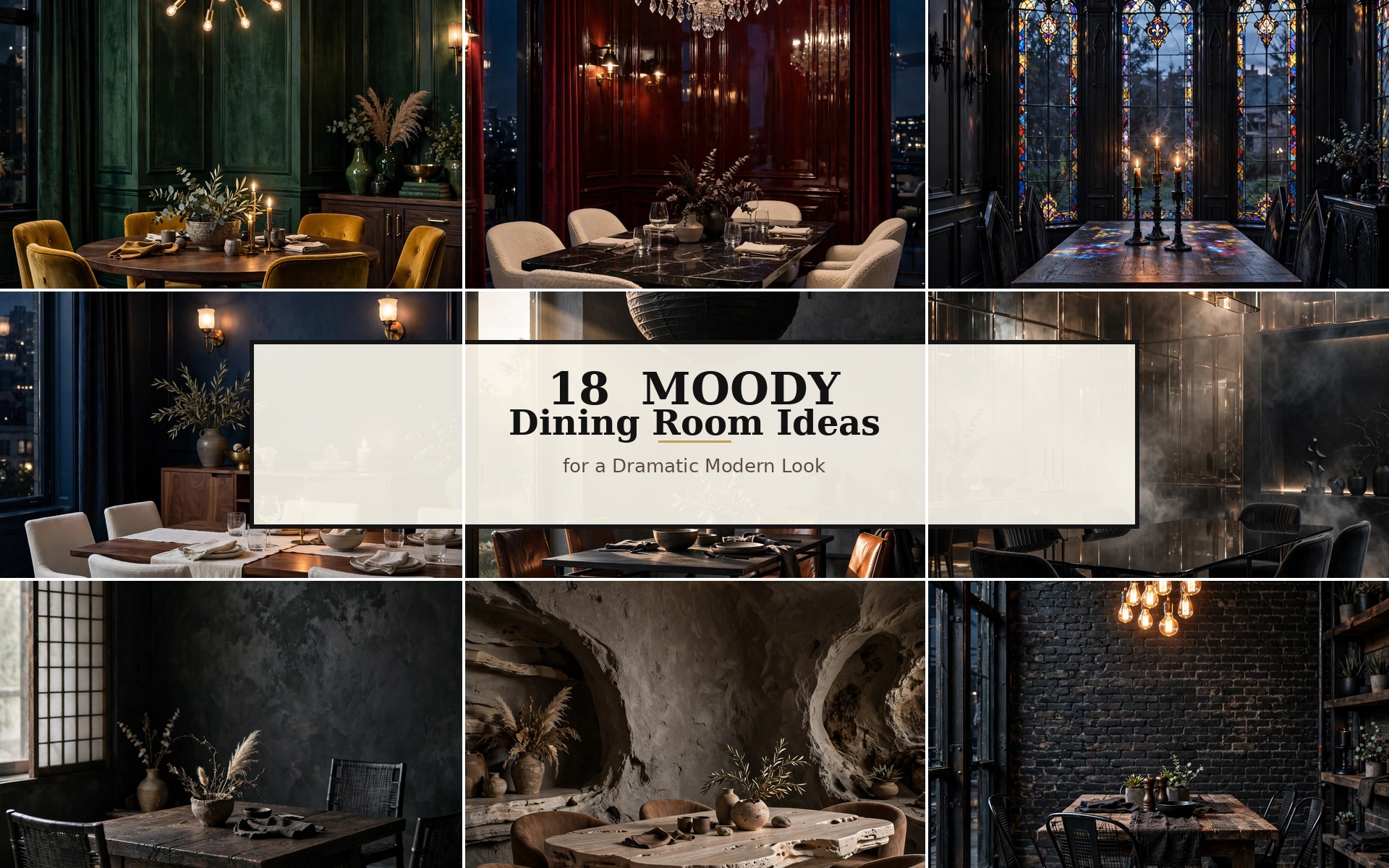
18 Moody Dining Room Ideas for a Dramatic Modern Look
A moody dining room sounds wonderfully dramatic—until the dark paint goes up and the space suddenly feels flat, cramped, or more gloomy than glamorous. The problem usually is not the color itself. It is the lack of contrast, layered light, and warm materials that make deeper shades feel intentional. With the right balance, even a compact dining area can feel sophisticated, welcoming, and comfortable enough for everyday meals. These moody dining room ideas explore 18 distinct ways to use rich color, sculptural furniture, tactile finishes, and strategic lighting without sacrificing practicality. Whether you are ready to repaint the whole room or only want a weekend refresh, you will find an achievable starting point below.
1. Wrap the Room in Deep Olive Green

Earthy and enveloping, deep olive creates drama without the severity of pure black. Its warm undertone pairs naturally with walnut, aged brass, and creamy linen, so the room feels layered rather than dim. Paint the walls and trim the same olive in different sheens: matte on the walls and satin on the woodwork. Keep the ceiling a soft warm white if the room has limited daylight, then add a pale rug beneath the dining table for contrast. This palette is especially effective in rooms overlooking a garden because it visually connects the interior to the greenery outside.
Quick Win: Test olive on two walls that receive different amounts of light. View the samples at breakfast and after sunset before committing; green can appear gray in cool daylight and much warmer under evening bulbs.
Shop the Look
| Item | What to Look Fo | Approx. Price Range |
| Olive wall paint | Matte or washable eggshell with a warm undertone | $40–$90 per gallon |
| Brass pendant | Aged or antique finish; warm diffused shade | $100–$500 |
| Neutral area rug | Low-pile wool blend in cream or oatmeal | $200–$900 |
2. Pair Charcoal Walls with Pale Oak

Refined and architectural, charcoal gives a modern dining room a crisp backdrop while pale oak prevents it from feeling heavy. Choose a charcoal with a soft brown undertone instead of a blue-black shade, then introduce oak through the table, sideboard, or slatted wall detail. A simple linear pendant reinforces the clean geometry. Leave enough negative space around the furniture and limit accessories to a large bowl and one framed artwork. If you enjoy the restrained style of a [Internal Link: Modern Dining Room Ideas with Warm Wood], this high-contrast version offers more depth without adding clutter.
3. Use Burgundy as a Sophisticated Color Drench

Rich and intimate, burgundy brings the atmosphere of a private dining club into a contemporary home. Color-drench the walls, trim, and ceiling for a cocooning effect, but vary the finishes so the architecture remains visible. Balance the red undertones with smoked-oak furniture, muted blush upholstery, and bronze accents rather than adding more saturated colors. Wall sconces are important here because they create pools of light at eye level. Use this approach in a room with a generous window or wide doorway, where borrowed daylight can keep the enveloping palette from closing in.
Quick Win: If a burgundy ceiling feels too permanent, paint only the walls and trim, then repeat the color overhead with a large fabric pendant. You will get a similar cocooning impression with less commitment.
4. Let a Black Feature Wall Frame the Table

Bold but controlled, a single black feature wall delivers a moody focal point without darkening every surface. Place it behind the dining table or sideboard, ideally on the wall seen first from the adjoining room. Warm white on the remaining walls keeps the layout open, while a black-framed artwork or pendant carries the dark tone across the space. Choose a soft off-black rather than a harsh jet black, and repeat it only two or three times. This is one of the easiest moody dining room ideas for an open-plan home where full color drenching could interrupt the wider palette.
5. Layer Moody Blue with Cognac Leather

Polished and welcoming, inky blue becomes warmer when paired with cognac leather. The blue supplies depth; the orange-brown leather provides complementary contrast and grows more characterful with age. Use blue on the walls, choose chairs with slim dark frames, and ground the arrangement with a vintage-style rug containing faded rust and navy. A frosted-glass globe light softens the angular furniture and spreads light evenly. Keep window treatments in natural flax linen so the room still feels relaxed during the day. The result is dramatic enough for dinner yet practical for a busy household.
Quick Win: No budget for new chairs? Add cognac seat cushions or a leather-look bench pad. Repeat that warm tone once in a tray or picture frame so the smaller accent appears deliberate.
6. Build Drama with Oversized Abstract Art

Expressive and gallery-like, one oversized artwork can make a neutral dining room feel moody without relying on dark paint. Choose a piece with charcoal, umber, oxblood, or midnight-blue tones and hang it so the center sits roughly at seated eye level. Pull one color from the art into the chair upholstery or rug, but let the remaining finishes stay quiet. A picture light adds depth after dark and makes the wall a true focal point. This approach is ideal for renters or anyone who wants the flexibility to change the atmosphere without repainting the entire room.
7. Make a Small Moody Dining Room Feel Open

Cozy rather than cramped, a small dining room benefits from dark color when the layout remains visually light. Use a round pedestal table to remove bulky corner legs, pair it with open-back chairs, and hang curtains above the window frame to emphasize height. A deep taupe or smoky green wall color offers atmosphere with less contrast than black. Add one large mirror opposite the brightest opening, angled to reflect light rather than clutter. For more layout help, [Internal Link: Small Dining Room Ideas That Maximize Space] can support the planning before you buy furniture.
Quick Win: Mark the table diameter on the floor with painter’s tape, including at least 30 inches of chair clearance. This five-minute check prevents a stylish table from overwhelming the actual walking path.
8. Add Texture with Limewash Walls

Softly weathered and dimensional, charcoal or deep mushroom limewash gives a moody dining room movement that flat paint cannot provide. The tonal variation catches daylight and prevents a dark wall from reading as a solid block. Apply two crosshatched coats over the manufacturer-recommended primer, leaving the brush marks visible. Pair the finish with simple oak or travertine furniture so the wall texture remains the focus. Because limewash can mark more easily than conventional paint, reserve it for walls away from chair backs or use a compatible protective finish in hard-working family dining spaces.
9. Introduce Dark Wood Paneling

Tailored and timeless, dark wood paneling adds architectural depth as well as color. Full-height walnut panels feel sleek and modern, while stained-oak battens create rhythm with less visual weight. Run the treatment along the main dining wall and keep the surrounding paint a related warm gray so the transition is subtle. Conceal the sideboard within the panel color or choose a floating cabinet to preserve floor space. Good lighting is essential: wash the wall with adjustable ceiling spots so the grain stays visible at night. This treatment makes even a simple table setting feel considered.
Shop the Look
| Item | What to Look For | Approx. Price Range |
| Wood wall treatment | Veneer panels or stained oak battens | $8–$30 per sq. ft. |
| Wall-wash lighting | Adjustable warm-white LED spotlights | $30–$150 each |
| Floating sideboard | Shallow profile in walnut or dark oak | $400–$1,500 |
10. Create a Modern Gothic Dining Room

Dramatic and collected, modern Gothic style works when historical shapes meet a disciplined palette. Start with near-black walls, then add a trestle table, high-backed chairs, and a contemporary chandelier with candle-like proportions. Avoid turning the room into a theme by limiting ornate details to one or two pieces. Linen curtains, a faded rug, and matte ceramics soften the sharper silhouettes. A large arched mirror can echo Gothic architecture while bouncing light around the room. The same editing principle appears in [Internal Link: Vintage Dining Room Ideas That Feel Current], where old forms are balanced with clean modern elements.
Quick Win: Replace shiny silver hardware with aged brass or blackened bronze, then group taper candles in varied heights. These small changes introduce Gothic character without requiring new furniture or permanent architectural work.
11. Soften Black with Cream Bouclé Chairs

Tactile and high-contrast, cream bouclé chairs can turn a black dining room into a space that feels plush rather than severe. Their pale upholstery breaks up the darker lower half of the room, while the looped texture catches light. Choose performance fabric if meals are frequent, and leave enough space between chairs so their sculptural shapes remain clear. A black pedestal table keeps the center visually calm; a cream plaster pendant repeats the lighter tone overhead. Because the palette is limited, small variations in texture—matte paint, nubby fabric, smooth ceramic—do most of the decorating work.
12. Go Tone-on-Tone with Chocolate Brown

Warm, grounded, and unexpectedly modern, a chocolate-brown scheme offers mood without the coolness of charcoal. Combine cocoa walls, a darker espresso table, and camel or tobacco upholstery, then separate the similar tones with texture. A sisal rug, linen curtains, and glazed ceramics keep the palette from looking flat. Add a small amount of black through a pendant or frames for definition. The trick here is sampling every brown together; red-brown paint and yellow-brown wood can clash, while shared warm or neutral undertones create a seamless, cocooning room.
Quick Win: Gather existing brown items on the dining table and photograph them in daylight. A phone image makes mismatched undertones easier to spot before you buy paint, fabric, or a large rug.
13. Use a Sculptural Pendant as the Focal Point

Striking and luminous, a sculptural pendant gives a moody dining room a clear center. Choose a fixture at roughly one-half to two-thirds the width of the table and hang its lowest point 30 to 36 inches above the tabletop. Opal glass, folded paper, or pale plaster stands out against dark walls and diffuses flattering light. Put the fixture on a dimmer and use warm 2700K bulbs so evening meals feel intimate rather than murky. Keep the centerpiece low and the surrounding artwork restrained; the light should command attention without blocking conversation across the table.
14. Combine Plum Walls with Brushed Brass

Jewel-toned and polished, muted plum gives a dining room richness while feeling less expected than navy or green. Select a brown-based aubergine rather than a bright purple, then use brushed brass in narrow, controlled doses: a chandelier frame, cabinet pulls, or slim picture lights. Black-stained furniture steadies the palette, while dusty rose or oatmeal fabric softens it. Avoid highly polished gold, which can push the room toward glamour rather than modern restraint. This color story works especially well after sunset, when brass catches the light and the walls deepen around it.
15. Try Moody Dining Room Wallpaper

Layered and expressive, dark wallpaper adds pattern and depth in one move. Look for oversized botanical, abstract landscape, or tonal geometric designs with plenty of visual breathing room. Paper one focal wall in a small room, or wrap all four walls when the pattern is subtle and the ceiling is high. Pull the quietest shade from the print for the trim, then keep the dining furniture simple. Before ordering, tape up a full repeat-sized sample; a tiny swatch cannot show how the motif will sit behind chairs, doors, or a sideboard.
Quick Win: Frame one leftover wallpaper panel as oversized art. It is an affordable way to test a dramatic pattern in the room, and the panel can move if you later change the furniture layout.
16. Balance Concrete with Velvet

Urban and tactile, concrete walls or a microcement finish bring quiet drama through texture rather than color. Prevent the room from feeling cold by adding velvet chairs in rust, moss, or deep teal, along with warm wood and a soft rug. Rounded furniture is especially useful because it offsets the hard, monolithic surfaces. If real concrete is impractical, a professionally applied mineral finish can create a convincing effect with less weight. Keep metal details dark and matte instead of shiny. The tension between raw and plush materials produces a modern dining room that feels intentional, not unfinished.
17. Create the Look on a Budget with Paint and Fabric

Resourceful and personal, a budget moody dining room can rely on color, fabric, and editing instead of major purchases. Paint the walls a deep blue-gray, keep the existing table, and unify mismatched chairs with one dark paint color. Add washable slipcovers or simple seat pads in rust or olive, then replace a small ceiling shade with a larger fabric drum. Thrifted frames painted to match create an inexpensive gallery wall. Spend first on flattering bulbs and a dimmer; thoughtful lighting will improve every finish already in the room. [Internal Link: Budget Dining Room Makeover Ideas] offers more low-cost upgrades.
Quick Win: Spray-paint mismatched frames in one matte finish and fill them with public-domain botanical prints. Hang the group within the table’s width so it reads as one strong feature rather than scattered decoration.
18. Frame the Dining Area with Dark Built-Ins

Tailored and functional, floor-to-ceiling dark built-ins can make the dining table feel purposefully anchored while adding valuable storage. Paint cabinets and the wall behind them in the same deep charcoal or blue-black, then leave a central opening for art, a mirror, or a serving surface. Closed lower cupboards hide table linens and small appliances; shallow open shelves keep glassware within reach. Add warm integrated lighting inside the niche and use understated hardware. If the room is narrow, stop the cabinetry 12 to 15 inches deep so chairs still move comfortably and the design does not crowd the table.
Quick Win: Paint an existing freestanding bookcase the same color as the wall and place it tight against the baseboard. The reduced contrast creates a convincing built-in effect without the cost of custom cabinetry.
Make the Mood Work for Your Home
A dramatic dining room does not require every surface to be dark.
One rich wall color, a stronger light fixture, or warmer upholstery may be enough to shift the atmosphere.
Choose the ideas that suit your daylight, room size, daily habits, and decorating budget.
Sample colors and measure furniture before committing, then build the look one deliberate layer at a time.
For your next step, explore [Internal Link: Dining Room Lighting Ideas for a Warm, Welcoming Space] or [Internal Link: Dining Room Color Ideas Beyond White].
The goal is a room that feels dramatic in photographs and genuinely comfortable when people gather around the table.
Frequently Asked Questions
1. What colors work best for a moody dining room?
Deep olive, charcoal, navy, chocolate brown, burgundy, aubergine, and smoky taupe all work well. Choose a shade whose undertone connects to the room’s wood, flooring, and natural light.
2. How do I keep a moody dining room from feeling too dark?
Layer overhead, wall, and accent lighting instead of relying on one ceiling fixture. Pale upholstery, reflective surfaces, warm wood, and a lighter rug can also create contrast without weakening the mood.
3. Can moody dining room ideas work in a small space?
Yes. Use a round pedestal table, open-back chairs, tall curtains, and one large mirror to preserve visual space. A dark focal wall or smoky mid-tone may be easier than color-drenching all four walls.
4. What is the best lighting temperature for a dark dining room?
Warm-white bulbs around 2700K generally create a comfortable evening atmosphere. Add dimmers and use multiple light sources so faces and food remain well lit without making the room feel harsh.
5. Should the dining room ceiling also be painted dark?
A dark ceiling can make a tall or well-lit room feel wonderfully cocooning. In a low room with limited daylight, keep the ceiling warm white or use a slightly lighter version of the wall color.
6. Which wood tones complement moody walls?
Walnut, smoked oak, espresso, and medium warm oak pair naturally with deep colors. Pale oak provides stronger contrast, while reddish woods need careful testing beside burgundy or plum paint.
7. How can I create a moody dining room on a budget?
Start with paint, improved bulbs, a dimmer, and coordinated chair cushions. Unifying mismatched frames or chairs with one finish can make existing pieces look intentional without replacing the furniture.
8. Are black dining rooms still modern?
Black feels current when balanced with tactile fabric, warm wood, simple silhouettes, and good lighting. Soft off-black usually looks more nuanced and forgiving than a stark, cool jet black.
9. What kind of rug suits a moody dining room?
Choose a low-pile, easy-clean rug large enough for chair legs to remain on it when pulled out. Faded vintage patterns, sisal, and pale wool blends add texture while balancing dark furniture.
10. How high should a dining room pendant hang?
The bottom of the fixture typically sits 30 to 36 inches above the tabletop. Adjust slightly for ceiling height and fixture size, ensuring it lights the table without blocking sightlines.
11. Can renters achieve a dramatic dining room without painting?
Use oversized dark artwork, removable wallpaper, full-length curtains, a large rug, and a sculptural pendant or plug-in sconces. These layers build atmosphere while remaining easier to reverse later.
12. How many dark colors should I use in one dining room?
One dominant dark shade plus one supporting deep tone is usually enough. Add contrast through material and texture rather than introducing several competing colors that make the room feel busy.]
