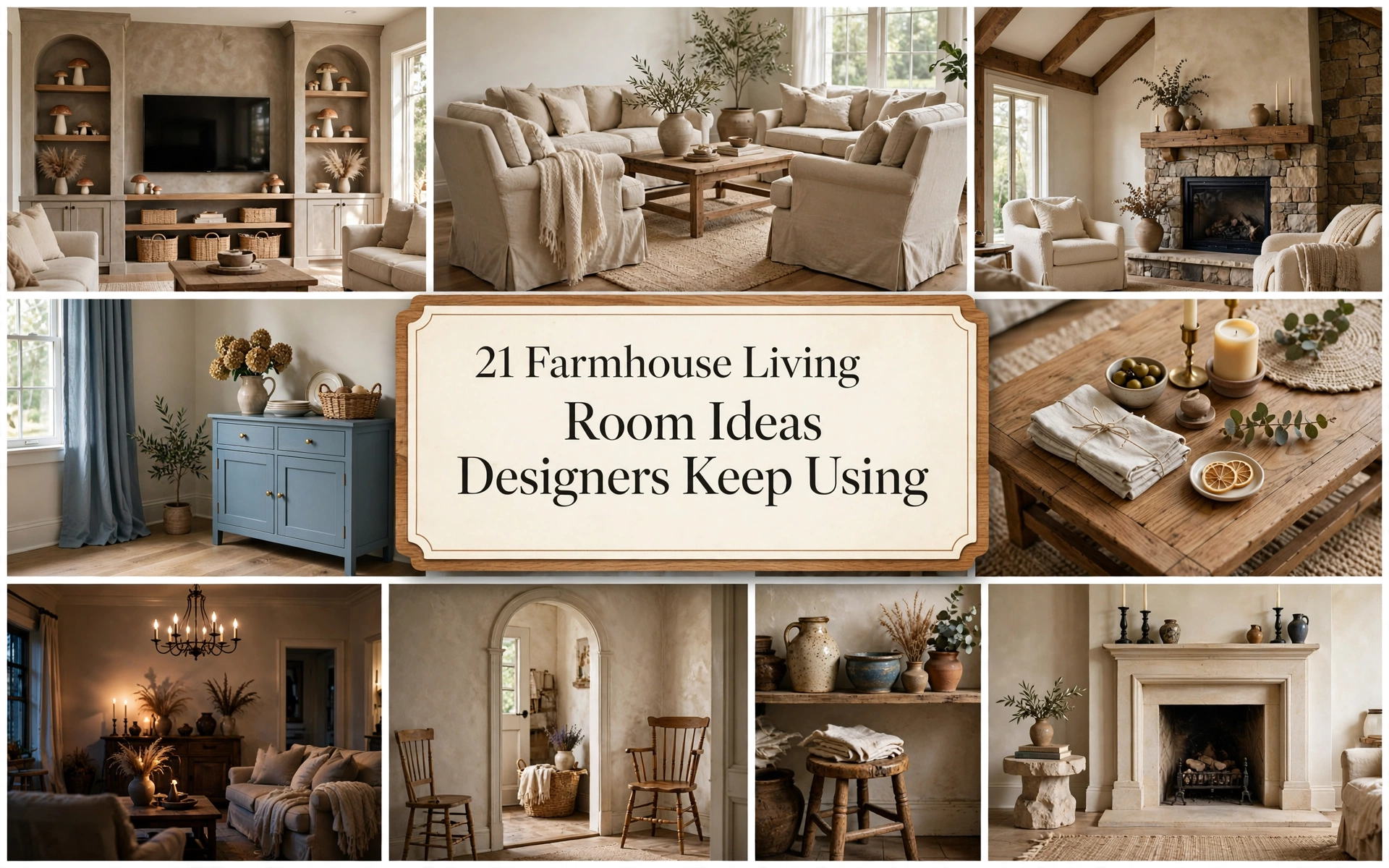
21 Farmhouse Living Room Ideas Designers Keep Using
A farmhouse living room should feel warm and collected, but it can quickly become overly themed. Too many distressed signs, matching furniture pieces, or rustic accessories can leave the room feeling staged rather than welcoming. On the other hand, removing every traditional detail may erase the character that made you love farmhouse style in the first place.
The solution is to focus on the design choices that give farmhouse interiors their staying power: natural materials, comfortable furniture, balanced proportions, and meaningful contrast. These farmhouse living room ideas show how designers create that relaxed character while keeping rooms fresh, functional, and personal. Whether you’re starting over or updating a few details, there’s an achievable approach here for your space.
1. Build the Room Around Warm White Walls

Warm white walls create an airy, sun-washed foundation without making a farmhouse living room feel cold. Choose paint with cream, beige, or subtle greige undertones rather than a sharp, blue-based white.
Pair the walls with medium-toned oak, linen upholstery, and a few dark accents for definition. Test samples throughout the day because warm whites can look yellow under certain artificial lights. This restrained backdrop also allows reclaimed wood, vintage furniture, and woven textures to stand out without competing for attention.
💡 Quick Win: Replace bright white throw pillow covers with oatmeal, flax, or ivory linen. This small color adjustment softens the room immediately and costs far less than repainting or replacing furniture.
2. Introduce Reclaimed Wood as a Focal Point

Reclaimed wood gives the room an earthy, timeworn quality that new furniture alone cannot recreate. The trick is to use it as a deliberate focal point rather than covering every surface with rustic boards.
Try a reclaimed mantel, substantial coffee table, ceiling beam, or narrow console. Keep surrounding finishes quieter so the wood’s grain, knots, and variation remain visible. Pairing aged timber with smooth plaster, simple upholstery, or crisp walls creates contrast and helps the material look intentional—not like part of a themed set.
Shop the Look
| Item | What to Look For | Approx. Price Range |
| Coffee table | Solid reclaimed wood with simple legs | $250–$900 |
| Mantel shelf | Aged beam with secure mounting hardware | $120–$450 |
| Console | Narrow profile with visible natural grain | $300–$1,000 |
3. Choose a Tailored Slipcovered Sofa

A slipcovered sofa creates the relaxed, approachable character associated with cozy farmhouse living room ideas. For a more refined result, choose a structured frame with fitted arms instead of an excessively loose cover.
Performance linen or a washable cotton blend works well in cream, oatmeal, warm gray, or muted taupe. Leave enough floor visible around the sofa so its generous shape does not overwhelm the room. Add two or three pillows in different textures rather than covering the entire back with matching cushions.
💡 Quick Win: If a new sofa is not practical, use a fitted neutral slipcover and steam it after installation. Tuck excess fabric firmly along the seat and arms to create cleaner, more tailored lines.
4. Ground the Space with a Vintage-Style Rug

A faded rug brings pattern and history into a neutral living room without dominating it. Rust, indigo, olive, and muted sand tones complement wood furniture and make newer pieces feel more collected.
Choose a rug large enough for at least the front legs of the main seating to rest on it. In an open-plan room, this also establishes a clear conversation area. If authentic vintage rugs exceed your budget, look for low-pile washable designs with irregular, softly distressed patterns rather than obvious printed fading.
5. Mix Old and New Furniture

A layered farmhouse living room should look collected gradually, not purchased as a matching package. Combining one or two vintage pieces with modern seating gives the room depth while preserving everyday comfort.
Place an antique chest beside a clean-lined sofa, or pair a contemporary coffee table with a weathered spindle chair. Repeat one material or color across the old and new pieces to make the combination cohesive. Avoid using distressed finishes everywhere; authentic age is more convincing when contrasted with smooth, well-maintained surfaces.
💡 Quick Win: Move a small antique table, stool, or wooden chest from another room into the living area. One unexpected vintage piece can break up a coordinated furniture set without requiring a full redesign.
6. Use Black Accents for Definition

Black accents add structure to a pale farmhouse palette. They help define architectural lines and prevent cream walls, light upholstery, and natural wood from blending into one indistinct neutral space.
Use matte black selectively through window frames, curtain rods, fireplace tools, lighting, or a slim metal table. Distribute three or four accents around the room so the contrast feels balanced. Heavy black furniture can visually shrink a small room, so keep the largest pieces light and let darker details provide punctuation.
Shop the Look
| Item | What to Look For | Approx. Price Range |
| Curtain rod | Simple matte-black metal profile | $30–$120 |
| Floor lamp | Slender frame with warm bulb | $80–$300 |
| Fireplace tools | Minimal iron set | $60–$220 |
7. Layer Linen, Wool, and Woven Textures

A calm neutral room becomes inviting when its materials offer noticeable variation. Linen, wool, jute, rattan, and chunky knits create depth through texture rather than relying on numerous colors.
Layer a low-pile wool rug over a larger natural-fiber rug, then add linen curtains and one substantial woven basket. Keep textures in related earthy shades so the room feels cohesive. Avoid placing a rough textile on every surface; balance tactile pieces with smoother wood, ceramic, glass, and painted finishes.
💡 Quick Win: Drape a wool or cotton throw loosely over one sofa arm and place a woven basket nearby. This creates an easy textural grouping while giving blankets a practical storage place.
8. Make the Fireplace Quietly Architectural

A fireplace can anchor the room without becoming overly elaborate. Simple plaster, limewash, brick, or natural stone gives it architectural presence while allowing the seating and accessories to remain relaxed.
Extend the surround upward to emphasize ceiling height, then use a substantial wood mantel or omit the mantel for a more modern farmhouse look. Keep the hearth styling restrained: a vessel, a short stack of books, or a framed piece leaning against the wall is often enough. For more inspiration, explore [Internal Link: Fireplace Decor Ideas for Every Season].
9. Add a Subtle Check or Stripe

Small-scale checks and ticking stripes introduce familiar farmhouse pattern without turning the room into a theme. Their linear structure works especially well among organic wood grain and soft solid fabrics.
Use pattern on one upholstered chair, a pair of pillows, or simple curtains. Brown, charcoal, faded blue, and muted olive are easier to live with than high-contrast black and white. If the room already contains a patterned rug, vary the scale: combine a faded large motif underfoot with a much smaller stripe above it.
10. Create a Modern Farmhouse Palette with Olive Green

Olive green adds an earthy, grounded mood while remaining calm enough for a farmhouse interior. It connects naturally with wood, aged brass, stone, and creamy upholstery.
Paint built-in shelves or a single wall in a muted olive with gray or brown undertones. For a smaller commitment, use the color on an armchair, pillows, or a ceramic lamp. Balance it with warm white rather than stark white, and include at least one medium wood tone so the palette feels organic instead of sharply contrasted.
💡 Quick Win: Add two olive pillow covers and a leafy branch in a stoneware vessel. Repeating the green at two different heights makes the color feel integrated rather than randomly introduced.
11. Install Built-Ins That Blend Storage and Display

Farmhouse living room ideas with storage work best when practical objects and decorative pieces share the same architectural framework. Floor-to-ceiling built-ins can hold books, media equipment, baskets, and meaningful objects without making the room feel crowded.
Paint the cabinetry warm white, mushroom, olive, or muted charcoal. Use closed cupboards along the bottom for visual clutter and open shelving above for a lighter effect. Leave some shelves partly empty, and vary the height of books, pottery, and framed art rather than arranging identical accessories in perfect rows.
Shop the Look
| Item | What to Look For | Approx. Price Range |
| Storage baskets | Rectangular natural fiber with handles | $25–$90 each |
| Cabinet hardware | Aged brass or dark iron | $5–$25 per pull |
| Picture lights | Warm, softly diffused illumination | $80–$350 |
12. Use Oversized Art Instead of Many Small Signs

One large artwork creates a more confident, refined focal point than a collection of small decorative plaques. A pastoral landscape, abstract earth-toned canvas, or vintage botanical print can reinforce the farmhouse mood without spelling it out.
Hang the piece about six to eight inches above the sofa or mantel, and aim for a width around two-thirds that of the furniture beneath it. Choose a simple wood, black, or aged-gold frame. This is especially effective when you want the room to look more expensive with fewer accessories.
💡 Quick Win: Enlarge a public-domain landscape or personal countryside photograph and place it in a secondhand frame. A new mat and one coat of paint can make an inexpensive frame look custom.
13. Arrange Furniture for Conversation

A welcoming farmhouse room is shaped as much by layout as by finishes. Seating that faces only a television can make the space feel less connected, even when the furniture itself is comfortable.
Position the sofa opposite two chairs or place the chairs at right angles around a central coffee table. Keep primary walkways roughly three feet wide and set the coffee table about 14–18 inches from the seating. In larger rooms, float furniture away from the walls to create a defined conversation zone.
14. Add Character with Ceiling Beams

Exposed beams draw the eye upward and add architectural warmth, particularly in rooms with vaulted or high ceilings. Their scale and finish matter more than the number of beams.
Use solid reclaimed timber when the structure permits, or lightweight hollow box beams for a decorative update. Medium-brown wood usually appears more natural than an extremely dark stain. Match the beam undertone to the floor or furniture, but avoid making every wood finish identical. A little variation creates a more authentic, evolved interior.
15. Bring in Soft Blue for a Relaxed Country Look

Dusty blue offers a lighter alternative to the typical brown-and-cream farmhouse palette. The color feels relaxed and familiar, especially alongside warm wood, white walls, and aged metal.
Use muted blue on a cabinet, pair of armchairs, or linen curtains. Echo it once in a rug or pillow, then stop before the room becomes overly coordinated. Blue with a gray or green undertone tends to feel more sophisticated than a bright, saturated shade. For complementary color inspiration, see [Internal Link: Warm and Inviting Living Room Color Ideas].
💡 Quick Win: Paint the back panel of an existing bookcase dusty blue. It introduces color in a contained area and makes neutral books, pottery, and wood accessories more noticeable.
16. Style the Coffee Table with Restraint

A coffee table should support daily life instead of becoming a decorative obstacle. Designers often use three elements with distinct heights: a low stack of books, a medium bowl or tray, and a taller vase or candle.
Keep at least half of the surface open for drinks, games, or feet. A tray can gather remote controls and small items, while a lidded box conceals less attractive necessities. Choose materials already present in the room—wood, stoneware, brass, or woven fiber—to connect the arrangement with the larger design.
Shop the Look
| Item | What to Look For | Approx. Price Range |
| Decorative tray | Wood, aged metal, or woven rattan | $30–$130 |
| Lidded box | Neutral finish sized for remotes | $20–$80 |
| Vase | Simple stoneware with organic shape | $25–$120 |
17. Layer Lighting at Different Heights

Warm, layered lighting makes a living room feel comfortable after daylight fades. A single ceiling fixture often creates flat illumination and harsh shadows, regardless of how carefully the room is decorated.
Combine ambient light from a chandelier or flush mount with floor lamps, table lamps, and optional picture lights. Select bulbs around 2700K for a warm effect, and install dimmers where possible. Place light sources at different heights and on more than one side of the room so the evening glow feels balanced rather than concentrated in one corner.
💡 Quick Win: Replace mismatched cool and warm bulbs with the same 2700K color temperature. This inexpensive adjustment immediately creates a more cohesive atmosphere and improves how your paint and upholstery colors appear at night.
18. Make a Small Farmhouse Living Room Feel Open

Small farmhouse living room ideas benefit from visual lightness. Choose raised-leg furniture, a round coffee table, and one compact armchair instead of bulky seating that blocks pathways.
Use curtains mounted several inches above the window to emphasize height, and keep the wall and curtain colors closely related. One large rug will make the room feel more unified than several small ones. Furniture does not need to be miniature, but every piece should serve a clear purpose. More solutions are available in [Internal Link: Small Living Room Ideas That Feel More Spacious].
19. Refresh the Room with Budget-Friendly Vintage Finds

A budget farmhouse living room gains character from pieces that have history, even when they are not valuable antiques. Thrifted stools, old frames, stoneware, baskets, and small tables can soften a room filled with newer furniture.
Shop with a short materials list—solid wood, woven fiber, iron, ceramic—and ignore pieces that need extensive repairs. Group finds by color or material so they feel connected. Clean everything thoroughly, but preserve minor wear that contributes to its character. Avoid buying generic accessories simply because they are inexpensive.
💡 Quick Win: Gather three mismatched thrifted frames and paint them the same muted color. Use simple landscape prints or family photographs to create a cohesive arrangement from pieces that originally had little in common.
20. Incorporate Natural Stone

Natural stone brings weight and permanence to an otherwise soft room. Limestone, soapstone, slate, and softly textured fieldstone work particularly well with linen, wood, and aged metal.
Use stone on a fireplace, hearth, side table, or lamp base rather than repeating it throughout the room. Honed and tumbled surfaces usually feel more relaxed than highly polished finishes. If real stone is beyond the budget, choose a quality stone-look surface with varied patterning and realistic edges; repetitive printed veining can undermine the effect.
21. Add Seasonal Changes Without Redecorating Everything

A timeless farmhouse foundation can shift with the seasons through a few controlled changes. This keeps the room feeling fresh without requiring new furniture or bins of highly specific decorations.
In autumn, introduce rust-colored wool, dried branches, and deeper candlelight. For winter, use heavier knits and evergreen clippings. Spring works well with washed linen and flowering branches, while summer calls for lighter throws and simple garden greenery. Keep the major palette consistent and change only two or three elements at a time.
💡 Quick Win: Create one small seasonal station on the mantel or console. Change the branch, candle, and textile accent while leaving the rest of the room alone. The update will feel intentional and remain easy to maintain.
Conclusion
The most inviting farmhouse interiors are not defined by a checklist of rustic decorations. They feel comfortable because natural materials, useful furniture, thoughtful lighting, and personal objects work together.
You do not need to adopt all 21 ideas or replace everything at once. Begin with the change that addresses your room’s biggest weakness—whether that is its layout, color palette, storage, or lack of warmth.
Then build gradually, choosing details that suit your home and budget. The result will feel more authentic because it reflects how you actually live. For your next step, explore the related living room guides below and save your favorite ideas for later.
Frequently Asked Questions
1. What colors work best in a farmhouse living room?
Warm white, cream, beige, mushroom, muted olive, dusty blue, and soft gray create a versatile farmhouse palette. Pair these shades with natural wood and a small amount of black, iron, or aged brass for contrast.
2. How can I make farmhouse decor look modern?
Use cleaner furniture lines, fewer decorative accessories, and a restrained neutral palette. Combine traditional materials such as reclaimed wood or stone with modern lighting, tailored upholstery, and simple artwork.
3. How do I keep a farmhouse living room from looking dated?
Avoid excessive distressing, word signs, coordinated furniture sets, and themed accessories. Focus instead on authentic materials, comfortable proportions, functional layouts, and vintage objects selected for their shape or usefulness.
4. Can farmhouse style work in a small living room?
Yes. Choose raised-leg furniture, one large rug, compact occasional tables, and light window treatments. Limit the number of rustic pieces so natural texture adds character without creating visual clutter.
5. What type of sofa is suitable for farmhouse decor?
A tailored slipcovered sofa, linen sectional, or neutral rolled-arm sofa works well. Choose a comfortable shape in cream, oatmeal, warm gray, or taupe, preferably in a durable or washable fabric.
6. What kind of rug should I use?
Vintage-style rugs, low-pile wool rugs, jute rugs, and softly patterned washable rugs all complement farmhouse interiors. Make sure the rug is large enough to connect the main seating pieces.
7. How can I create farmhouse style on a budget?
Start with paint, pillow covers, thrifted wood furniture, woven baskets, and secondhand artwork. Reusing furniture from other rooms and changing hardware or lampshades can also make a noticeable difference.
8. Can I mix different wood tones?
Yes. Mixed wood tones make a farmhouse living room feel collected and natural. Choose one dominant wood, then repeat the undertone of secondary woods in at least two places to maintain visual continuity.
9. What window treatments suit a farmhouse living room?
Full-length linen, cotton, or woven shades work particularly well. Choose warm white, flax, subtle stripes, or muted colors, and hang curtain rods above the window to make the room feel taller.
10. How much farmhouse decor is too much?
If nearly every item is distressed, rustic, or decorative rather than useful, the theme may be overpowering the room. Keep major pieces simple and allow a few distinctive materials or vintage finds to establish the style.
11. What lighting works with farmhouse decor?
Iron chandeliers, ceramic table lamps, linen shades, aged brass sconces, and simple floor lamps are suitable choices. Use several light sources and warm 2700K bulbs to create a comfortable evening atmosphere.
12. Can I combine farmhouse and coastal decor?
Yes. Both styles use relaxed furniture, natural fibers, pale walls, and weathered materials. Introduce dusty blue, woven textures, and light woods while avoiding overly literal coastal or farmhouse decorations.
13. What should I put above a farmhouse sofa?
Try one oversized landscape, a large textile, a restrained gallery wall, or a substantial architectural object. The display should generally span around two-thirds of the sofa’s width to maintain balanced proportions.
14. How do I add farmhouse character to a builder-grade room?
Introduce character through a reclaimed mantel, ceiling beams, paneled built-ins, upgraded lighting, or vintage furniture. Even one architectural focal point can make plain walls and standard finishes feel more intentional.
15. Is farmhouse decor still suitable for contemporary homes?
Farmhouse elements can work well in contemporary homes when used selectively. Natural wood, stone, linen, warm neutrals, and vintage accents soften modern architecture without requiring a fully rustic transformation.