
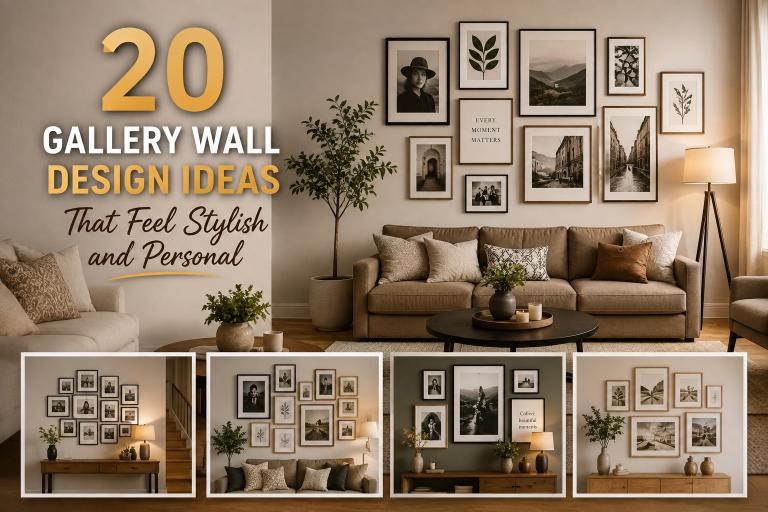
20 Gallery Wall Design Ideas That Feel Stylish and Personal
A blank wall can make an otherwise finished room feel strangely incomplete, yet filling it with random frames often creates more visual noise than personality. The right Gallery Wall Design can solve both problems by turning an empty wall into a thoughtful focal point without making the room feel crowded. The key is choosing the right mix of artwork, frame styles, spacing, and scale for your room.
Whether you have a narrow hallway, a cozy living room, a bedroom, or a large staircase wall, there are plenty of ways to create a gallery that feels intentional. These 20 ideas show different layouts, color palettes, materials, and styling tricks so you can find a look that feels personal rather than copied.
1. Classic Grid Gallery Wall With Matching Frames

A classic grid is one of the easiest ways to make a Gallery Wall Design look polished because repeated frames create visual order. Use six to nine prints in identical black, oak, or warm white frames and keep the spacing consistent at about 2 to 3 inches.
For a balanced result, choose artwork with a shared color family rather than completely matching pictures. Black and white photography, botanical prints, or simple architectural sketches work particularly well. This layout is especially useful above a sofa, console table, or dining bench where you want structure without visual clutter.
Quick Win: Place your frames on the floor first and measure the gaps before putting anything on the wall. Take a photo from standing height so you can check whether the arrangement feels balanced before making holes.
2. Eclectic Gallery Wall With Different Frame Styles

An eclectic arrangement feels personal because the frames do not have to match perfectly. Combine slim black frames with aged brass, natural oak, antique gold, or painted wood frames while keeping one visual element consistent.
The easiest way to control the mix is to repeat one color throughout the artwork. For example, cream backgrounds with touches of rust, charcoal, olive, and muted blue can connect completely different prints. The result feels collected over time rather than purchased as one matching set.
3. Gallery Wall Above a Sofa

The sofa wall is one of the most natural places for a Gallery Wall Design because the artwork can visually connect the seating area to the wall above it. Keep the overall arrangement about two thirds the width of the sofa for a comfortable proportion.
Instead of placing every frame at the same height, create a strong central anchor and build outward. A large artwork in the middle can make smaller surrounding pieces feel intentional. Leave enough space between the sofa and artwork so the wall does not feel crowded.
4. Small Gallery Wall for a Narrow Hallway

A hallway does not need a huge collection to feel decorated. A compact vertical Gallery Wall Design can make a narrow passage feel intentional while using very little floor space.
Choose four to six smaller frames and arrange them vertically along the main sightline. Black and white photographs are particularly effective because they add personality without introducing too many colors. Keep the surrounding walls relatively simple so the artwork remains the focal point.
IMAGE PROMPT:
Create a photorealistic vertical 2:3 Pinterest interior photograph of a narrow hallway with a compact vertical gallery wall. Display six small black frames containing black and white travel photographs arranged in a neat vertical composition. Warm white walls, light oak flooring, slim console table, small ceramic lamp, minimal styling, natural daylight entering from the far end. Clean narrow space, realistic proportions, sharp focus, soft shadows, balanced exposure, editorial home photography, no text.
5. Black and White Photography Gallery

Black and white photography gives a Gallery Wall Design a calm and cohesive appearance even when the images come from completely different subjects. Family portraits, city streets, landscapes, architecture, and travel photographs can all work together.
Use simple black or dark walnut frames for a stronger editorial effect. If the room already has colorful furniture, this approach helps create a visual pause. The monochromatic artwork also works particularly well in modern, Scandinavian, industrial, and minimalist interiors.
6. Warm Wood Frame Gallery Wall

Natural wood frames bring warmth to a gallery without relying on bold colors. Unfinished white oak, medium oak, or walnut frames work especially well against warm white, cream, or soft beige walls.
For a cohesive result, combine different frame sizes but keep the wood tone similar. Add artwork with botanical greens, warm taupes, muted terracotta, or sandy neutrals. This approach is ideal for organic modern interiors where natural materials are already part of the room.
7. Colorful Gallery Wall With Art That Pops

A colorful Gallery Wall Design can become the main personality feature of a neutral room. Instead of choosing completely unrelated bright colors, select three or four shades that repeat throughout the artwork.
Try muted cobalt, terracotta, olive green, mustard, or dusty pink depending on your existing furniture. Keep the frames simple so the artwork remains the star. This approach works particularly well when the rest of the room uses quiet colors.
8. Gallery Wall With Personal Family Photos

Family photographs can make a gallery feel meaningful rather than purely decorative. The trick is to edit the collection before framing it so the images share a similar visual mood.
Choose photographs from different moments but use consistent frames and similar editing. Soft black and white images or photographs with warm neutral tones are easier to combine. A personal gallery works especially well in family rooms, stairways, and bedrooms.
A Gallery Wall Design based on personal photographs can also make a home feel more connected because the artwork tells a story that cannot be copied from a showroom.
9. Floor to Ceiling Gallery Wall

A floor to ceiling arrangement is perfect when you want artwork to become an architectural feature. Instead of concentrating everything around eye level, extend smaller frames upward and downward to create a tall visual field.
This works best on a large uninterrupted wall where furniture does not block most of the artwork. Keep a limited frame palette so the large quantity of pieces does not become chaotic. A tall gallery can also make a room feel visually taller because the eye travels upward.
10. Gallery Wall Around a Television

A television can dominate a living room, but framing artwork around it can help integrate the screen into the surrounding decor. Use a symmetrical arrangement or a balanced salon style layout rather than randomly placing frames.
Choose artwork that repeats colors already found in the room. Keep frames thin and avoid placing fragile pieces where they may be bumped. This approach is particularly useful when you want the television wall to feel more decorative without building an expensive media unit.
11. Minimalist Gallery Wall With Lots of Breathing Room

Minimalist gallery walls rely on restraint rather than quantity. Use three to five large artworks with generous spacing so each piece has room to stand on its own.
A good minimalist Gallery Wall Design often uses neutral artwork, thin frames, and a simple color palette. The empty space between frames becomes part of the composition. This is a useful choice for modern rooms where too many decorative objects would compete with the architecture.
IMAGE PROMPT:
Create a photorealistic vertical 2:3 Pinterest image of a minimalist bedroom with a restrained gallery wall. Display four large neutral abstract artworks in thin warm white and light oak frames with generous spacing. Soft beige plaster wall, low upholstered bed, ivory bedding, oak nightstands, simple ceramic lamp, morning daylight. Airy composition, plenty of negative space, sharp focus, realistic textures, subtle shadows, sophisticated editorial photography, no text.
12. Vintage Gallery Wall With Antique Frames

Vintage frames can give a modern home a collected character without requiring expensive furniture. Look for aged gold, dark walnut, distressed black, or carved wooden frames at thrift stores and vintage markets.
Mix portraits, botanical illustrations, maps, and old architectural drawings. The important detail is scale. One or two larger pieces should anchor the arrangement while smaller pieces fill the surrounding spaces. This prevents the wall from looking like a random collection.
Quick Win: Check thrift shops for empty vintage frames. You can create inexpensive artwork by adding downloadable botanical prints, old book pages, or your own black and white photographs.
13. Gallery Wall With Mirrors Mixed Into the Artwork

Small mirrors can make a gallery arrangement more interesting while reflecting natural light around the room. Combine two or three decorative mirrors with artwork rather than filling the entire wall with frames.
Round brass mirrors can soften a collection of rectangular frames, while arched mirrors can complement traditional interiors. This technique is especially useful in darker hallways or rooms with limited natural light because reflective surfaces add visual brightness.
14. Gallery Wall With a Soft Neutral Palette

Neutral artwork does not have to feel boring. A palette of warm white, greige, taupe, sand, muted brown, and soft charcoal can create a sophisticated wall while keeping the room peaceful.
The best neutral gallery walls use texture and contrast instead of strong color. Combine linen artwork, charcoal sketches, abstract forms, woven pieces, and subtle photography. This is a strong option for bedrooms, calm living rooms, and organic modern interiors.
15. Gallery Wall in a Staircase

Staircases naturally create a vertical wall area that can handle a more energetic arrangement. Follow the angle of the stairs instead of forcing every frame onto one horizontal line.
Start with larger artwork near the center and gradually adjust the height of smaller pieces as the staircase rises. Use paper templates before hanging anything because the changing wall height makes mistakes harder to correct.
16. Small Gallery Wall in a Cozy Bedroom

A bedroom gallery wall should feel quieter than one in a busy living space. Choose three to seven pieces with soft artwork, natural frames, and colors that repeat in the bedding.
Place the arrangement above a dresser or on a side wall rather than directly above the headboard if you want a safer and more relaxed visual focal point. Warm oak, linen, muted green, cream, and dusty blue create a calming combination.
Quick Win: Use postcards, small art prints, or personal photographs in matching 5 by 7 inch frames. A small collection can feel finished without requiring a large wall or major budget.
17. Budget Friendly Gallery Wall Using Printable Art

You do not need original artwork to create a stylish wall. Printable art can provide a budget friendly solution when you want to experiment with a new color palette or layout.
Choose high resolution artwork from legitimate sources and print it on quality matte paper. Instead of buying twenty expensive frames, use a small number of matching frames and rotate the prints seasonally. This makes your Gallery Wall Design easier to refresh.
18. Gallery Wall in a Sunroom

A sunroom gives you an opportunity to combine artwork with natural materials and outdoor views. Choose pieces that echo the room’s surroundings, such as botanical prints, soft landscapes, pressed plant artwork, or nature photography.
Keep frames relatively light in color so they do not compete with large windows. Natural oak, white, and pale brass work particularly well with rattan furniture and linen textiles.
If you enjoy bright, relaxed spaces, you can also explore these green sunroom ideas for more ways to bring nature inspired color into the room.
19. Gallery Wall in a Laundry Room

Artwork can make a hardworking utility room feel more considered. A small Gallery Wall Design above a folding counter, beside open shelving, or on an unused wall can add personality without taking away valuable workspace.
Choose practical artwork such as botanical prints, simple illustrations, vintage laundry inspired artwork, or muted typography free designs. Keep frames easy to clean and avoid placing delicate pieces directly beside water sources.
For more ways to make this hardworking space attractive, see these laundry room ideas for additional storage and styling inspiration.
20. A Collected Gallery Wall That Tells Your Story

The most memorable gallery walls usually mix personal objects with artwork rather than following a perfect formula. Combine photographs, travel prints, small paintings, botanical drawings, children’s artwork, and one or two meaningful objects.
The secret is creating a visual connection through color and scale. If your collection includes very different pieces, repeat one frame color or one background shade to make everything feel connected.
A collected wall can also work beautifully in a more formal room. If you want to create a sophisticated entertaining space around it, these formal living room ideas can help you balance decorative artwork with elegant furniture and lighting.
How Much Does a Gallery Wall Cost?
A Gallery Wall Design can cost very little if you use printable artwork and existing frames, while custom framing and original artwork can raise the budget considerably. A simple arrangement of five to seven affordable frames may cost roughly $50 to $150, while larger collections using premium frames and professionally printed artwork can cost several hundred dollars.
For the best value, spend more on the frames you will keep for years and use affordable prints that can be replaced as your style changes.
How Do You Arrange a Gallery Wall?
The easiest approach is to plan the arrangement before hanging anything. For a balanced gallery wall:
- Measure the wall and the furniture beneath it.
- Choose a central artwork or visual anchor.
- Arrange the remaining pieces around it.
- Keep spacing consistent where the layout is formal.
- Photograph the arrangement before drilling holes.
- Adjust the scale if the wall feels too crowded or too empty.
The most important rule is proportion. A gallery should relate visually to the furniture and wall rather than floating randomly in the room.
What Should You Buy First for a Gallery Wall?
Start with artwork you genuinely like rather than buying frames first. Once you know the number, size, and color of the pieces, choose frames that support the collection.
If you already own photographs or prints, lay everything on the floor and experiment with combinations. This simple step often reveals which pieces belong together before you spend money.
If your home uses bright colors, you may also find inspiration in these colorful living room ideas, especially when choosing artwork colors that connect with existing furniture.
Can You Create a Gallery Wall in a Small Space?
Yes. Small spaces often benefit from a compact gallery because artwork adds personality without taking up floor space. Use four to six smaller frames on a narrow wall, above a compact console, or beside a doorway.
In a small room, avoid using too many large frames because they can make the wall feel visually heavy. Lighter frames, smaller artwork, and consistent spacing can create a more open appearance.
For rooms that receive lots of natural light, a simple artwork collection can also complement the relaxed styling found in these sunroom decorating ideas.
What Is the Best Spacing for Gallery Wall Frames?
For most gallery walls, spacing of about 2 to 3 inches between frames creates a cohesive appearance. Smaller pieces can sometimes be placed slightly closer together, while large statement pieces may need more breathing room.
The exact spacing depends on the scale of the artwork and the wall. The goal is to make the collection read as one visual group rather than as separate pieces scattered across the wall.
Final Thoughts
A gallery wall does not need to follow a perfect formula to feel finished. The strongest Gallery Wall Design usually combines a clear visual structure with artwork that actually means something to you.
Start with the wall, furniture, and colors you already have, then choose a layout that supports them. You can keep things symmetrical, mix vintage frames, add mirrors, use family photographs, or build a collected arrangement over time.
Do not feel pressured to fill every empty space at once. Begin with a few pieces you love and let the collection grow naturally.
The best result should feel like your home, not a showroom.
Frequently Asked Questions
1. What is a gallery wall?
A gallery wall is a curated arrangement of artwork, photographs, mirrors, or decorative objects displayed together on one wall. The pieces can match for a structured look or vary in size and style for a more collected appearance.
2. How many pictures should be on a gallery wall?
There is no fixed number, but five to twelve pieces work well for many medium sized walls. Large walls can handle more artwork, while narrow hallways and small bedrooms usually look better with smaller collections.
3. Should gallery wall frames match?
Matching frames create a clean and organized appearance, while mixed frames create a more collected and personal look. If you mix frame styles, repeat one color or material to keep the arrangement visually connected.
4. What should I put in a gallery wall?
You can use family photographs, paintings, botanical prints, illustrations, travel photographs, mirrors, textiles, or meaningful objects. A combination of different artwork types often creates more personality than using identical prints.
5. How do I make a gallery wall look expensive?
Use consistent spacing, quality looking frames, a controlled color palette, and artwork with enough negative space. Natural oak, walnut, antique brass, and matte black frames can create a refined appearance without requiring every artwork to be expensive.