
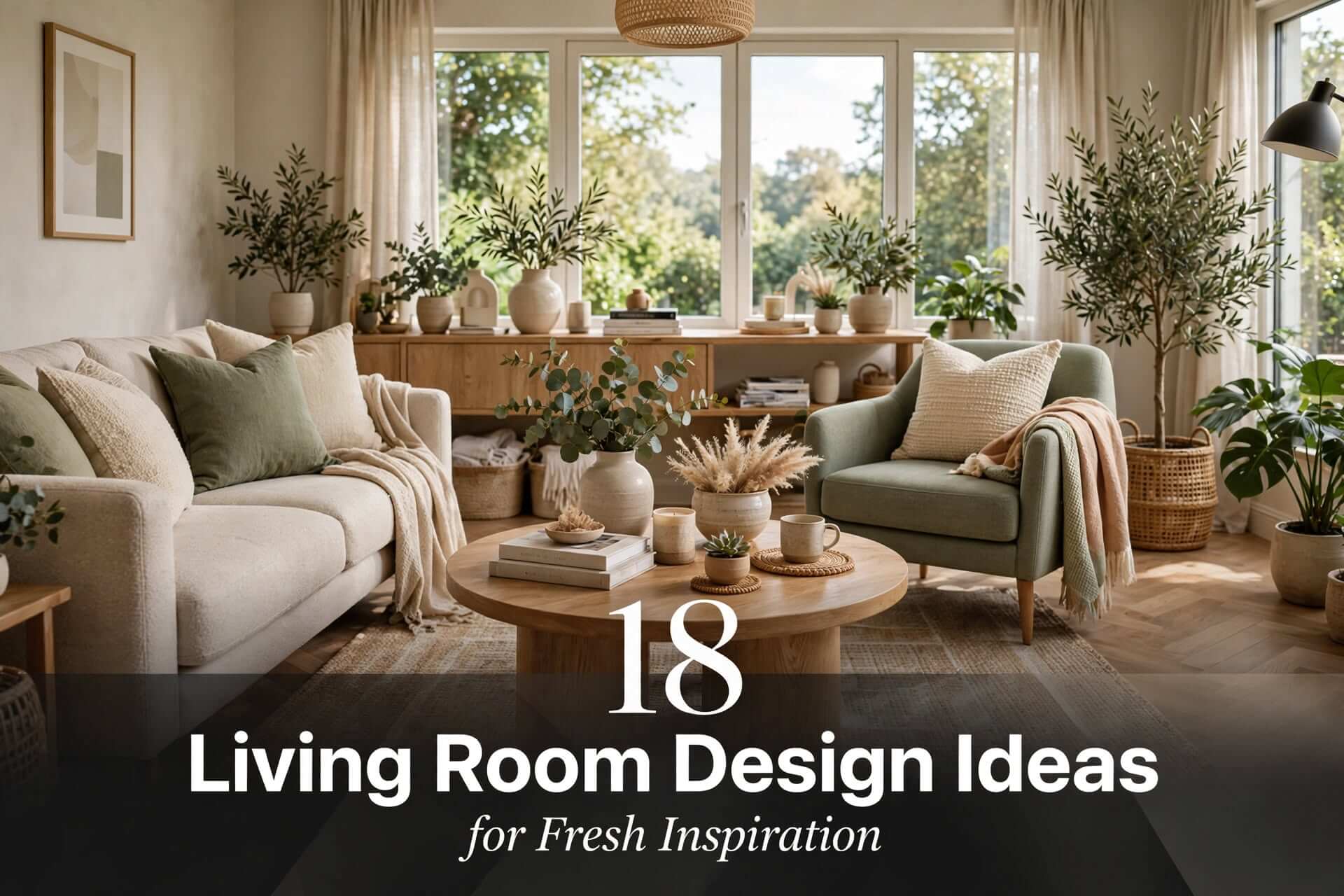
18 Living Room Design Ideas for Fresh Inspiration
A living room can have all the right furniture and still feel flat, crowded, or unfinished. The difference often comes down to layout, proportion, lighting, color, and those few details that make a space feel intentionally designed. Whether you’re decorating a compact apartment, refreshing a dated room, or starting from scratch, the right inspiration can help you see your space differently. These living room design ideas bring together practical layouts, inviting color palettes, natural textures, statement pieces, and easy styling tricks. From relaxed and cozy to refined and contemporary, each idea offers something you can realistically borrow without copying an entire room.
1. Layer Warm Neutrals for an Inviting Room

Warm neutrals create a living room that feels calm without becoming bland. Pair creamy white walls with a beige or oatmeal sofa, medium-oak furniture, woven accents, and touches of aged brass. The trick is to use several shades rather than one flat neutral tone. A textured rug, linen curtains, and boucle or cotton cushions add depth while keeping the palette relaxed. This approach works especially well when you want a timeless foundation that can easily accommodate seasonal accessories.
Quick Win: Add two different textures—such as a woven cushion and a chunky throw—to an existing neutral sofa before buying new furniture.
2. Create a Cozy Conversation Layout

A beautiful living room isn’t only about what you buy; it’s also about where everything goes. Instead of pushing every piece against the walls, arrange the sofa and chairs toward one another to create a natural conversation zone. Anchor the furniture with an appropriately sized rug and keep enough space for comfortable movement around the seating. This layout makes both large and medium-sized rooms feel more intentional and welcoming, especially when entertaining guests.
3. Make the Sofa the Visual Anchor

When a room lacks direction, start with the sofa. A generously sized sofa in a distinctive but versatile color can immediately establish the palette and mood. Try a deep olive, muted blue, caramel, or warm taupe upholstery, then repeat small touches of that color in cushions, artwork, or a rug. Keep the surrounding furniture quieter so the sofa remains the focal point. This is particularly useful when you want a strong transformation without redesigning every surface.
4. Bring in Natural Wood for Warmth

Natural wood can make a living room feel grounded, particularly when the rest of the space uses pale colors. Introduce oak, walnut, or reclaimed wood through a coffee table, media console, shelving, or occasional chair. Keep the finish visible rather than heavily painted so the grain becomes part of the design. For a balanced look, combine wood with soft upholstery, woven textiles, and matte ceramics. The result feels warm and collected rather than overly coordinated.
Quick Win: Replace one glossy or heavily finished accent with a simple natural-wood tray, stool, or side table.
5. Use a Statement Rug to Define the Room

A rug can completely change how a living room reads because it visually connects the furniture. Choose a size large enough for at least the front legs of the main seating to sit on it. A subtle geometric pattern can energize neutral furniture, while a faded vintage-inspired design adds character without overpowering the room. If your furniture feels disconnected, a properly scaled rug may solve the problem more effectively than adding extra accessories.
6. Give a Small Living Room More Breathing Room

Small living rooms benefit from visual simplicity rather than miniature versions of everything found in a large room. Choose furniture with raised legs, use a lighter rug, and keep the center of the room visually open. A wall-mounted television or narrow console can free valuable floor space. Mirrors positioned opposite or near a window can also distribute light and create a stronger sense of depth. The goal isn’t to make the room empty; it’s to make every piece earn its place.
7. Add a Deep Accent Color

A controlled dose of a deeper color can give a neutral living room much more personality. Consider charcoal, forest green, navy, chocolate brown, or burgundy through an accent chair, curtains, artwork, or cushions. Rather than scattering the color randomly, repeat it two or three times around the room so it feels intentional. This technique works beautifully when you want a room that feels sophisticated and layered without committing to dark walls or expensive renovations.
Quick Win: Choose one deeper accent color already present in your artwork or rug and repeat it through two smaller accessories.
8. Style an Oversized Coffee Table

A large coffee table can become a functional centerpiece instead of an empty slab in the middle of the room. Keep the styling low and restrained: a wooden tray, a ceramic bowl, one stack of books, and a small organic object are often enough. Leave generous empty space around the arrangement so the table remains practical. Rounded tables can also soften rooms dominated by straight-lined sofas, cabinets, and shelving.
9. Mix Modern Furniture With Vintage Pieces

A room can feel much more personal when contemporary furniture is paired with something that looks collected over time. Combine a clean-lined sofa with a vintage wooden cabinet, antique-inspired mirror, traditional rug, or secondhand side table. The contrast prevents the space from looking like a matching furniture set. Keep the color palette connected so the different eras feel intentional rather than random. This approach is excellent for homeowners who want character without sacrificing a modern foundation.
10. Use Floor-to-Ceiling Curtains

Long curtains can make a living room feel taller and more finished, particularly when mounted close to the ceiling rather than directly above the window frame. Choose linen or linen-look panels in ivory, sand, or a soft neutral for an airy effect. Let the fabric reach the floor with a relaxed break. This simple adjustment draws the eye upward and can make ordinary windows feel more architectural without changing the actual structure of the room.
Quick Win: Raise an existing curtain rod several inches and use longer panels if the current curtains stop well above the floor.
11. Build a Soft, Earthy Color Palette

Earthy colors create an inviting living room without relying on bright shades. Layer clay, sand, olive, muted brown, cream, and natural wood across furniture and accessories. The key is to keep the colors slightly softened so they work together rather than compete. Terracotta cushions, an olive chair, and a walnut table can provide enough contrast while maintaining a relaxed atmosphere. This palette is especially appealing in rooms with plenty of natural light.
12. Create a Calm Reading Corner

An unused corner can become one of the most charming parts of the living room with just a comfortable chair, small table, floor lamp, and soft textile. Position the chair near a window when possible to take advantage of natural light. Choose a different texture or color from the main sofa so the corner feels like a distinct destination. This is a practical solution for larger rooms that feel unfinished or spaces that need a quiet secondary function.
13. Make Built-In Shelving a Focal Point

Built-in shelving can provide both storage and personality when styled with restraint. Mix books, ceramics, framed artwork, small plants, and a few meaningful objects while leaving some shelves partially empty. Repeating one or two materials—such as oak and ceramic—helps the arrangement feel cohesive. If you don’t have built-ins, freestanding shelving can create a similar effect. This idea works particularly well in rooms where blank walls feel underused.
Quick Win: Remove a third of the objects from crowded shelves, then rearrange what remains with intentional empty space between groups.
14. Choose a Curved Sofa for a Softer Look

Curved furniture can soften the visual lines of a modern living room while creating a more sociable arrangement. A gently rounded sofa works especially well with a round or oval coffee table, curved floor lamp, and organic-shaped artwork. Keep the surrounding furniture relatively simple so the silhouette remains noticeable. This style can make a contemporary room feel less rigid and is particularly effective when paired with warm neutrals and tactile fabrics.
15. Use Lighting in Layers

One ceiling fixture rarely creates the most comfortable living room atmosphere. Combine overhead lighting with a floor lamp, table lamp, wall light, or concealed accent lighting to create several levels of illumination. Warm-toned bulbs help soften the room in the evening, while directional lamps can highlight artwork or reading areas. Layered lighting also allows you to change the mood without changing the furniture, making it one of the most useful upgrades for almost any living room.
Quick Win: Add one floor or table lamp to a dark corner and use it in the evening instead of relying entirely on the main ceiling light.
16. Let Large Artwork Set the Mood

One large artwork can often make a stronger statement than a collection of small pieces scattered across the wall. Choose a canvas or framed print with colors that connect to your sofa, rug, or accent furniture. Hang it at a comfortable viewing height and give it enough surrounding space to breathe. Abstract landscapes, oversized botanical pieces, and restrained modern compositions work particularly well when the rest of the room is relatively quiet.
17. Combine Cream With Rich Chocolate Brown

Cream and chocolate brown create a sophisticated contrast that feels especially welcoming in living rooms. Start with a light cream sofa or walls, then introduce chocolate through leather seating, walnut furniture, cushions, or a darker rug. Add brass or aged bronze sparingly for warmth. The result has enough contrast to feel visually interesting while remaining easy to live with. It also works beautifully for anyone looking for warm living room ideas that feel more refined.
18. Keep the Room Minimal but Layered

Minimal doesn’t have to mean empty. Start with a few well-proportioned furniture pieces and build depth through texture rather than quantity. Think a simple sofa, sculptural coffee table, textured rug, one oversized artwork, linen curtains, and a carefully selected ceramic or wooden accent. Keep surfaces mostly clear and allow negative space around the furniture. This approach works particularly well for modern homes, small rooms, and anyone who prefers a calm environment without visual clutter.
Quick Win: Clear one major surface completely, then return only three objects that are genuinely useful or visually meaningful.
Conclusion
The best living room design ideas are not necessarily the most expensive or elaborate—they’re the ones that make your space feel more intentional and more like you. Start with one change that solves a real problem, whether that’s better lighting, a stronger layout, warmer color, or more texture. You don’t need to recreate an entire room. Choose the elements that suit your space, lifestyle, personality, and budget, then build from there.
Frequently Asked Questions
1. How do I make my living room look more stylish?
Start with furniture placement, a properly sized rug, layered lighting, and a cohesive color palette. A few intentional textures and accessories can then add personality without creating clutter.
2. What colors make a living room feel cozy?
Warm neutrals, earthy browns, muted terracotta, olive green, caramel, and soft cream can create a cozy atmosphere. Combining several related tones usually feels richer than using one color throughout.
3. How can I make a small living room look bigger?
Use appropriately scaled furniture, keep pathways open, choose lighter colors, and avoid overcrowding the floor. Mirrors, raised-leg furniture, and visually light tables can also help create a sense of openness.
4. Should a living room rug go under the sofa?
Ideally, the rug should extend under at least the front legs of the sofa and other main seating. A rug that is too small can make the furniture arrangement feel disconnected.
5. How many colors should a living room have?
A simple palette of three to five related colors is usually easy to manage. Use one dominant color, one or two supporting shades, and smaller accent colors through artwork and accessories.
6. How can I make a living room look expensive on a budget?
Focus on proportion, curtains, lighting, and texture rather than buying expensive decorations. Natural wood, quality-looking textiles, oversized artwork, and a well-scaled rug can make a significant difference.
7. What type of lighting works best in a living room?
Layered lighting works best because it provides different levels of brightness for different activities. Combine ambient lighting with floor lamps, table lamps, wall lights, or accent lighting.
8. How do I mix modern and vintage living room furniture?
Choose one dominant style and use the other as an accent. Keeping the colors, wood tones, or materials connected helps different furniture styles look intentionally collected.
9. How can renters decorate a living room without permanent changes?
Use removable artwork solutions, freestanding shelving, rugs, lamps, curtains, cushions, and movable furniture. These additions can transform the room without requiring structural changes.
10. What makes a living room feel unfinished?
Common causes include an undersized rug, insufficient lighting, furniture pushed too far apart, empty walls, or a lack of texture. You don’t necessarily need more decor; correcting scale and arrangement can be enough.
11. Are neutral living rooms still a good design choice?
Yes. Neutral spaces remain versatile because texture, wood tones, artwork, and accent colors can change their character easily. Warm neutrals can also create a more inviting feel than stark white alone.
12. How do I choose the right coffee table?
Consider the size and shape of your seating arrangement first. The table should be easy to reach from the sofa and leave enough walking space around it.
13. How can I add personality without making my living room cluttered?
Choose fewer, more meaningful pieces and give them room to breathe. Artwork, books, handmade ceramics, vintage furniture, and textiles can communicate personality without filling every surface.
14. What living room design works best for entertaining?
A conversation-friendly layout with seating facing toward one another works particularly well. Add a practical coffee table, sufficient side tables, flexible lighting, and clear walking paths.
15. How can I make a modern living room feel warmer?
Introduce natural wood, woven textiles, soft upholstery, warm lighting, earthy colors, and handmade accessories. These details soften hard contemporary lines without losing the modern character.


