
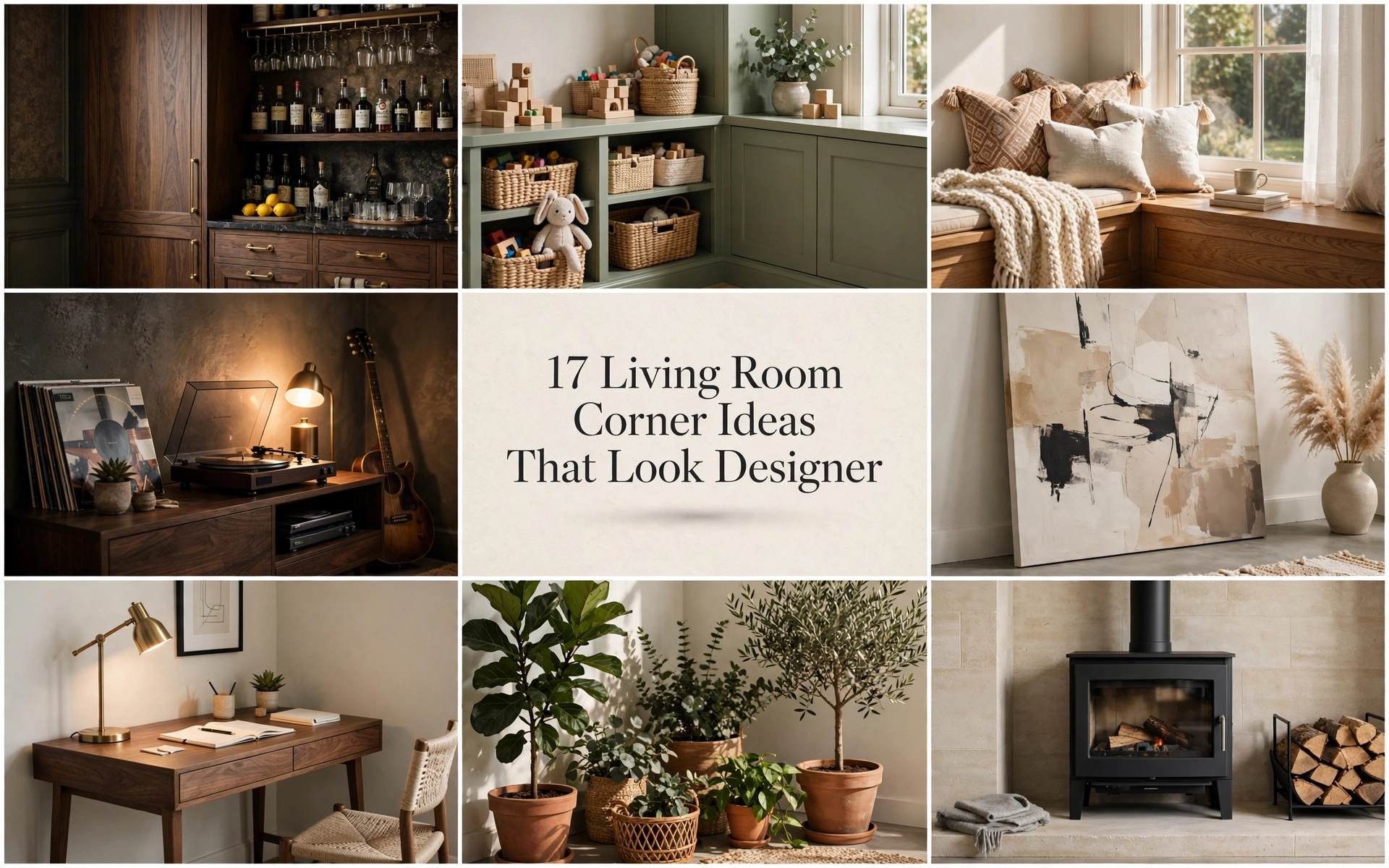
17 Living Room Corner Ideas That Look Designer
That empty corner makes your whole living room feel unfinished—but every piece you try there either looks lonely or gets in the way.
The fix isn’t necessarily more décor. It’s choosing one clear purpose, getting the scale right, and leaving enough breathing room around it. Start with the quick corner check below, or skip straight to the living room corner ideas that suit your space.
Diagnose the Corner Before You Decorate It

Before buying anything, measure the usable floor area and ask what the room is currently missing.
- Under 24 inches wide: Try a lamp, slender plant, pedestal, or wall art.
- 24–36 inches wide: Consider a small chair, ladder shelf, or compact cabinet.
- 36–48 inches wide: You likely have room for a proper reading nook or desk.
- Near a window: Use plants or low furniture that won’t block daylight.
- In a dark corner: Prioritize lighting before accessories.
- Beside a walkway: Keep roughly 30–36 inches of clear circulation space where possible.
Stand in the main doorway and take a photo of the room. A photograph makes poor scale, clutter, and visual imbalance much easier to spot.
Designer Tip: A corner usually needs one dominant anchor—not five small objects competing for attention.
1. Create a Proper Reading Nook

A reading nook gives an underused corner a reason to exist. It works best in a corner at least 36 inches wide, particularly near a window or slightly removed from the television.
Angle a comfortable chair toward the center of the room rather than pushing it tightly into the wall. Add a small table, a reading lamp, and one soft textile.
- Why it works: The chair adds visual weight while creating useful seating.
- Best for: Medium or large corners and homes that need an extra seat.
- Recreate it: Chair + lamp + table + throw.
- Common Mistake: Choosing a huge chair and squeezing every accessory behind it.
- Budget Hack: Pair a secondhand chair with a rechargeable table lamp.
- Luxury Upgrade: Add a swivel chair, wool ottoman, and dimmable brass lamp.
2. Ground the Corner With One Oversized Plant

A tall plant softens the hard meeting point of two walls while drawing the eye upward. It fills significant visual space without the heaviness of another piece of furniture.
Choose the plant according to the light—not the Pinterest photo. Bird of paradise and ficus generally prefer brighter conditions, while a cast-iron plant or quality faux tree is more forgiving in darker areas.
- Why it works: Its organic shape breaks up straight architectural lines.
- Best for: Narrow corners and rooms with too much hard furniture.
- Recreate it: Use a plant approximately two-thirds the height of the wall.
- Common Mistake: Putting a small plant in a tiny pot on the floor.
- Budget Hack: Raise a medium plant inside a basket on a hidden stool.
- Luxury Upgrade: Use a mature indoor tree in a handmade stone planter.
Designer Tip: Allow leaves to spread. A plant crushed tightly between two walls will look stored, not styled.
3. Let a Sculptural Floor Lamp Do the Work

If a corner feels visually empty and physically cramped, a statement floor lamp is one of the cleanest solutions. It adds height, mood, and function while using very little floor area.
Pick a silhouette that relates to the room: a pleated shade for softness, a slim metal lamp for minimalism, or an arc lamp when light needs to reach over the sofa.
- Why it works: It decorates the vertical space and fixes poor lighting.
- Best for: Dark or narrow corners beside a sofa.
- Recreate it: Use a warm 2700K dimmable bulb for an inviting glow.
- Common Mistake: Choosing a short lamp that disappears behind furniture.
- Budget Hack: Upgrade a basic lamp with a linen or patterned shade.
- Luxury Upgrade: Choose a hand-finished plaster, marble, or aged-brass base.
4. Lean a Full-Length Mirror

A large mirror gives a dark or compact corner depth without filling it with visual clutter. Position it where it can reflect a window, artwork, greenery, or an attractive part of the room.
A mirror should feel substantial. In most rooms, one generous floor mirror looks more convincing than a collection of undersized mirrors.
- Why it works: It redirects light and creates the illusion of another opening.
- Best for: Small, shaded, or visually heavy living rooms.
- Recreate it: Lean the mirror slightly, then secure it with anti-tip hardware.
- Common Mistake: Reflecting a television, clutter, or an unattractive doorway.
- Budget Hack: Paint a thrifted wood frame in matte black or warm cream.
- Luxury Upgrade: Commission an antiqued or arched mirror for the space.
Safety note: Secure all large leaning mirrors—especially in homes with children or pets.
5. Install Floating Corner Shelves

Floating shelves use vertical space while keeping the floor clear. They’re especially useful when a corner is too narrow for furniture but needs personality or light storage.
Choose either true triangular corner shelves or run shallow shelves along one wall. Keep the styling restrained: books, one framed piece, a plant, and a sculptural object are enough.
- Why it works: It turns unused wall area into a layered display.
- Best for: Small rooms, apartments, and collectors.
- Recreate it: Repeat one material or color across the shelves.
- Common Mistake: Filling every inch with similarly sized accessories.
- Budget Hack: Use painted timber boards and visible brass brackets.
- Luxury Upgrade: Install custom oak shelves with integrated lighting.
Designer Tip: Style objects in loose groups and leave approximately one-third of the shelf visibly empty.
6. Add an Accent Chair—Without Overfilling It

An accent chair is useful when the room needs seating but cannot accommodate another large upholstered piece. Choose one with an open base or visible legs if the room is small.
The chair doesn’t need to match the sofa. It should echo at least one feature elsewhere—perhaps the wood tone, fabric color, or curved silhouette.
- Why it works: It balances the sofa and improves conversation.
- Best for: Open corners facing the main seating group.
- Recreate it: Pull it a few inches off the walls and angle it inward.
- Common Mistake: Adding a pillow, throw, basket, lamp, and table when only the chair fits.
- Budget Hack: Reupholster a vintage chair in a durable solid fabric.
- Luxury Upgrade: Choose a compact designer swivel chair.
7. Turn It Into a Mini Library

A corner bookcase creates height, storage, and instant character. It can be a true triangular unit, a freestanding tower, or two slim bookcases meeting neatly at the corner.
Arrange books vertically and horizontally, then add only a few personal objects. Books should remain the main event.
- Why it works: It makes storage feel architectural.
- Best for: Book lovers and living rooms short on storage.
- Recreate it: Anchor tall units to the wall and light them from nearby.
- Common Mistake: Using a flimsy shelf that looks undersized and top-heavy.
- Budget Hack: Paint an inexpensive bookcase the same color as the wall.
- Luxury Upgrade: Add floor-to-ceiling built-ins and a library light.
8. Style a Bar or Drinks Corner

A bar cabinet or cart turns a forgotten corner into an entertaining zone. It works particularly well near the dining area but away from busy walkways.
Use a tray to contain bottles, place glassware together, and add one decorative element—perhaps a small lamp, framed print, or bowl of citrus.
- Why it works: It gives the corner a distinct, sociable purpose.
- Best for: People who entertain regularly.
- Recreate it: Combine closed storage below with a tidy display above.
- Common Mistake: Displaying every bottle and glass you own.
- Budget Hack: Convert a vintage side table using a tray and bottle rack.
- Luxury Upgrade: Install a fitted cabinet with stone top and wine refrigerator.
9. Hide Clutter in a Closed Cabinet

When the living room lacks storage, the corner should work harder. A narrow cabinet can hold toys, games, cables, craft supplies, or serving pieces while giving the eye a calm place to rest.
Painted wood blends into the room; fluted glass feels lighter; natural wood adds warmth. Measure door clearance before buying.
- Why it works: It adds function without displaying everyday clutter.
- Best for: Family living rooms and compact homes.
- Recreate it: Choose a tall cabinet with adjustable internal shelves.
- Common Mistake: Buying a deep unit that pinches the walkway.
- Budget Hack: Paint a basic cabinet to match the wall and replace its handles.
- Luxury Upgrade: Commission a built-in unit with concealed charging outlets.
10. Build a Window Seat

A window corner is valuable because it already has light and a view. A fitted bench turns it into seating while storage drawers make the footprint work twice as hard.
Keep the seat below the window sill. Use firm foam, washable upholstery, and only enough cushions to remain comfortable.
- Why it works: It creates a destination without blocking daylight.
- Best for: Bay windows, deep recesses, and family rooms.
- Recreate it: Add drawers below and a wall-mounted reading light.
- Common Mistake: Piling on so many cushions that nobody can sit down.
- Budget Hack: Place a low storage bench under the window.
- Luxury Upgrade: Add custom joinery, tailored upholstery, and hidden sockets.
11. Create a Music Corner

A record player, guitar, or compact piano can become part of the décor rather than equipment pushed awkwardly against the wall.
Start with the instrument, then add only what supports its use: record storage, a stool, headphones, or a focused light.
- Why it works: It expresses personality and encourages a real activity.
- Best for: Music lovers and creatively used family rooms.
- Recreate it: Conceal cables and keep nearby storage proportional.
- Common Mistake: Treating valuable instruments as unsupported decorative props.
- Budget Hack: Use sturdy cube storage as a record-player console.
- Luxury Upgrade: Commission a ventilated media cabinet with cable management.
12. Use One Large Piece of Art

If the floor must stay clear, let the walls define the corner. One oversized canvas can visually connect the two surrounding furniture zones and make the room feel more intentional.
Choose artwork large enough to hold its own. A tiny frame floating on a large wall usually emphasizes the emptiness.
- Why it works: It supplies scale, color, and a focal point without using floor space.
- Best for: Tight corners and minimalist rooms.
- Recreate it: Relate at least one artwork color to the textiles or furniture.
- Common Mistake: Hanging art too high or choosing several undersized pieces.
- Budget Hack: Frame a large textile, vintage map, or downloadable print.
- Luxury Upgrade: Commission an original work sized for the wall.
13. Add a Slim Writing Desk

A shallow desk can turn a larger corner into a useful work zone without making the living room feel like an office.
Choose furniture that resembles a console rather than corporate office equipment. A comfortable dining-style chair, attractive lamp, and concealed cable box keep the setup integrated.
- Why it works: It uses an awkward recess for a specific daily task.
- Best for: Apartments and occasional work-from-home needs.
- Recreate it: Look for a desk around 16–20 inches deep.
- Common Mistake: Letting monitors, cords, and paperwork dominate the room.
- Budget Hack: Mount a sturdy wall shelf at desk height.
- Luxury Upgrade: Add a fitted floating desk with drawers and integrated power.
14. Build a Layered Plant Gallery

If one tall plant feels too formal, group three plants at staggered heights. The key is variation: one floor plant, one plant on a stand, and one trailing or elevated plant.
Repeat planter colors so the group feels intentional. Choose species with compatible light and watering requirements.
- Why it works: The different heights create a full composition.
- Best for: Bright corners and enthusiastic plant owners.
- Recreate it: Form a loose triangle with the plants.
- Common Mistake: Lining up identical small pots at the same height.
- Budget Hack: Use stools, crates, or stacked books as concealed risers.
- Luxury Upgrade: Add handmade planters and a discreet grow light.
15. Treat a Sculptural Object Like Art

A pedestal with one ceramic vessel, bust, sculpture, or collected artifact can turn a narrow corner into a gallery moment.
This works because it resists the urge to fill every surface. Give the object negative space and, if possible, its own light.
- Why it works: One distinctive piece looks more deliberate than assorted fillers.
- Best for: Formal, minimalist, or art-focused living rooms.
- Recreate it: Choose a pedestal that visually contrasts with the object.
- Common Mistake: Surrounding the sculpture with unrelated accessories.
- Budget Hack: Paint a sturdy secondhand plant stand in a plaster finish.
- Luxury Upgrade: Add a commissioned sculpture and directional ceiling light.
16. Add a Compact Corner Fireplace

A compact electric stove or purpose-built corner fireplace can give a larger empty corner warmth and a strong focal point without requiring a traditional chimney.
Check clearance, outlet requirements, ventilation instructions, and local safety rules. Keep textiles and furniture outside the manufacturer’s required safety zone.
- Why it works: It adds light, movement, warmth, and architectural presence.
- Best for: Cold climates and rooms without an existing focal point.
- Recreate it: Pair it with one log basket or simple artwork—not a themed display.
- Common Mistake: Using an undersized heater surrounded by decorative clutter.
- Budget Hack: Try a freestanding electric stove in a simple black finish.
- Luxury Upgrade: Install a custom corner surround in stone or plaster.
17. Leave the Corner Intentionally Empty

Not every corner needs furniture. If the room already has several focal points, leaving one corner open can improve circulation and allow the eye to rest.
Intentional emptiness still needs structure. A beautiful wall color, well-positioned rug, architectural molding, or light falling across the space can make the corner feel complete.
- Why it works: Negative space prevents a decorated room from becoming visually exhausting.
- Best for: Small rooms and interiors with bold furniture or art.
- Recreate it: Remove everything, then assess the room from the doorway.
- Common Mistake: Confusing empty space with a pile of temporary storage.
- Budget Hack: Cost: nothing—edit before you shop.
- Luxury Upgrade: Improve the architecture with wall paneling or a specialist finish.
Designer Tip: If the corner improves the room’s movement and balance when empty, it isn’t wasted space. It’s doing its job.
Conclusion
Picture walking into your living room and no longer noticing the awkward gap beside the sofa. Instead, there’s a chair angled toward the conversation, a tree catching the afternoon light, or a lamp giving the room that soft evening glow it always lacked.
Measure the corner, decide what your room genuinely needs, and begin with one confident anchor. By tonight, that forgotten little patch of floor could be the part of the room you love most.
Frequently Asked Questions
What should I put in an empty living room corner?
Choose something that solves a real need: an accent chair for seating, a lamp for light, a cabinet for storage, or a plant for softness. If the room needs nothing, intentional negative space may be the best choice.
How do I decorate a very small living room corner?
Use height instead of floor area. A slender floor lamp, tall plant, large vertical artwork, or shallow wall-mounted shelf can fill the corner without blocking movement.
How do I make a living room corner cozy?
Combine warm, low-level lighting with one comfortable texture and a sense of enclosure. A chair, small lamp, and throw are often enough; adding too many objects can make the nook feel cramped rather than cozy.
What can I put in a dark living room corner?
Begin with a floor or table lamp using a warm bulb. Then introduce light-reflecting materials, pale finishes, a mirror positioned to catch existing light, or a plant suited to low-light conditions.
Should a corner chair touch the walls?
Usually, no. Pulling the chair a few inches away from the walls and angling it toward the main seating area makes the arrangement feel more relaxed and intentional.
How do I decorate an awkward angled corner?
Avoid forcing rectangular furniture into it. Use modular shelving, a plant, sculptural lighting, custom joinery, or wall-mounted art that works with the angle rather than trying to disguise it.
How do I style a corner without making it cluttered?
Select one dominant anchor and no more than two or three supporting elements. Vary their heights, repeat colors or materials, and preserve visible empty space around the composition.
Can I put a mirror in a living room corner?
Yes. A mirror can brighten the room and create depth, especially when it reflects a window or attractive feature. Secure a leaning mirror properly and check what it reflects before deciding on its position.
What is the cheapest way to decorate an empty corner?
Reposition something you already own, such as a chair, lamp, artwork, or plant. Removing clutter and improving the arrangement often has more impact than buying several inexpensive accessories.
How can renters decorate a living room corner safely?
Use freestanding lamps, plants, chairs, cabinets, and properly anchored furniture where permitted. Do not trust adhesive strips with heavy mirrors or loaded shelves; follow both the product’s weight limits and your lease requirements.


