
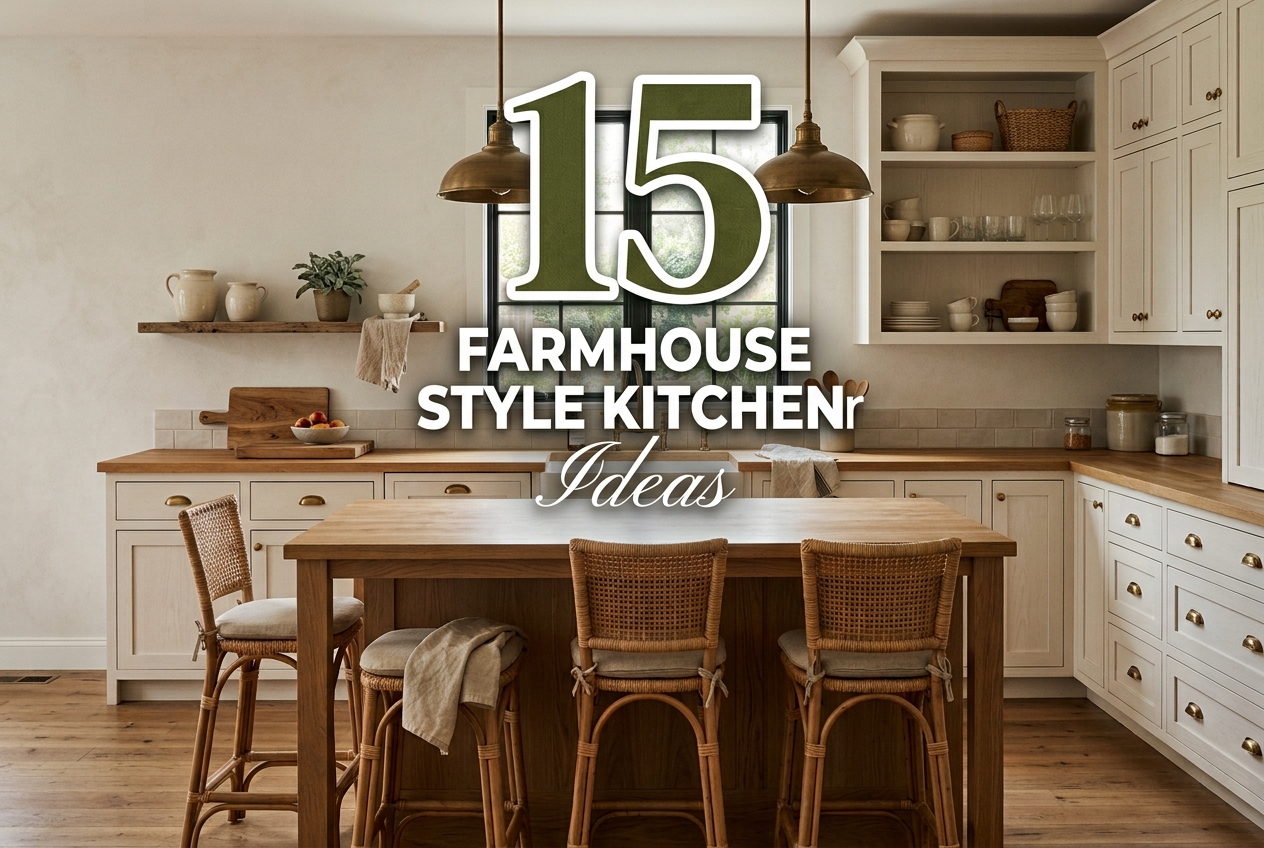
15 Farmhouse Style Kitchen Ideas for a Cozy Kitchen
A farmhouse kitchen can feel wonderfully welcoming, but there is a fine line between warm and collected and a room that looks overly rustic or themed. The goal is not to fill every surface with vintage signs and distressed finishes. Instead, the most successful farmhouse kitchens balance practical layouts with natural materials, timeless cabinetry, soft colors, and a few pieces that feel genuinely collected. Whether you’re updating a large kitchen or working with a smaller space, these farmhouse style kitchen ideas show how to bring in that relaxed character without sacrificing function or a polished look.
1. Pair Creamy Cabinets With Warm Wood

One of the easiest ways to create a farmhouse kitchen is to combine soft, creamy cabinetry with natural wood. Choose warm white or ivory shaker cabinets and introduce medium-toned oak through an island, open shelves, or a butcher-block countertop. The contrast keeps the kitchen from feeling flat while giving it the relaxed warmth associated with classic farmhouse interiors. This combination works particularly well in both older homes and newer kitchens that need a little architectural character.
Quick Win: If replacing cabinets isn’t practical, add a small wooden cutting board, stool, or floating shelf to introduce the same warm contrast.
2. Make the Farmhouse Sink the Focal Point

A deep apron-front farmhouse sink instantly establishes the character of a kitchen without requiring a complete renovation. Place it beneath a generously sized window so the sink becomes both practical and architectural. Pair the white fireclay basin with simple bridge-style or polished nickel hardware, depending on the rest of your finishes. The surrounding area should remain relatively quiet so the sink, window, and view become the natural focal point.
3. Add an Oversized Wood Kitchen Island

A substantial wood island gives a farmhouse kitchen the feeling of a welcoming gathering place. Look for a chunky oak or reclaimed-wood finish with visible grain rather than an overly distressed surface. Keep the surrounding cabinetry lighter so the island reads as a strong focal point. Add simple counter stools with woven seats or painted wood frames, leaving enough clearance around the island for comfortable movement.
Quick Win: A freestanding butcher-block worktable can create a similar farmhouse effect without the cost of building a permanent island.
4. Use Shaker Cabinets for Timeless Character

Shaker cabinets are a natural fit for farmhouse kitchens because their simple recessed panels provide detail without looking ornate. For a classic approach, use warm white or light greige throughout the kitchen and pair the doors with understated hardware. If you prefer a more modern farmhouse kitchen, skip heavy distressing and choose clean cabinet lines with a slightly warmer paint color.
5. Bring in a Muted Sage Green Accent

Farmhouse style does not have to mean an entirely white kitchen. Muted sage green adds depth while keeping the relaxed, nature-inspired feeling intact. Try sage on a kitchen island, lower cabinets, or a small section of cabinetry while keeping upper cabinets creamy white. Pair it with oak, aged brass, and warm stone for a palette that feels fresh but still grounded.
Quick Win: Paint only the island in a dusty sage shade to test the look before committing to a larger cabinet update
6. Install Warm, Statement Lighting

Lighting can make even a simple farmhouse kitchen feel intentional. Oversized lantern pendants, aged-brass fixtures, or black metal lights can add architectural presence above an island or dining area. Choose fixtures with enough scale to balance the cabinetry rather than tiny lights that disappear into the room. Warm bulbs help bring out wood tones and make the kitchen feel inviting after sunset.
7. Choose a Handmade-Look Tile Backsplash

A slightly irregular backsplash gives a farmhouse kitchen texture and craftsmanship without making it feel dated. Consider creamy handmade-look subway tiles, softly uneven zellige-style tiles, or small rectangular tiles with subtle tonal variation. Keep the grout relatively quiet so the backsplash adds dimension without competing with the cabinetry, countertops, and wood accents.
8. Mix Aged Brass With Natural Wood

A farmhouse kitchen becomes more layered when warm metal finishes meet organic wood. Aged brass hardware, faucets, or lighting can bring a gentle glow against oak shelves, beams, or an island. The key is consistency without making everything match perfectly. Let the brass look slightly softened and lived-in rather than mirror-polished for a more authentic farmhouse atmosphere.
Quick Win: Swap standard cabinet pulls for aged-brass hardware to create a noticeable style change without remodeling the kitchen.
9. Add Open Shelving With Everyday Ceramics

Open shelving can make a farmhouse kitchen feel more personal because useful objects become part of the decor. Install one or two sturdy wood shelves rather than covering an entire wall. Style them with white stoneware, wooden bowls, glass jars, and a few handmade pieces, leaving plenty of open space. This approach works especially well when you want warmth without visual clutter.
10. Use a Vintage-Inspired Range Hood

A range hood can become a major architectural feature in a farmhouse kitchen. A plaster, painted-wood, or softly paneled hood creates a custom-built appearance and gives the cooking area more visual weight. Keep the shape relatively simple, then balance it with understated cabinets and a warm backsplash. This works particularly well in kitchens with high ceilings or large open walls.
11. Layer in Vintage Farmhouse Decor

A few vintage-inspired pieces can give a kitchen soul, but restraint matters. Look for an old wooden stool, antique-style crock, enamel pitcher, woven basket, or framed botanical print rather than decorating every surface. Mixing these pieces with newer cabinetry creates the collected-over-time quality that makes farmhouse kitchens feel authentic instead of themed.
Quick Win: Place one vintage-looking ceramic crock or woven basket on an otherwise quiet counter to introduce character without adding clutter.
12. Create a Cozy Breakfast Nook

If your kitchen has an unused corner, turn it into a compact breakfast nook with a simple wooden table and comfortable seating. A built-in bench with washable linen or cotton cushions can make the area feel especially welcoming. Add a small pendant overhead and keep the palette connected to the kitchen so the nook feels like part of the overall design rather than an afterthought.
13. Combine Black Accents With Soft Neutrals

Black accents can give farmhouse kitchens a slightly more modern edge. Use them selectively through window frames, pendant lights, stools, or cabinet hardware while keeping the main palette warm and light. The contrast creates definition without losing the cozy farmhouse character. This is especially useful in a newer kitchen that needs a little visual structure.
14. Make a Small Farmhouse Kitchen Feel Airy

Small kitchens can embrace farmhouse style without becoming visually crowded. Use light cabinetry, open shelving, a compact wood work surface, and one strong natural-material focal point instead of layering many accessories. A narrow runner, simple pendant, and reflective backsplash can add personality while preserving an open feeling. This approach is ideal for apartments, cottages, and smaller homes.
Quick Win: Remove rarely used countertop appliances and leave one intentional work zone visually open; the extra breathing room can make a compact kitchen feel noticeably larger.
15. Finish With Layered Natural Textures

The finishing touch in a farmhouse kitchen is often texture rather than more decoration. Combine wood grain, woven baskets, linen, ceramic, stone, and aged metal to create depth without relying on a busy color palette. A neutral kitchen can feel remarkably warm when these materials are layered thoughtfully. The result is relaxed, tactile, and easy to live with.
Conclusion
The best farmhouse kitchens are not about copying a specific room—they are about combining warmth, practicality, and timeless materials in a way that suits your home. You might only need a wood island, aged hardware, softer cabinetry, or a few vintage accents to shift the atmosphere. Start with the elements that fit your budget and layout, then layer in texture and character gradually. The result should feel collected, comfortable, and genuinely yours.
Frequently Asked Questions
What colors work best in a farmhouse kitchen?
Warm white, cream, greige, muted sage, soft beige, and earthy taupe all work beautifully. Natural wood and aged metal can add contrast without making the palette feel harsh.
What makes a kitchen look farmhouse style?
Farmhouse kitchens typically combine simple cabinetry, natural wood, practical materials, vintage-inspired details, and a warm neutral palette. The overall effect should feel comfortable rather than overly decorative.
Are white cabinets good for a farmhouse kitchen?
Yes. Warm white or creamy shaker cabinets are particularly versatile because they pair easily with wood, stone, brass, black accents, and handmade-look tile.
What type of countertops work with farmhouse style?
Natural stone, quartz with subtle veining, butcher block, soapstone, and other softly textured surfaces can work well. The best choice depends on how much maintenance and visual contrast you want.
Is a farmhouse sink practical?
A farmhouse sink can be very practical because its deep basin accommodates large pots, pans, and dishes. Fireclay and other durable materials are popular choices, although installation requirements should be considered.
Can I create a farmhouse kitchen on a budget?
Absolutely. You can make a noticeable difference with new cabinet hardware, open wood shelving, vintage-inspired accessories, paint, textiles, or a simple light fixture without replacing the entire kitchen.
How can I make a modern kitchen look more farmhouse?
Introduce natural wood, warmer lighting, aged or brushed metal hardware, handmade-look backsplash tile, woven textures, and a few vintage-inspired pieces. Avoid adding every farmhouse element at once.
What wood looks best in a farmhouse kitchen?
Oak, white oak, reclaimed wood, and other naturally grained woods are excellent choices. Choose a finish that complements the undertones of your cabinets and flooring.
Can a small kitchen have farmhouse style?
Yes. Keep the palette light, limit decorative accessories, and emphasize a few strong elements such as wood shelving, a compact island, or farmhouse-inspired lighting. This preserves the sense of openness.
Should farmhouse kitchen hardware match?
Hardware does not have to match perfectly, but it should feel intentional. Aged brass, brushed nickel, iron, and matte black can all work when repeated thoughtfully throughout the room.
What backsplash is best for a farmhouse kitchen?
Creamy subway tile, handmade-look ceramic tile, zellige-style tile, and softly textured neutral tile are popular choices. Subtle variation usually feels more authentic than an overly uniform finish.
How do I decorate farmhouse kitchen shelves without clutter?
Start with everyday pieces such as plates, bowls, mugs, jars, and wooden boards. Leave generous empty space between groups and use only a few decorative objects to keep the shelves functional.
Can farmhouse style look elegant rather than rustic?
Yes. Use cleaner cabinetry, refined lighting, quality natural materials, subtle hardware, and restrained accessories. Modern farmhouse design often feels more polished while retaining its warmth.


One Comment