
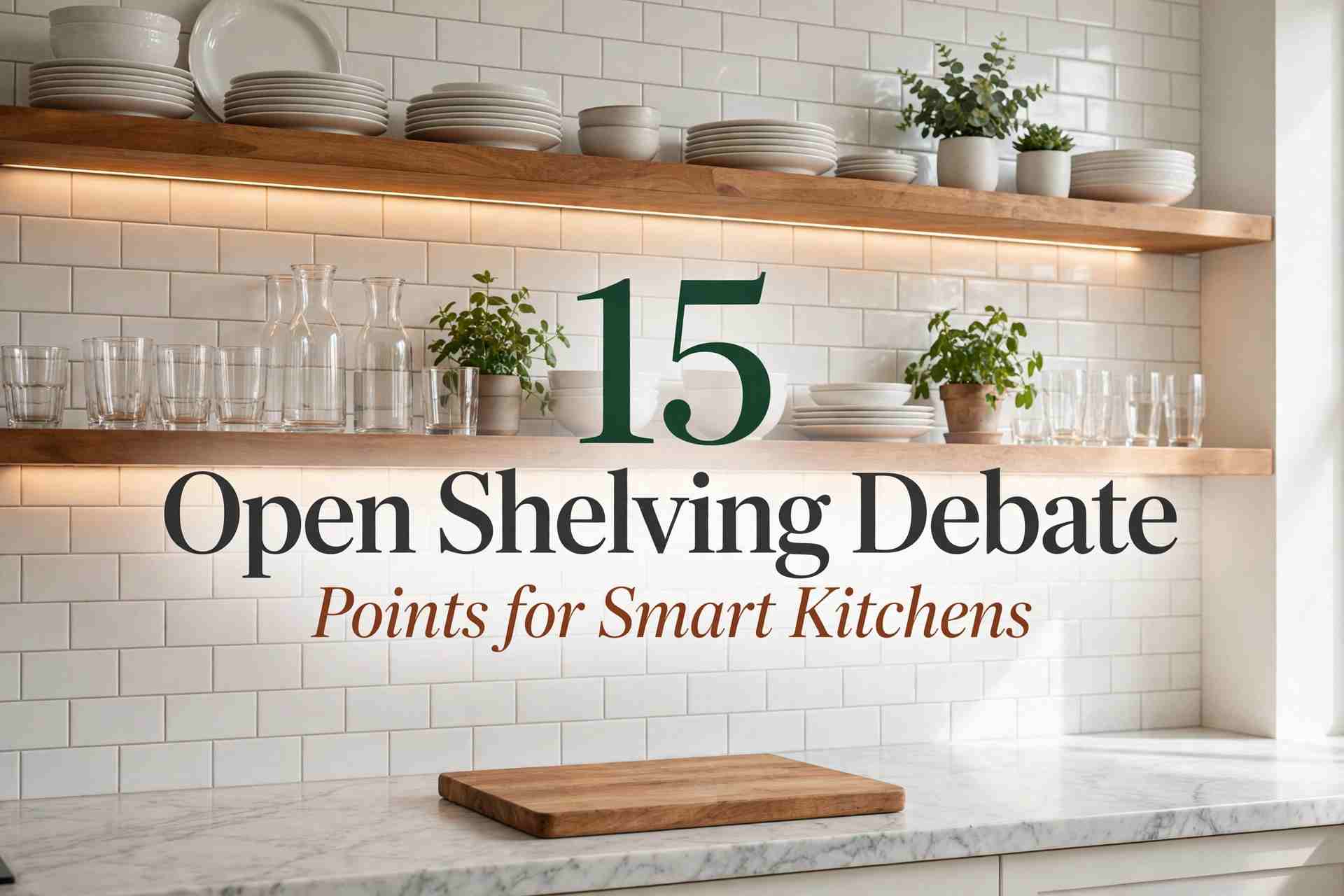
15 Open Shelving Debate Points for Smart Kitchens
Every kitchen remodel eventually hits the same argument. One side wants airy shelves with pretty dishes on show, the other wants doors that hide the mess. The open shelving debate has divided designers and homeowners for years, and both camps make fair points. Open shelves can make a small kitchen feel twice as big, but they also demand a level of tidiness that busy family life rarely allows. Before you tear out your upper cabinets, it helps to hear the full argument. Below are 15 honest points from both sides, plus practical tips that make open shelving work in real kitchens, not just styled photos.
1. Airy Feel That Opens Up Small Kitchens

The strongest argument in the open shelving debate is visual space. Removing upper cabinets instantly makes a tight kitchen feel larger and brighter because the eye travels further. Walls that once felt boxed in suddenly breathe, and natural light bounces around instead of hitting cabinet doors. This works especially well in galley kitchens and small apartments where every inch of openness counts. If your kitchen feels cramped, swapping one run of uppers for shelves is the fastest way to open it up. Quick Win: Remove the doors from one upper cabinet for a week to test the open look before committing to full shelves.
2. Everything Within Easy Reach

Daily cooking gets faster when your most used items sit in plain sight. Plates, bowls and glasses on open shelves mean no more opening three doors to find the right mug. This practical point often wins over skeptics in the open shelving debate because it changes how the kitchen actually works. The trick here is keeping only true everyday items on the shelves, so what you see is what you grab. Seasonal platters and specialty gadgets can live in closed storage elsewhere.
3. The Dust Problem Nobody Can Ignore

Here is the con that fuels the open shelving debate more than any other. Open dishes collect dust, and in real homes that means a weekly wipe down of every shelf and item. Kitchens near busy roads or with pets gather dust even faster. If you hate extra cleaning, this single point may settle the matter for you. What makes this work for some households is using only pieces they touch daily, since frequent use keeps dust from settling. Rarely used decor on open shelves is what creates the real chore. Quick Win: Keep a microfiber cloth in a nearby drawer and wipe one shelf each morning while coffee brews.
4. Forced Tidiness Keeps Clutter Away

Open shelves punish mess, and for some people that is a genuine benefit. When everything is visible, you naturally buy less clutter and put things back where they belong. Fans of the open shelving debate pro side say their kitchens stay tidier than ever because there is nowhere to hide a jumble of mugs. This works especially well for minimalists and small households. If your cabinets currently hide chaos behind closed doors, open shelves force a satisfying reset of your habits.
5. Grease Builds Up Near the Stove

Cooking sends fine grease into the air, and open shelves near the range catch all of it. This is one of the toughest cons in the open shelving debate because sticky film builds silently and needs degreasing, not just dusting. The simple fix is placement. Keep open shelves away from the cooktop and reserve that zone for closed cabinets or a proper range hood. Shelves on a far wall or beside a window stay far cleaner. A simple way to recreate the look safely is planning shelf placement around your cooking zone first. Quick Win: Hold a tissue near your planned shelf spot after frying something. If it feels tacky, move the shelves elsewhere.
6. A Chance to Show Off Pretty Pieces

If you own beautiful dishes, why hide them. Open shelves turn everyday tableware into decor, from handmade ceramics to vintage glassware collected over years. This joyful point in the open shelving debate resonates with anyone who loves styling. Group pieces by color or material for a collected look, and leave breathing room between stacks so each item shines. It is one of the most personal ways to make a kitchen feel like yours rather than a showroom.
7. Style It Wrong and It Looks Messy

The same visibility that shows off pretty dishes also exposes every mismatch. Random mugs, faded plastic containers and crowded rows make open shelves look chaotic fast. Critics in the open shelving debate point to messy real life photos as proof it only works in magazines. The truth sits in the middle. Open shelves need a simple color palette and consistent shapes to look calm. Limit open display to two or three tones and keep the rest behind doors, and the messy risk drops sharply. Quick Win: Pull everything off one shelf and restyle it with only white and wood pieces to see the difference editing makes.
8. How Real Cooks Settle the Open Shelving Debate

Talk to people who cook daily and a pattern appears. Most land on a hybrid answer rather than a pure yes or no. They keep one or two open shelves for daily dishes near the dishwasher, and closed cabinets for everything else. This middle ground resolves the open shelving debate for busy households because it delivers the airy look and easy reach without the full maintenance load. You do not need to choose a camp. Borrow the best of both and design around your real routine.
9. Lower Cost Than New Cabinets

Budget often decides the open shelving debate before style does. Solid wood floating shelves cost far less than custom upper cabinets, and installation is a simple weekend project. This makes open shelving a favorite for rental refreshes and budget remodels. The savings grow when you skip the cabinet boxes, doors and hardware entirely. Just remember to budget for sturdy brackets and wall anchors, since shelves loaded with dishes need serious support. Quick Win: Price two thick oak shelves with hidden brackets against one stock upper cabinet to see your exact savings.
10. Less Storage Per Square Foot

Here is the math the open shelving debate cannot dodge. Shelves hold less than cabinets because items cannot stack as high or pack as tight without looking messy. Deep cabinet boxes also swallow bulky appliances that would ruin a styled shelf. Small kitchens with limited storage feel this loss most. Before removing uppers, audit what lives in them now. If every inch is packed, replacing cabinets with shelves will create a storage crisis rather than a style win.
11. Easy to Refresh for Each Season

One underrated joy in the open shelving debate is how fast the look can change. Swapping a few pieces for autumn tones or spring greens takes minutes and costs nothing. Closed cabinets never offer that kind of seasonal play. Keep a small box of seasonal accents, like a pumpkin toned pitcher or fresh greenery, and your kitchen feels new four times a year. This works especially well for decor lovers who restyle often and get bored with fixed cabinet fronts. Quick Win: Change just the top shelf styling with the season and leave the everyday dishes below untouched.
12. Kids and Pets Add a Risk Factor

Low open shelves and curious toddlers are a risky mix, and cats treat open shelves as personal highways. This practical worry rarely appears in styled photos but dominates the open shelving debate for young families. The fix is height. Keep open shelves above adult shoulder level and store anything breakable or tempting up high. Closed lower cabinets stay the safer choice for snacks and heavy pots. Design around your household first and the style second, and everyone stays happy.
13. Mix Open Shelves With Closed Cabinets

You do not have to pick a winner in the open shelving debate. The most loved kitchens today blend both. Try open shelves on one wall for display and daily dishes, with closed cabinets everywhere else for the practical bulk. This combo gives you the airy styled moment without sacrificing hidden storage. Designers call it the best of both worlds because it photographs beautifully and still works on a chaotic Tuesday night. It is the compromise most remodelers wish they had chosen from the start. Quick Win: Convert a single upper cabinet near the sink to open shelving and keep the rest closed for a low risk trial.
14. Lighting Makes or Breaks the Look

Open shelves without good lighting fall flat, while a simple LED strip turns them into the kitchen focal point. Under shelf lights highlight your dishes, add task light to the counter and make the whole wall glow in the evening. This detail rarely gets mentioned in the open shelving debate, yet it changes everything. Battery puck lights work for renters, while hardwired strips suit full remodels. Either way, plan the lighting at the same time as the shelves, not as an afterthought.
15. Resale Value Is a Real Question

The final point in the open shelving debate is about the future. Some buyers love the look, others see missing storage and extra cleaning. Real estate opinions split by market, but most agents agree that some closed storage should remain. If resale matters, keep at least half your uppers as cabinets so the kitchen appeals to the widest pool of buyers. Your dream kitchen should still make sense to the next owner. A balanced design protects both your daily joy and your home value. Quick Win: Photograph your kitchen with shelves styled simply. Clean minimal shelves appeal to far more buyers than crowded ones.
Conclusion
The open shelving debate has no single winner because the right answer depends on your cooking style, your tolerance for dusting and your storage needs. Whichever side of the open shelving debate speaks to you, test it with a single shelf before a full remodel. Start small with one shelf or one cabinet conversion, keep greasy zones closed, and mix open and closed storage for balance. You do not need to copy a magazine look to enjoy the airy feel. Pick the points that fit your real kitchen, and let the shelves serve your life instead of the other way around.
Frequently Asked Questions
Are open shelves practical in a real kitchen?
They can be, with the right plan. Keep open shelves for daily dishes you touch often, place them away from the stove to avoid grease, and keep closed cabinets for bulky or rarely used items. Most happy owners in the open shelving debate use a hybrid layout rather than going fully open.
How do you keep open kitchen shelves from looking cluttered?
Stick to a simple palette of two or three colors and repeat shapes across the shelves. Leave breathing room between stacks and store mismatched or faded items behind closed doors. Editing ruthlessly is the real secret, since every visible item needs to earn its place.
Do open shelves collect a lot of dust?
Yes, they collect more dust than closed cabinets, especially near busy roads or in homes with pets. Dishes used daily stay fairly clean through regular handling. A quick weekly wipe of shelves and lesser used pieces keeps everything fresh without much effort.
Are open shelves cheaper than kitchen cabinets?
Usually yes. A pair of solid wood floating shelves with good brackets costs far less than custom upper cabinets. That cost gap is one reason the open shelving debate keeps resurfacing in budget remodels. Installation is simpler too, which saves on labor. Just invest in sturdy anchors, since shelves full of dishes carry real weight.
Should I remove all my upper cabinets for open shelving?
Most designers advise against going fully open. Keep at least some closed uppers for bulky appliances, cleaning supplies and visual calm. A mix of open shelves and cabinets gives you style plus practical storage, which also appeals to future buyers.


