
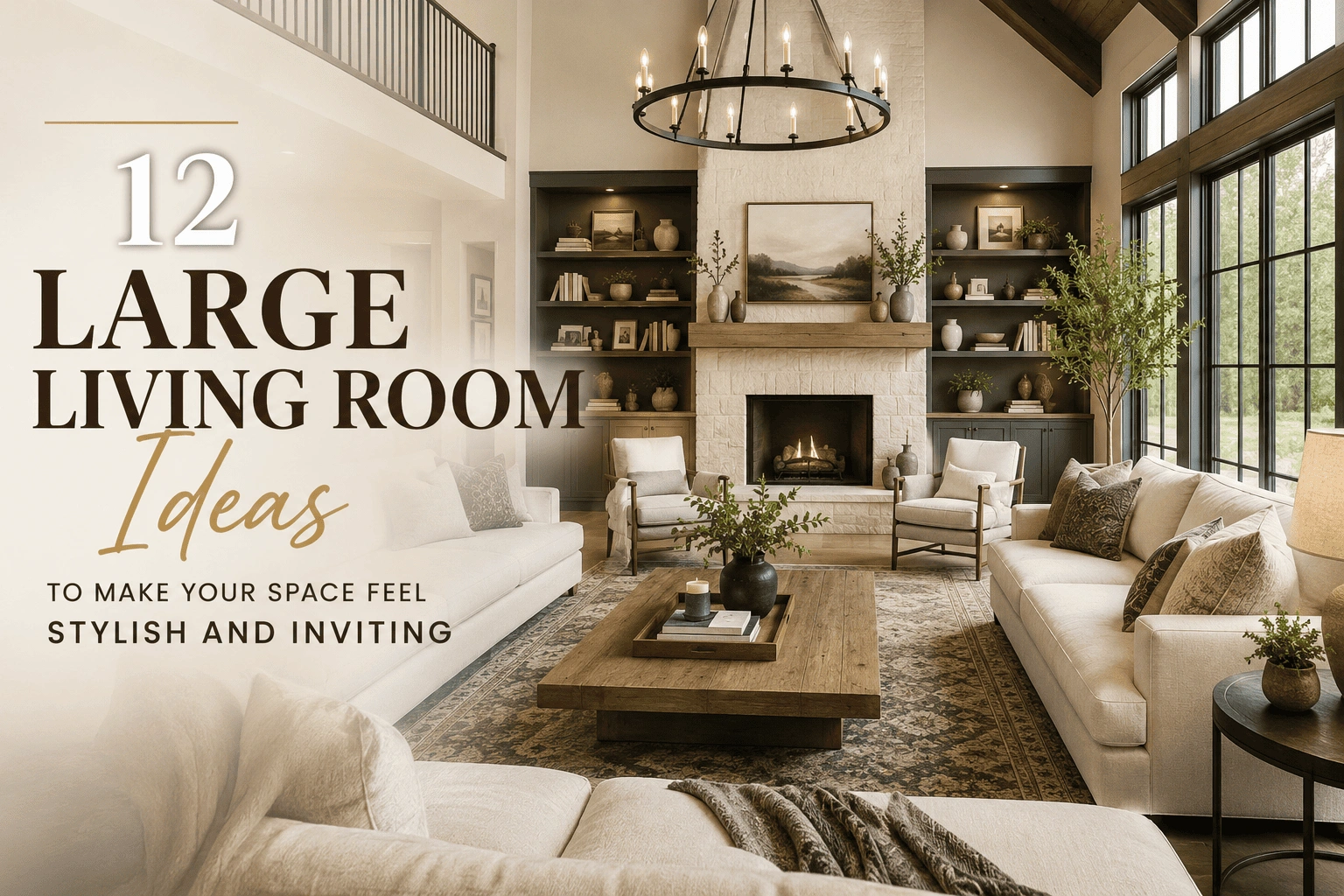
12 Large Living Room Ideas to Make Your Space Feel Stylish and Inviting
A large living room is a dream for many homeowners, but decorating one isn’t always as easy as it seems. While extra square footage offers endless possibilities, it can also leave your space feeling cold, empty, or disconnected if it’s not designed with intention. The key is to strike the perfect balance between spaciousness and comfort, creating a room that feels inviting without looking overcrowded.
Whether you’re designing an open-concept family room, a formal entertaining space, or a cozy retreat for movie nights, the right layout, furniture, lighting, and décor choices can completely transform your living room. From creating functional conversation zones to layering textures that make oversized spaces feel warm and welcoming, these expert-approved ideas will help you make the most of every square foot.
Below, you’ll discover 12 large living room ideas that combine timeless style with practical design tips, along with expert advice, budget-friendly alternatives, luxury upgrades, and realistic image prompts to inspire your next makeover.
1. Create Multiple Conversation Zones

One of the biggest decorating mistakes in a large living room is pushing all the furniture against the walls. Instead, divide the room into separate conversation areas to make the space feel intentional and welcoming. A pair of sofas facing each other can create the main seating area, while a pair of accent chairs and a side table can define a cozy reading corner nearby.
Breaking the room into functional zones also makes it easier for family members and guests to interact naturally. Large spaces should feel connected, not like one giant empty room. Use area rugs, lighting, or furniture placement to visually separate each zone without adding physical barriers.
Designer Tip: Leave at least 30–36 inches of walking space between furniture groupings for comfortable traffic flow.
Budget Hack: Rearrange your existing furniture into smaller seating groups before buying anything new.
Luxury Upgrade: Add custom oversized rugs beneath each seating area to visually anchor every zone.
Common Mistake: Creating one oversized seating arrangement that leaves the rest of the room feeling unused.
2. Anchor the Room with an Oversized Area Rug

A generously sized area rug instantly makes a large living room feel more cohesive. Instead of having furniture scattered across the floor, a large rug visually connects sofas, chairs, and tables into one unified arrangement.
Choose a rug large enough so that at least the front legs of every major furniture piece rest on it. Neutral rugs create timeless elegance, while patterned rugs add personality without overwhelming the room.
Designer Tip: Layer subtle textures rather than bold patterns if your room already features statement furniture.
Budget Hack: Use two matching rugs placed seamlessly together in extra-large rooms.
Luxury Upgrade: Invest in a handcrafted wool or silk-blend rug for exceptional texture and durability.
Common Mistake: Choosing a rug that’s too small, making the furniture appear disconnected.
3. Install Floor-to-Ceiling Curtains

Nothing enhances the scale of a large living room quite like full-length curtains. Hanging curtain rods close to the ceiling draws the eye upward, making ceilings appear taller while adding softness to expansive walls.
Choose linen, cotton blends, or velvet depending on your desired style. Light-filtering fabrics create an airy atmosphere, while heavier drapes add warmth and luxury during cooler seasons.
The extra fabric also improves acoustics, helping reduce echo that often occurs in oversized rooms.
Designer Tip: Extend curtain rods at least 10–12 inches beyond each side of the window for a fuller appearance.
Budget Hack: Purchase longer ready-made curtains instead of custom panels.
Luxury Upgrade: Install motorized drapery for effortless operation and a high-end finish.
Common Mistake: Hanging curtains directly above the window frame instead of near the ceiling.
4. Add a Statement Fireplace Wall

A large living room benefits from a strong focal point, and a beautifully designed fireplace wall instantly creates one. Whether it’s finished in natural stone, marble, textured plaster, or wood paneling, the fireplace becomes the heart of the room while grounding the surrounding furniture.
Decorate the mantel with a carefully curated mix of artwork, candles, and sculptural accessories instead of overcrowding it with small decorative pieces. If your home doesn’t have a built-in fireplace, consider an electric model surrounded by custom millwork for a similar effect.
Designer Tip: Keep surrounding décor simple so the fireplace remains the visual centerpiece.
Budget Hack: Refresh an outdated fireplace with paint or peel-and-stick stone panels.
Luxury Upgrade: Choose a floor-to-ceiling marble surround with integrated shelving on both sides.
Common Mistake: Decorating every inch of the fireplace wall, making it feel cluttered.
5. Mix Large Furniture with Sculptural Accent Pieces

Large rooms deserve furniture that matches their scale. Oversized sectionals, generously proportioned coffee tables, and wide armchairs prevent the space from looking empty. However, balance is essential. Pair these substantial pieces with sculptural side tables, curved accent chairs, or artistic floor lamps to create visual interest.
Mixing shapes and proportions prevents the room from feeling too heavy while introducing movement throughout the design.
Designer Tip: Repeat similar curves or finishes throughout the room for a cohesive look.
Budget Hack: Refresh existing furniture with larger throw pillows and oversized coffee table books.
Luxury Upgrade: Incorporate designer sculptural furniture crafted from natural stone or solid wood.
Common Mistake: Filling the room with many small furniture pieces instead of fewer well-scaled items.
6. Layer Lighting for Warmth and Dimension

Lighting plays a crucial role in making a large living room feel cozy. Relying on a single ceiling fixture often leaves corners feeling dark while creating harsh overhead illumination. Instead, combine ambient, task, and accent lighting throughout the room.
A statement chandelier establishes the room’s centerpiece, table lamps add warmth beside sofas, floor lamps brighten reading corners, and wall sconces highlight architectural features or artwork. Layered lighting not only improves functionality but also gives the room a luxurious, professionally designed appearance.
Dimmer switches allow you to adjust the mood throughout the day, making the space equally inviting for entertaining guests or relaxing in the evening.
Designer Tip: Aim for at least three different light sources in every seating zone for balanced illumination.
Budget Hack: Replace basic bulbs with warm white LED bulbs and add stylish plug-in floor lamps to instantly elevate the atmosphere.
Luxury Upgrade: Install a layered smart lighting system with recessed lights, designer pendants, and programmable scenes.
Common Mistake: Depending entirely on recessed ceiling lights, which can make a large room feel flat and impersonal.
7. Make a Statement with Oversized Wall Art

Large walls can easily feel bare, even when the rest of the room is beautifully furnished. Instead of filling every inch with multiple small frames, choose one oversized artwork or a thoughtfully arranged gallery wall. Large-scale art instantly adds personality while helping balance the proportions of an expansive living room.
Abstract paintings, oversized landscape photography, or textured canvas pieces work particularly well because they create visual impact without overwhelming the space. Coordinate artwork colors with your pillows, rugs, or accessories for a polished, designer-inspired look.
Why it works: Large artwork creates a focal point that visually anchors the room while making tall walls feel intentionally decorated.
Best for: Modern, transitional, contemporary, and minimalist living rooms.
Designer Tip: Hang artwork so its center sits approximately 57–60 inches from the floor for the most natural viewing height.
Budget Hack: Frame printable digital artwork or create your own gallery using affordable oversized canvases.
Luxury Upgrade: Commission a custom painting that perfectly complements your home’s color palette and architecture.
Common Mistake: Hanging several tiny frames too high, making the wall feel cluttered rather than cohesive.
8. Bring Life into the Room with Oversized Indoor Plants

Nothing fills an empty corner more beautifully than a tall indoor tree. Olive trees, fiddle leaf figs, rubber plants, and bird of paradise plants soften architectural lines while adding natural texture and vibrant color to a large living room.
Use woven baskets, ceramic planters, or stone pots that complement your overall design style. If natural light is limited, high-quality faux trees can provide the same visual effect with minimal maintenance.
Why it works: Greenery introduces movement, texture, and warmth while making large spaces feel more inviting.
Best for: Bright open-concept homes, modern farmhouse interiors, coastal styles, and Scandinavian-inspired spaces.
Designer Tip: Group plants of varying heights for a layered, professionally styled look.
Budget Hack: Buy younger plants and allow them to grow naturally instead of purchasing mature specimens.
Luxury Upgrade: Place a mature olive tree inside a handcrafted stone planter for a timeless European-inspired aesthetic.
9. Incorporate Custom Built-In Shelving

Built-in shelving transforms a plain wall into both a functional storage solution and a striking design feature. Floor-to-ceiling shelves provide space for books, artwork, ceramics, woven baskets, and carefully selected decorative objects while making the room feel custom-designed.
The secret is restraint. Mix decorative pieces with empty space so the shelves feel curated instead of cluttered. Vary heights, textures, and materials for a collected-over-time appearance.
Why it works: Built-ins maximize vertical space while adding architectural interest and practical storage.
Best for: Family living rooms, traditional homes, transitional interiors, and luxury spaces.
Designer Tip: Repeat similar colors throughout the shelves for visual consistency.
Budget Hack: Upgrade standard bookcases with trim and paint to mimic custom built-ins.
Luxury Upgrade: Install custom cabinetry with integrated lighting and hidden storage compartments.
Common Mistake: Filling every shelf completely instead of allowing breathing room between decorative objects.
10. Layer Rich Textures Instead of Adding More Furniture

Large living rooms don’t always need more furniture—they often need more texture. Layering soft fabrics and natural materials creates warmth while preventing the room from feeling empty.
Combine linen upholstery, chunky knit throws, velvet cushions, woven baskets, natural wood, stone accents, and textured rugs to create depth without overcrowding the space. Texture makes even neutral color palettes feel rich and visually interesting.
Why it works: Layering materials creates dimension while maintaining an open, uncluttered layout.
Best for: Neutral interiors, modern organic homes, Japandi, Scandinavian, and contemporary designs.
Designer Tip: Mix at least three different textures in every seating arrangement.
Budget Hack: Replace inexpensive pillow covers seasonally to refresh the room without replacing furniture.
Luxury Upgrade: Invest in genuine linen upholstery, cashmere throws, and handcrafted wool rugs.
Common Mistake: Using too many matching fabrics, making the room appear flat.
11. Add a Grand Coffee Table That Commands Attention

In a spacious living room, a small coffee table often looks lost. An oversized rectangular, round, or square coffee table creates better visual balance while serving as the centerpiece of the seating arrangement.
Decorate it with stacked coffee table books, candles, fresh flowers, sculptural bowls, and decorative trays. Keep styling intentional by varying heights and leaving enough open surface for functionality.
Why it works: A substantial coffee table grounds the furniture arrangement and ties the seating area together.
Best for: Large sectionals, dual-sofa layouts, and formal entertaining spaces.
Designer Tip: Use the rule of three when styling decorative accessories for effortless balance.
Budget Hack: Combine two matching smaller tables to achieve the appearance of one oversized piece.
Luxury Upgrade: Choose a marble or travertine coffee table with sculptural detailing.
Common Mistake: Overdecorating the tabletop until it loses everyday functionality.
12. Balance the Space with Symmetrical Furniture Layouts

Symmetry is one of the easiest ways to make a large living room feel refined and harmonious. Matching sofas, identical armchairs, coordinated table lamps, and balanced décor create an elegant sense of order that naturally suits spacious interiors.
Symmetry doesn’t have to feel formal. Pairing matching furniture with layered textures and organic accessories keeps the room comfortable while maintaining visual balance.
Why it works: Symmetrical layouts create structure and prevent oversized rooms from feeling chaotic.
Best for: Traditional, transitional, luxury, and formal living rooms.
Designer Tip: Even if furniture isn’t identical, repeat similar shapes and colors throughout the room.
Budget Hack: Use matching pillow covers and lamps to create symmetry without replacing furniture.
Luxury Upgrade: Invest in custom-designed matching sofas with bespoke upholstery and handcrafted accent tables.
Common Mistake: Making every side identical, which can make the room feel overly staged. Introduce subtle variations for a more natural appearance.
Conclusion
A large living room offers endless design possibilities when every element serves a purpose. Instead of focusing on filling empty space, think about creating warmth, balance, and personality through thoughtful layouts, layered textures, statement pieces, and meaningful details. Whether you’re decorating on a modest budget or investing in luxury upgrades, these ideas can help transform an oversized room into a space that feels effortlessly stylish, comfortable, and truly lived in.
The best living rooms aren’t simply the biggest—they’re the ones that invite people to relax, connect, and create lasting memories. Start with one idea that speaks to you, build around it with confidence, and watch your spacious living room become the favorite place in your home.
Frequently Asked Questions
1. How do I make a large living room feel cozy?
Layer rugs, textiles, lighting, and furniture into smaller conversation areas rather than treating the room as one large open space.
2. What color works best in a large living room?
Warm neutrals like beige, greige, taupe, soft white, and warm gray create an inviting atmosphere, while deeper accent colors add depth.
3. Should all furniture touch the walls?
No. Floating furniture creates a more intimate and professionally designed layout.
4. How many rugs should a large living room have?
One oversized rug or multiple rugs can be used to define separate functional zones.
5. What’s the best lighting for a large living room?
A layered combination of chandeliers, floor lamps, table lamps, sconces, and recessed lighting provides balanced illumination.
6. How can I decorate tall walls?
Use oversized artwork, custom built-ins, architectural molding, or floor-to-ceiling curtains to draw the eye upward.
7. Can a sectional work in a large living room?
Absolutely. Choose a generously sized sectional that complements the room’s proportions.
8. What plants look best in large living rooms?
Olive trees, fiddle leaf figs, bird of paradise plants, and rubber trees all make excellent statement pieces.
9. How do I avoid making a large room look empty?
Use layered textures, large-scale furniture, multiple seating zones, and focal points like fireplaces or artwork.
10. Is symmetry important in large spaces?
Yes. Symmetrical layouts create visual balance while still allowing room for personal style.


