
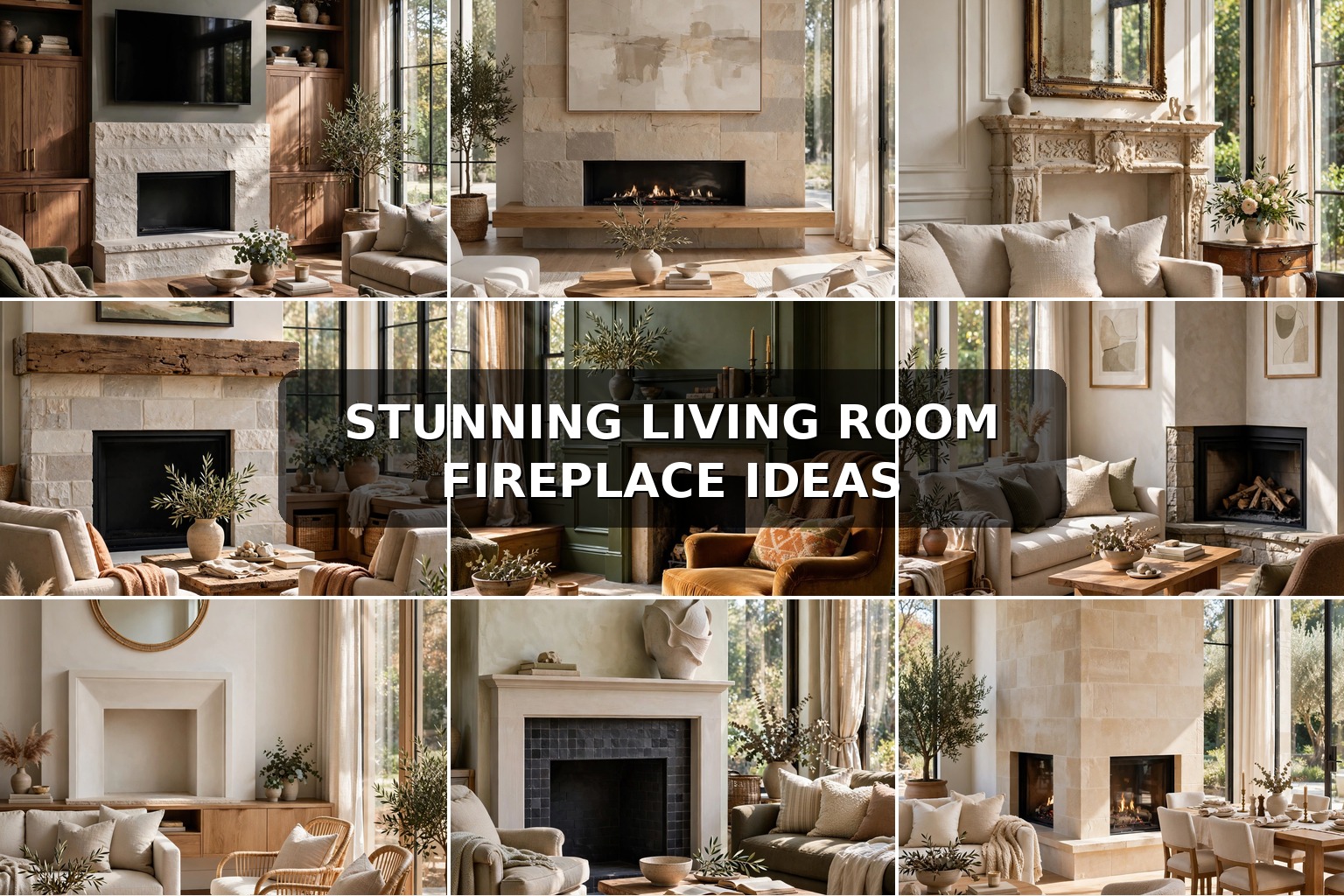
15 Fireplace Living Room Ideas That Feel Custom
A fireplace changes more than the temperature of a living room. It determines where people look when they enter, how the furniture wants to sit, where conversation naturally gathers, and how comforting the room feels after sunset.
That influence is also why fireplace design can become frustrating. A beautiful stone surround may feel too heavy on a short wall. A television above the mantel may solve one problem while creating an uncomfortable viewing angle. Built-in shelves can introduce useful storage—or make the entire wall feel crowded.
The best fireplace ideas for living rooms begin with the room, not with a trending material. Consider the wall’s proportions, the viewing distance, the pathways through the room, and whether the fire is a working heat source or primarily decorative. Once those conditions are clear, the fireplace can become the quiet architectural anchor the room has been missing.
Start With the Fireplace’s Role

Before selecting tile or paint, decide what the fireplace needs to accomplish.
A working wood or gas fireplace may be the room’s primary heat source. An electric insert may provide ambience and occasional warmth. A blocked firebox may be purely architectural. Each situation allows different materials, mantel depths, television placements, and decorating choices.
Next, stand at the room’s entrance and identify what competes for attention. Large windows, a television, a dramatic ceiling, and an exterior view can all function as focal points. The fireplace does not always need to defeat them. It needs a clear visual relationship with them.
For most rooms, choose one of three approaches:
- Emphasize it: Use stone, tile, contrast, or vertical height.
- Integrate it: Repeat the wall color and surround it with cabinetry.
- Soften it: Use restrained materials so another feature can lead.
Designer Tip: Photograph the fireplace wall straight on. A photograph reveals imbalance, undersized artwork, and awkward furniture placement more quickly than viewing the familiar room in person.
Common Mistake: Selecting a surround material before considering the flooring. Two strongly veined stones or several competing wood tones can make the room feel patched together.
1. Build a Floor-to-Ceiling Stone Statement

Floor-to-ceiling stone gives an ordinary rectangular room a sense of permanence. The continuous vertical surface draws the eye upward, making the ceiling feel higher while giving the furniture a strong visual anchor.
This approach works particularly well in large rooms, vaulted spaces, mountain homes, and open-plan interiors where a conventional mantel might look too small. In a modest room, use a quieter limestone, travertine, or softly textured manufactured stone rather than heavily contrasting stacked stone.
Choose the scale of the pieces carefully. Large-format slabs produce a clean contemporary effect, while irregular fieldstone feels rustic and substantial. Honed stone usually looks calmer than a highly polished finish because it absorbs rather than reflects light.
How to recreate it: Carry one stone from the hearth to the ceiling. Keep the mantel minimal or omit it altogether. Repeat one color from the stone in the rug or upholstery so the fireplace belongs to the room.
Budget Hack: Apply stone only to the chimney breast rather than the entire wall. A quality thin veneer can also create depth without the structural demands of full-depth masonry.
Luxury Upgrade: Book-match two large slabs so their veining opens across the fireplace like a piece of natural artwork.
Common Mistake: Choosing tiny, highly varied pieces for a short wall. Excessive grout lines create visual noise and can make the wall seem smaller.
2. Update Red Brick With Limewash

Old brick often feels dated because of its strong red-and-brown contrast, not because brick itself is unattractive. Limewash softens those colors while allowing the natural texture and irregularities to remain visible.
The result feels more authentic than an opaque coat of white paint. It suits cottage, farmhouse, coastal, transitional, and relaxed European interiors. A light application leaves more brick showing; several coats produce a chalkier appearance.
Before treating the surface, identify the brick and test a hidden area. Previously sealed or painted brick may not accept a mineral finish evenly. Materials used on or near a working fireplace also need to suit the unit and applicable requirements.
Styling Secret: Pair chalky brick with something visually precise—a slim black fire screen, a simple oak mantel, or a clean-edged stone hearth. The contrast prevents the scheme from looking overly rustic.
Budget Hack: If the brick is in good condition, cleaning and changing only the mantel may be enough. A darker beam can make faded brick look warmer without covering it.
Luxury Upgrade: Add custom plaster alcoves or full-height millwork on both sides to make the existing fireplace look original to the architecture.
Common Mistake: Applying bright, cool white over warm floors. A muted cream, putty, or mushroom treatment usually creates a more connected result.
3. Create a Soft Plaster Fireplace

A plaster fireplace replaces hard outlines with gentle mass and subtle movement. Its seamless finish allows the fire itself, rather than the surround, to become the focal point.
This idea is ideal for organic modern, Mediterranean, minimalist, desert-inspired, and contemporary rustic rooms. It is particularly useful when several materials already appear in the space and the fireplace needs to provide visual rest.
The silhouette matters more than ornament. A softly rounded corner, shallow projecting breast, or arched firebox can give simple plaster real character. Choose a finish with slight tonal variation; perfectly flat gray plaster can look cold under artificial light.
Designer Tip: View the sample in morning, afternoon, and lamplight. Mineral and plaster finishes can change considerably as the light becomes warmer.
Budget Hack: Use a suitable textured finish on the surrounding wall while retaining the existing code-compliant firebox and hearth.
Luxury Upgrade: Integrate a curved bench or sculptural hearth into the same continuous finish.
Common Mistake: Extending ordinary wall products into heat-exposed areas without confirming suitability. A professional should specify the assembly around an operating unit.
4. Use Floor-to-Ceiling Tile

Tile can turn a plain fireplace wall into a carefully composed feature without the visual weight of rough stone. The many available shapes and finishes also make it one of the most adaptable fireplace ideas for living rooms.
Large porcelain panels create a sleek, nearly seamless appearance. Zellige-style tile introduces reflected light and handcrafted variation. Slim vertical tile emphasizes height, while square tile brings a charming mid-century rhythm.
Use grout deliberately. Matching grout creates a continuous surface; contrasting grout highlights the tile pattern. In a small room, low-contrast grout usually feels less busy.
Styling Secret: Repeat the tile color only once elsewhere—perhaps in a cushion, vase, or artwork. Over-matching makes the design feel themed.
Budget Hack: Tile the area immediately around the firebox and paint the remaining chimney breast in a closely related color.
Luxury Upgrade: Wrap the edges so the tiled surface reads as a three-dimensional architectural volume rather than a decorated front panel.
Common Mistake: Selecting tile from a small sample without viewing several pieces together. Variation that looks appealing on one tile may become chaotic across an entire wall.
5. Frame the Fireplace With Balanced Built-Ins

Built-in shelving makes a fireplace wall useful as well as beautiful. The repeated vertical lines visually widen the fireplace and give books, media equipment, and personal objects a permanent home.
This works best when the room needs substantial storage and the fireplace is reasonably centered. Closed cabinets below control clutter, while open shelves above prevent the wall from feeling solid.
Good built-ins should support the fireplace, not compete with it. Leave some shelves partly empty, vary object heights, and use a limited color palette. Approximately two-thirds full usually feels collected without looking congested.
Designer Tip: Align one significant horizontal line—the cabinet top, mantel, or a shelving division—across the composition. That shared line makes separate elements feel custom designed.
Budget Hack: Place matching freestanding bookcases on either side, add trim at the top and base, and paint the entire wall one color.
Luxury Upgrade: Add integrated picture lights, concealed cables, adjustable shelving, and touch-latch cabinets.
Common Mistake: Filling every shelf with small accessories. Numerous tiny pieces weaken the visual authority of the fireplace.
6. Use Asymmetry for a More Relaxed Fireplace Wall

Not every fireplace needs matching shelves. An asymmetrical design can look more architectural, especially when a fireplace sits off-center or the room has a doorway, window, or television on one side.
Try a low cabinet extending from the hearth, a single tall bookcase, or artwork balanced by shelving. The goal is visual weight rather than mirror-image duplication. A wide cabinet may balance a tall chimney breast even though their shapes differ.
This solution is excellent for modern renovations because it works with existing irregularities instead of disguising them.
Styling Secret: Repeat one finish across unequal elements. For example, a walnut mantel and walnut media cabinet create unity without symmetry.
Budget Hack: Use a long, low ready-made console beside the fireplace and paint the wall behind both in one enveloping shade.
Luxury Upgrade: Commission wall-to-wall joinery with hidden ventilation, media storage, and a flush stone hearth.
Common Mistake: Adding several unrelated asymmetrical elements. Choose one dominant fireplace, one balancing mass, and enough open wall to let both breathe.
7. Pair the Fireplace and Television Properly

A TV above the fireplace is popular because it consolidates two focal points, but it is not automatically the best arrangement. The screen can become uncomfortable to watch when mounted too high, and heat may affect what can be installed and where.
Start by checking the fireplace manufacturer’s clearance instructions and the television’s environmental requirements. Mantel depth, firebox type, wall construction, heat output, and ventilation all matter. Do not rely on a universal internet measurement.
If the screen would sit far above seated eye level, consider these alternatives:
- Place the television in cabinetry beside the fireplace.
- Use a pull-down or articulating mount where appropriate.
- Position the TV on an adjacent wall.
- Conceal it behind doors or an artwork-style display.
- Use a low linear firebox that leaves more comfortable screen space.
Paint the media wall a medium or deep color to reduce the contrast of the black screen when it is off.
Designer Tip: Make a cardboard template the size of the TV and tape it in position. Sit in every main seat for 15 minutes before committing.
Budget Hack: Place the TV on a low console next to the fireplace rather than constructing an expensive combined media wall.
Luxury Upgrade: Add flush cabinetry, hidden speakers, concealed wiring, and a heat-management system specified for the chosen fireplace.
Common Mistake: Designing the wall around the TV while forgetting the seated viewer. A visually symmetrical elevation is not worthwhile if watching it strains the neck.
8. Design a Low, Linear Fireplace Wall

A long horizontal fireplace can visually widen a narrow room and support the low profiles of modern sofas and media cabinets. It feels particularly effective in contemporary homes where a traditional mantel would introduce unnecessary ornament.
Keep the wall composition disciplined. A linear firebox, broad slab hearth, and one strong artwork may be enough. Adding a television, shelves, sconces, niches, and decorative objects can quickly destroy the calm effect.
This style suits gas and electric units particularly well, although installation and ventilation conditions vary by model.
Styling Secret: Echo the fireplace’s horizontal direction with a wide coffee table or low-backed sectional.
Budget Hack: Use a correctly installed electric insert in a simple projecting wall finished in paint or suitable large-format porcelain.
Luxury Upgrade: Extend the stone hearth into a full-width floating bench with integrated drawers.
Common Mistake: Choosing a firebox too narrow for a long wall. Mock up the opening with painter’s tape and view it from the farthest entrance.
9. Restore a Traditional Mantel

A carved wood or stone mantel gives the living room a recognizable architectural center. Rather than removing an older surround, consider whether paint, hardware, lighting, and better-scaled decor can restore its presence.
Traditional mantels work in more than formal rooms. Pair an ornate surround with contemporary furniture, restrained colors, and abstract art to create tension between old and new.
The object above the mantel should relate to its width. One substantial mirror or artwork usually looks stronger than a scattered arrangement of small frames. Allow negative space around it so the molding remains visible.
Designer Tip: If the mantel feels undersized, extend its authority with wall molding, painted panels, or sconces rather than replacing it immediately.
Budget Hack: Paint the mantel and surrounding wall the same sophisticated shade. Reduced contrast makes inexpensive molding appear more architectural.
Luxury Upgrade: Source an antique stone surround and design the wall molding around its exact dimensions.
Common Mistake: Using a mirror so small that it floats above the mantel. Choose a piece with enough visual weight to connect the firebox to the upper wall.
10. Add a Reclaimed Wood Mantel

A substantial timber mantel adds warmth to brick, stone, plaster, and painted surrounds. Its texture makes a newly renovated room feel less perfect and more lived in.
This is an effective update for farmhouse, rustic, industrial, coastal, and transitional spaces. The beam should be scaled to the fireplace rather than chosen only for its character. A narrow firebox can be overwhelmed by an excessively deep, distressed timber.
Use concealed brackets where suitable for a floating appearance. Any combustible mantel must follow the fireplace manufacturer’s required clearances and applicable local rules.
Styling Secret: Let the beam’s texture be the decorative feature. Use only two or three objects above it rather than covering the entire surface.
Budget Hack: Stain a new hollow box beam to resemble aged timber. It can provide the desired thickness with less weight.
Luxury Upgrade: Choose responsibly sourced antique timber and have it custom finished to coordinate with the flooring.
Common Mistake: Matching the mantel stain exactly to every wooden item. Slightly related tones create a richer, more natural room.
11. Color-Drench the Chimney Breast

Painting the fireplace, chimney breast, trim, and surrounding wall one color can make mismatched components feel cohesive. It is especially helpful when the surround lacks distinctive material quality or the chimney breast creates awkward breaks.
Deep olive, tobacco, charcoal, burgundy, and muted blue can create an enveloping focal point. Pale putty or warm white can help a small room feel quieter and more spacious.
Color drenching works because it reduces outline. Instead of seeing the mantel, wall, trim, and alcoves as separate pieces, the eye reads one architectural composition.
Budget Hack: This is one of the most economical transformations because it emphasizes shape rather than expensive material.
Luxury Upgrade: Combine the saturated color with a honed stone hearth, tailored window treatments, and antique brass lighting.
Common Mistake: Selecting a dark paint without improving the lighting. Add warm lamps or picture lights so the wall gains depth after sunset.
12. Make a Corner Fireplace Feel Intentional

A corner fireplace often feels awkward because furniture is placed parallel to the walls while the fireplace sits diagonally. The solution is usually not to angle every piece toward it. Instead, establish a comfortable central seating group and let one or two movable chairs turn toward the fire.
Use the rug to define the primary furniture geometry. Then strengthen the fireplace with a distinct material, artwork, or lighting so it feels deliberate rather than leftover.
A swivel chair is particularly useful. It can face the sofa during conversation, the TV during movie night, or the fire on a quiet evening.
Designer Tip: Keep the area directly in front of the corner fireplace visually open. Crowding it with a large chair exaggerates the awkward angle.
Budget Hack: Paint the corner section a slightly deeper version of the room color and add one substantial piece of art above the mantel.
Luxury Upgrade: Replace a bulky diagonal surround with a cleaner custom firebox wall or wraparound stone treatment, subject to professional assessment.
Common Mistake: Rotating the entire sofa diagonally. This often wastes floor area and creates unusable triangular gaps.
13. Keep a Small Living Room Fireplace Visually Light

A small fireplace does not necessarily need to disappear. It needs controlled contrast and appropriately scaled neighboring elements.
Use a simple surround, one large mirror, and shallow storage. Painting the fireplace the same color as the wall makes the architecture feel continuous. Alternatively, a narrow strip of beautiful tile can create a focal point without occupying the entire wall.
Avoid placing tall, heavy storage on both sides if it narrows the room. One shallow cabinet or floating shelf may provide enough function.
Furniture should support circulation. A compact sofa facing the fireplace, two lightweight chairs, and an appropriately sized rug often work better than a large sectional pushed against every wall.
Styling Secret: Mount the curtain rod close to the ceiling. Vertical fabric helps balance the chimney breast and makes the whole room feel taller.
Budget Hack: Use paint, a secondhand mirror, and a simplified mantel display instead of changing the firebox.
Luxury Upgrade: Install shallow custom cabinetry that uses every inch without projecting deeply into the room.
Common Mistake: Decorating the mantel with numerous miniature objects. Small objects make a compact fireplace look even smaller.
14. Transform an Unused Firebox

A nonworking fireplace can still give the living room depth and history. The key is to treat the opening as a deliberate niche rather than an abandoned appliance.
For a relaxed rustic look, fill it with neatly cut logs only when the fireplace is confirmed inactive and suitable for decorative use. For a cleaner approach, paint the interior a deep color and place one sculptural vessel inside. An arrangement of battery-operated candles can introduce a gentle evening glow without soot or wax near the floor.
Other possibilities include:
- A fitted basket for blankets.
- A stack of art books.
- A seasonal branch arrangement.
- A decorative metal screen.
- A small display plinth.
- Patterned tile lining the back of the opening.
Budget Hack: Clean and paint the firebox interior, then add one oversized secondhand vessel.
Luxury Upgrade: Line the opening with handmade tile and install concealed, low-temperature accent lighting appropriate for the application.
Common Mistake: Using many small candles at different heights without a visual plan. One organized cluster looks more intentional and is easier to maintain.
15. Connect an Open Plan With a Double-Sided Fireplace

A double-sided fireplace can define separate living and dining zones without blocking sightlines. The flame becomes a shared focal point, giving both sides warmth and identity.
This approach is best for new construction or a substantial renovation because venting, structure, heat management, access, and clearances must be resolved from the beginning. It is not merely a decorative wall opening.
Keep the surrounding architecture simple enough to be attractive from both rooms. Stone, plaster, and large-format porcelain work particularly well because they can wrap continuously around the volume.
Designer Tip: Plan furniture on both sides before choosing the unit’s dimensions. A fireplace that looks balanced from the living room may interrupt circulation in the dining area.
Budget Alternative: Create a partial-height partition with an electric fireplace and open shelving, where permitted and installed according to its instructions.
Luxury Upgrade: Combine a see-through firebox with book-matched stone and concealed architectural lighting.
Common Mistake: Treating one elevation as the front and neglecting the other. Every visible side needs finished edges and intentional proportions.
Arrange Furniture for Conversation, Not Just the View

A fireplace may be the visual focal point, but people remain the social focus. Arrange the seats so occupants can see one another without turning every chair directly toward the hearth.
A practical starting point is a sofa facing the fireplace with two chairs perpendicular to it. In a wide room, two sofas facing each other place the fireplace at the end of the conversation area. In an open-plan space, float the sofa and use a console behind it to establish a boundary.
Keep common walkways outside the main conversation group. The rug should connect the primary seats; if it touches only the coffee table, the arrangement often feels fragmented.
For two competing focal points, such as a fireplace and a view, use swivel chairs or an L-shaped seating arrangement. Flexibility is more useful than forced symmetry.
Designer Tip: Use painter’s tape to mark the furniture footprints before buying. Include the space needed to pull out chairs, open cabinets, and walk around the coffee table.
Plan Fireplace Safety Before Decorating
A working fireplace is an appliance, not merely a backdrop. Materials, television placement, mantel dimensions, hearth protection, ventilation, and clearances should be checked against the specific unit’s installation instructions and local requirements.
The U.S. Consumer Product Safety Commission advises annual professional inspection of fuel-burning systems, including fireplaces, chimneys, flues, and vents. It also recommends working smoke and carbon-monoxide alarms on every level and outside sleeping areas. CPSC fireplace and heating safety guidance
For wood-burning units, burn only suitable, dry, seasoned wood. Keep furniture, curtains, books, and other combustible materials away from the appliance. The EPA also advises storing cooled ashes in a covered metal container outdoors on a noncombustible surface. EPA best wood-burning practices
Never assume a material is safe because it resembles stone, brick, or timber. Substrates, adhesives, finishes, air gaps, and construction details all influence performance. Have structural, gas, electrical, venting, or heat-related modifications designed and installed by appropriately qualified local professionals.
Frequently Asked Questions
1. How can I make my living room fireplace look better?
Improve the fireplace by simplifying the mantel, correcting the scale of the artwork, repeating its materials elsewhere, and arranging furniture around it. Paint is the easiest update; new tile, stone, plaster, cabinetry, or a mantel can create a larger transformation.
2. What fireplace style is most timeless?
Simple stone surrounds, traditional mantels, restrained brick, and softly finished plaster tend to age well. Choose proportions that suit the home’s architecture rather than copying an isolated trend.
3. Should the fireplace be the focal point of a living room?
A fireplace often makes a natural focal point, but it can share attention with a view or television. Establish a clear visual hierarchy so the features complement rather than compete with one another.
4. Can I put a television above a fireplace?
Sometimes, but only after checking the fireplace manufacturer’s instructions, heat management, wall construction, required clearances, and the television’s specifications. Also test whether the proposed height is comfortable from the main seats.
5. What can I put above a fireplace instead of a television?
Use one large artwork, an architectural mirror, a relief panel, restrained seasonal foliage, or leave the wall open when the surround already has strong material movement.
6. How wide should a fireplace mantel be?
A mantel commonly extends beyond the firebox opening, but there is no single ideal width for every fireplace. Its size should relate to the surround, wall, ceiling height, and mandatory clearances for the specific unit.
7. How do I decorate a fireplace mantel without clutter?
Begin with one dominant piece, add one lower supporting group, and leave visible empty space. Vary the heights and shapes while limiting the color palette.
8. How do I update a brick fireplace affordably?
Clean the brick first, simplify the mantel, and reconsider the wall color. Depending on the brick’s condition and finish, suitable paint or limewash may create a larger change without replacing the masonry.
9. What color makes a fireplace stand out?
Charcoal, deep green, black, burgundy, and saturated blue create contrast. Handmade tile, warm stone, or natural brick can also establish a focal point without relying on paint.
10. How do I make a fireplace blend into the room?
Paint the mantel, chimney breast, trim, and nearby walls in one color. Use low-contrast materials and repeat the room’s dominant undertone across the hearth and furniture.
11. How should I arrange furniture around a corner fireplace?
Keep the main sofa aligned with the room, anchor it with a rectangular rug, and use swivel or lightweight chairs that can turn toward the fire. Avoid rotating every piece diagonally.
12. What should I put inside an unused fireplace?
Try one sculptural vessel, decorative logs, a blanket basket, art books, suitable battery-operated candles, or patterned tile. Confirm that the fireplace is inactive before converting the opening to decorative use.
13. Which fireplace surround material is easiest to maintain?
Large-format porcelain and many properly specified stones have fewer joints than small tile or rough brick. Maintenance varies by finish, porosity, sealing requirements, and exposure to soot.
14. How can I make a small living room fireplace feel larger?
Use one large mirror or artwork, extend paint or tile vertically, reduce mantel clutter, and avoid surrounding it with bulky furniture. Full-height curtains can also improve the room’s vertical proportions.
15. How do I make a fireplace look expensive?
Prioritize proportion, fewer high-quality materials, concealed wiring, tailored lighting, and clean transitions. A simple surround installed beautifully usually looks more luxurious than several expensive finishes competing on one wall.
Conclusion
Imagine entering your living room at the end of the day and immediately feeling that the space knows what it is. The sofa invites conversation, the lighting softens the stone or brick, and the fireplace holds the room together even before the first flame appears.
That transformation may begin with a bucket of paint and a better-scaled mirror. It might involve uncovering old brick, introducing one beautiful tile, moving the television, or finally giving an awkward corner a reason to exist. The value is not measured only by how dramatic the renovation looks. It is measured by how naturally everyone gravitates toward the room afterward.
Choose the idea that resolves your biggest frustration first. Once the fireplace has the right proportion and purpose, the rest of the room becomes far easier to finish—and far harder to leave.


