
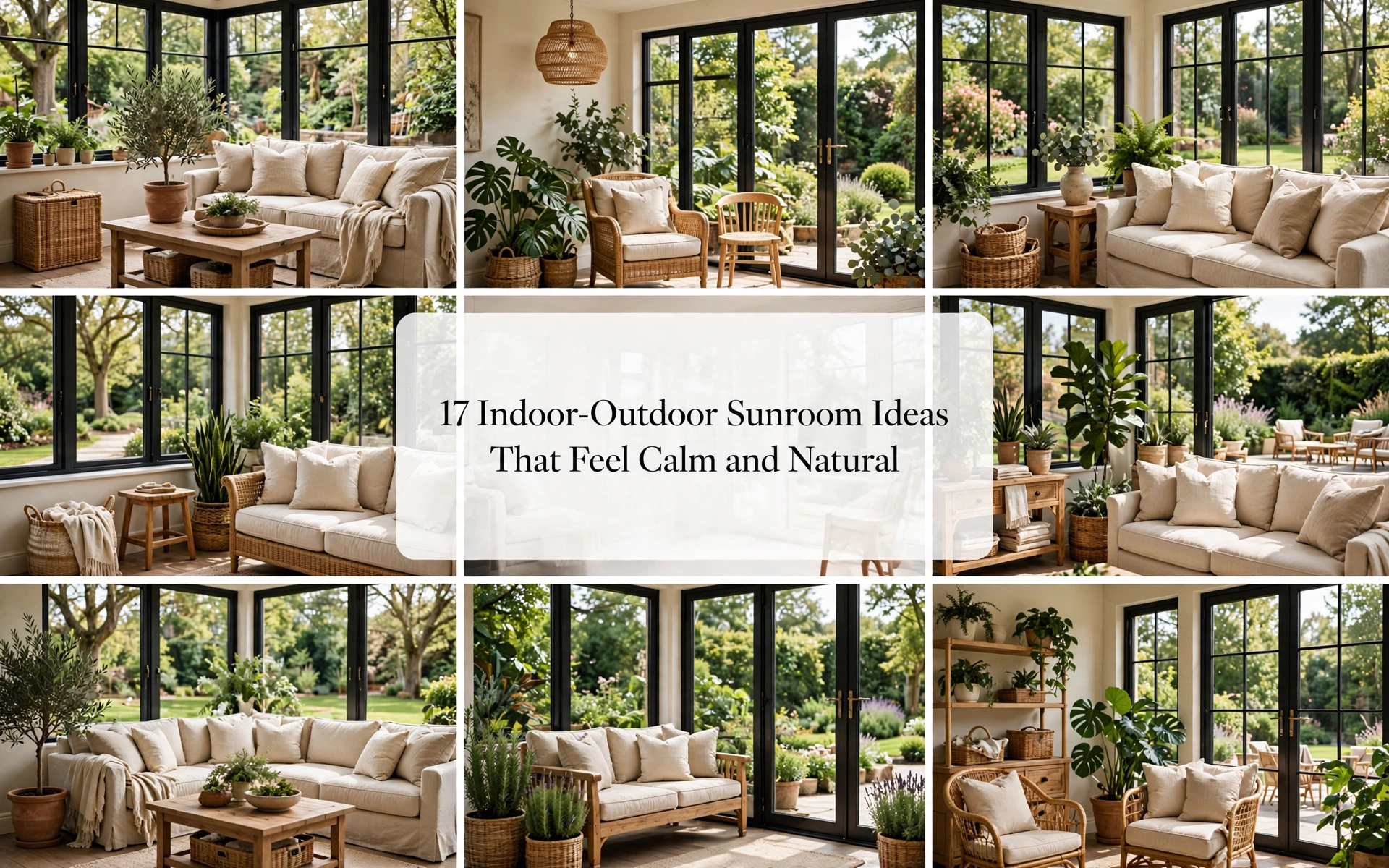
17 Indoor-Outdoor Sunroom Ideas That Feel Calm and Natural
A sunroom should feel like an easy transition between home and garden, yet it can quickly become too warm, visually cluttered, or disconnected from the rooms around it. Heavy furniture blocks the light, delicate indoor pieces may not tolerate humidity, and too many botanical accents can make the space feel themed rather than natural. The answer is a thoughtful mix of durable materials, restrained colors, comfortable seating, and greenery placed with purpose. These indoor-outdoor sunroom ideas explore 17 distinct ways to create a calm, practical retreat—from earthy neutral palettes and space-saving layouts to budget updates, built-in storage, and year-round design solutions.
1. Build a Sun-Washed Neutral Foundation

Soft, sun-washed neutrals make a sunroom feel luminous without competing with the outdoor view. Begin with warm white or pale oatmeal walls, then introduce sand, flax, putty, and light oak through furniture and textiles.
The trick is to vary the textures so the neutral room does not look flat. Pair washable linen-look cushions with a tightly woven indoor-outdoor rug, matte ceramic planters, and a rattan side table. Keep large pieces pale, but add a few medium-brown details to ground the arrangement.
Quick Win: Replace several mismatched cushion covers with two coordinated neutral tones. Choosing one warm white and one sandy beige can calm the entire room in less than an hour without requiring new furniture.
2. Use Woven Furniture to Connect Indoors and Out

Woven furniture gives an indoor-outdoor sunroom a relaxed, grounded character. Rattan, cane, wicker, and woven rope reference garden furniture while still looking refined enough to sit beside indoor finishes.
Choose one substantial woven element rather than filling the room with matching pieces. A cane-back loveseat or pair of rope lounge chairs can become the focal point, while a simple wood table keeps the room balanced. Look for performance cushions with removable covers, especially in a sunroom exposed to damp air or muddy paws.
Shop the Look
| Item | What to Look For | Approx. Price Range |
| Woven lounge chair | Sturdy frame and removable performance cushion | $180–$600 |
| Indoor-outdoor rug | Flat weave with a natural-fiber appearance | $80–$350 |
| Wood side table | Sealed teak, acacia, or solid oak | $70–$250 |
3. Frame the Garden With a Low-Profile Layout

An airy layout allows the garden—not the furniture—to become the room’s main artwork. Tall chair backs and bulky cabinets can interrupt sightlines, particularly in a small sunroom with windows on several sides.
Position a low sofa perpendicular to the strongest view instead of pushing every item against the glass. Add armless chairs or a slim bench that can be moved when needed. Leave a clear path between the interior doorway and the garden entrance; this visual corridor makes the space appear larger and improves everyday flow.
For more layout strategies, explore these small sunroom ideas that maximize light and space.
4. Layer Green Tones Without Creating a Theme

A restrained green palette feels fresh and connected to the landscape without turning the sunroom into a botanical display. The most natural result comes from mixing muted shades rather than repeating one bright green.
Start with sage or gray-green upholstery, then add olive cushions and a small amount of deeper forest green. Balance those tones with warm wood and creamy walls. Solid fabrics should form the foundation; use leaf patterns only once, perhaps on a lumbar pillow or framed textile. The surrounding garden will supply plenty of additional pattern.
Quick Win: Paint a small side table or plant stand in muted sage. It introduces a garden-inspired color without the time or commitment required to repaint the walls.
5. Create a Cozy Reading Corner Near the Best Light

A dedicated reading corner makes a sunroom feel purposeful rather than like a passage between indoors and outdoors. Choose a position with soft side light, avoiding the window that receives harsh afternoon glare.
Place a comfortable armchair at a slight angle toward the view, accompanied by a compact drink table and an adjustable floor lamp for evenings. A small ottoman adds comfort without the visual weight of a recliner. Finish with one washable throw and a basket for books or magazines. This arrangement works especially well when the rest of the room must remain open for circulation.
6. Bring in Natural Stone for a Grounded Look

Stone adds an earthy permanence that contrasts beautifully with glass and sunlight. It is particularly effective in a sunroom that otherwise contains many light, delicate surfaces.
You do not need a full stone floor or fireplace to create the effect. Try a travertine-topped coffee table, a slate plant stand, or limestone-look porcelain flooring. Keep the finish honed rather than highly polished; a low-sheen surface feels quieter and hides minor wear. Pair the stone with oak, linen, or woven fibers so the room remains warm rather than stark.
Shop the Look
| Item | What to Look For | Approx. Price Range |
| Stone-top side table | Honed travertine or durable stone composite | $120–$450 |
| Textured planter | Concrete, limestone-look, or matte ceramic | $40–$180 |
| Linen-look cushions | Removable, fade-resistant covers | $25–$80 each |
7. Add Ceiling-Mounted Curtains for Softness

Lightweight curtains soften hard window frames and improve glare control while preserving the sunroom’s open character. Hanging them close to the ceiling makes the glazing appear taller and gives the fabric a cleaner fall.
Select sheer or semi-sheer panels in warm white, flax, or pale taupe. Use enough fabric to create gentle folds, but avoid heavy pooling near exterior doors. Ceiling tracks are especially useful around corners because they create a continuous architectural line. If the room receives intense sun, layer the curtains with discreet solar shades for more reliable protection.
Quick Win: Add curtain holdbacks beside the primary garden view. Gathering the panels neatly during the day immediately reveals more glass and creates a polished frame around the landscape.
8. Design a Small Sunroom With Flexible Furniture

A compact sunroom feels calm when every piece earns its place. Oversized sofas and fixed coffee tables can make a narrow room difficult to use, even when they technically fit.
Choose a two-seat settee, nesting tables, and lightweight chairs that can be repositioned for conversation or carried onto the patio. A storage ottoman can serve as a footrest, table, or spare seat. Keep approximately 30 to 36 inches of space along the main walkway whenever the layout allows. Furniture with visible legs also exposes more floor, helping the room feel less crowded.
9. Turn the Sunroom Into a Casual Dining Space

A sunroom dining area feels bright, sociable, and naturally connected to outdoor entertaining. To keep it relaxed, avoid an overly formal matching dining set.
Combine a round pedestal table with a built-in or freestanding bench and two or three lightweight chairs. The round shape improves movement in a tight room, while the bench can sit close to a wall or low window. Use washable seat cushions and a pendant with a woven or linen shade. Keep the tabletop styling minimal so the garden remains visible during meals.
Quick Win: Place a shallow bowl filled with seasonal fruit or clipped garden branches at the center of the table. It creates a natural focal point without introducing permanent decorative clutter.
10. Introduce Terracotta in Small, Warm Accents

Terracotta brings a sun-baked warmth to an indoor-outdoor room without overwhelming its calm palette. Its earthy orange undertone works particularly well with cream, olive, faded blue, and natural wood.
Use the material in measured amounts: two aged pots, a table lamp with a clay base, or a rust-colored cushion. Vary the forms but repeat the color in no more than three places to make the styling feel intentional. If the room already has red brick, choose softer weathered clay tones instead of vivid orange so the finishes do not compete.
11. Use Built-In Storage to Hide Everyday Clutter

A refined sunroom becomes much easier to maintain when cushions, gardening tools, games, and pet supplies have concealed storage. Low cabinetry is ideal because it preserves windows and doubles as a display ledge or occasional seat.
Install shallow base cabinets beneath a solid wall or low sill, then paint them the same color as the surrounding trim. Flat-panel doors and minimal hardware keep the design understated. Inside, use labeled baskets to divide small items. Leave most of the countertop clear, adding only a lamp, a tray, or one plant.
See more ways to combine function and style in these sunroom storage and organization ideas.
Quick Win: Place matching lidded baskets beneath an existing console or bench. They create an organized storage zone immediately and are easier to add than custom cabinetry.
12. Make a Budget Sunroom Feel Collected

A collected sunroom feels personal and relaxed because its pieces appear gathered over time. This approach is ideal when a complete furniture set is outside the budget—or simply feels too predictable.
Begin with a secondhand wood table or bench, then combine it with simple upholstered seating and one vintage-style accent chair. Unify the mix through color rather than matching shapes: repeat warm brown, cream, and muted green across three or four elements. Replace damaged upholstery, tighten loose joints, and seal wood that may face strong sunlight or moisture.
The result should feel edited, not crowded, so give each distinctive piece room to breathe.
13. Create Contrast With Black Window Frames

Black window frames give a bright sunroom definition and make the outdoor greenery appear more vivid. The contrast can feel calm and architectural when the rest of the palette remains soft.
Echo the frames sparingly through a slim floor lamp, narrow table legs, or one black ceramic object. Avoid repeating black in every accessory, which can make the room feel busy. Warm white upholstery, oak furniture, and a textured beige rug will soften the strong lines. If replacing windows is unrealistic, painting existing interior frames may work, provided the surface and paint are compatible.
Quick Win: Introduce a thin black-framed mirror on the room’s only solid wall. It repeats the window geometry and reflects additional light without requiring an architectural renovation.
14. Arrange Plants as a Curated Garden View

Plants can strengthen the indoor-outdoor connection, but scattering small pots across every surface usually creates visual noise. A curated arrangement looks calmer and is easier to maintain.
Group plants in odd numbers and vary their heights: one floor plant, one medium specimen on a stand, and one trailing plant on a shelf. Select species suited to the room’s actual light and temperature changes. Repeat planter colors—such as warm white and weathered terracotta—to unify different leaf shapes. Keep windows and walkways partially open so the plants complement rather than conceal the garden.
15. Add an Indoor-Outdoor Rug for Quiet Definition

A rug anchors the furniture and gives an expansive glass room a more intimate scale. In an indoor-outdoor sunroom, performance matters as much as pattern.
Choose a flat-weave polypropylene or washable rug with a low-contrast stripe, grid, or organic motif. It should be large enough for at least the front legs of every seat to rest on it. A rug that is too small makes the furniture appear disconnected. Leave a visible floor border around the perimeter, particularly near exterior doors where damp shoes and tracked soil are common.
Shop the Look
| Item | What to Look For | Approx. Price Range |
| Indoor-outdoor rug | UV-resistant, washable, low-profile weave | $90–$400 |
| Rug pad | Moisture-resistant and suitable for the floor | $25–$100 |
| Performance pillow | Fade-resistant cover with removable insert | $30–$90 |
16. Plan Layered Lighting for Evenings

A sunroom can lose its inviting quality after sunset unless the lighting is planned for more than daytime use. Layered illumination creates a softer evening atmosphere and prevents a single ceiling fixture from producing harsh shadows.
Combine a dimmable pendant with a floor lamp beside the main chair and a shaded table lamp on a console. Choose warm bulbs around 2700K for a comfortable glow. Exterior path or garden lighting can extend the view beyond the glass, reducing the mirror-like effect of dark windows. Keep fixtures visually light so they do not compete with the architecture during the day.
Quick Win: Replace cool white bulbs with warm, dimmable versions before buying new fixtures. This inexpensive change often makes the room feel noticeably more comfortable after dark.
17. Create a Year-Round Sunroom With Seasonal Layers
A year-round sunroom should adapt without requiring a complete redesign every few months. Begin with durable neutral furniture, then use lightweight layers to respond to changing temperatures and colors outside.
Store summer linen covers and winter wool-blend throws in a nearby cabinet or basket. Add thermal shades where heat loss is a concern, and use a ceiling fan to improve warm-weather airflow. Instead of filling the room with seasonal ornaments, change a few functional textiles and clipped branches. The consistent foundation will keep the space calm while still allowing it to feel fresh throughout the year.
Quick Win: Prepare two cushion-cover sets: sage and flax for warmer months, then rust and oatmeal for fall and winter. Changing only the covers is affordable, compact to store, and visually effective.
Conclusion
A natural sunroom does not require a complete renovation or a perfectly matched furniture collection.
Start with the idea that addresses the room’s biggest weakness, whether that is glare, clutter, poor circulation, or a lack of warmth.
Then build slowly with colors and materials that relate to the landscape outside.
You can combine a neutral foundation with woven furniture, practical storage, or layered evening light without using every suggestion at once.
Let the size of the room, its sun exposure, and your budget guide the final mix.
For more focused inspiration, continue with the related small-space, color, and seasonal sunroom guides below.
Frequently Asked Questions
1. What is an indoor-outdoor sunroom?
An indoor-outdoor sunroom is an enclosed or semi-enclosed living area designed to connect the interior of a home with its garden, patio, or landscape. Large windows, natural materials, durable furnishings, and easy access to the outdoors usually define it.
2. What colors make a sunroom feel calm?
Warm white, oatmeal, sand, sage, olive, faded blue, and light brown create a soothing foundation. Use stronger colors in small amounts so they support the outdoor view rather than compete with it.
3. What furniture works best in a sunroom?
Choose furniture that tolerates sunlight, temperature changes, and occasional moisture. Woven frames, sealed wood, powder-coated metal, performance upholstery, and removable washable covers are practical options.
4. How can I make a small sunroom look larger?
Use low-profile furniture, visible legs, pale colors, and a clear path to the exterior door. Round or nesting tables also improve circulation without sacrificing useful surfaces.
5. Can I use regular indoor furniture in a sunroom?
Yes, provided the room is climate-controlled and the furniture is protected from intense direct sunlight and moisture. Fade-resistant fabrics and sealed wood finishes will usually perform better over time.
6. What type of rug is suitable for a sunroom?
A flat-weave, UV-resistant indoor-outdoor rug is usually the safest option. Select a washable material and pair it with a moisture-resistant rug pad approved for your flooring.
7. How many plants should I place in a sunroom?
There is no fixed number, but a few grouped plants generally look calmer than many small pots scattered around the room. Match each plant to the available light and leave important views unobstructed.
8. How do I prevent a sunroom from becoming too hot?
Use solar shades, light-filtering curtains, exterior awnings, or UV-control window film where appropriate. A ceiling fan and good cross-ventilation can also make the room more comfortable during warmer months.
9. How can I decorate a sunroom on a budget?
Start with secondhand wood furniture, new cushion covers, a washable rug, and grouped plants in coordinated pots. Paint and textiles can unify mismatched pieces without the expense of replacing everything.
10. Should sunroom furniture face the windows?
Not every seat needs to face directly outside. Positioning furniture perpendicular to the windows can preserve the view while encouraging conversation and maintaining a clear path through the room.
11. What window treatments are best for sunrooms?
Semi-sheer curtains provide softness, while solar or thermal shades offer more effective light and temperature control. Layering the two gives the room flexibility throughout the day and across seasons.
12. How do I make a sunroom comfortable at night?
Use multiple warm light sources instead of relying on one overhead fixture. A dimmable pendant, floor lamp, table lamp, and subtle garden lighting will create depth and reduce reflections in dark windows.
13. How can I make a sunroom feel connected to the rest of my home?
Repeat one or two interior finishes, such as the same wood tone, wall color, or metal hardware. Then introduce more durable outdoor-inspired materials gradually so the transition feels intentional.


2 Comments