
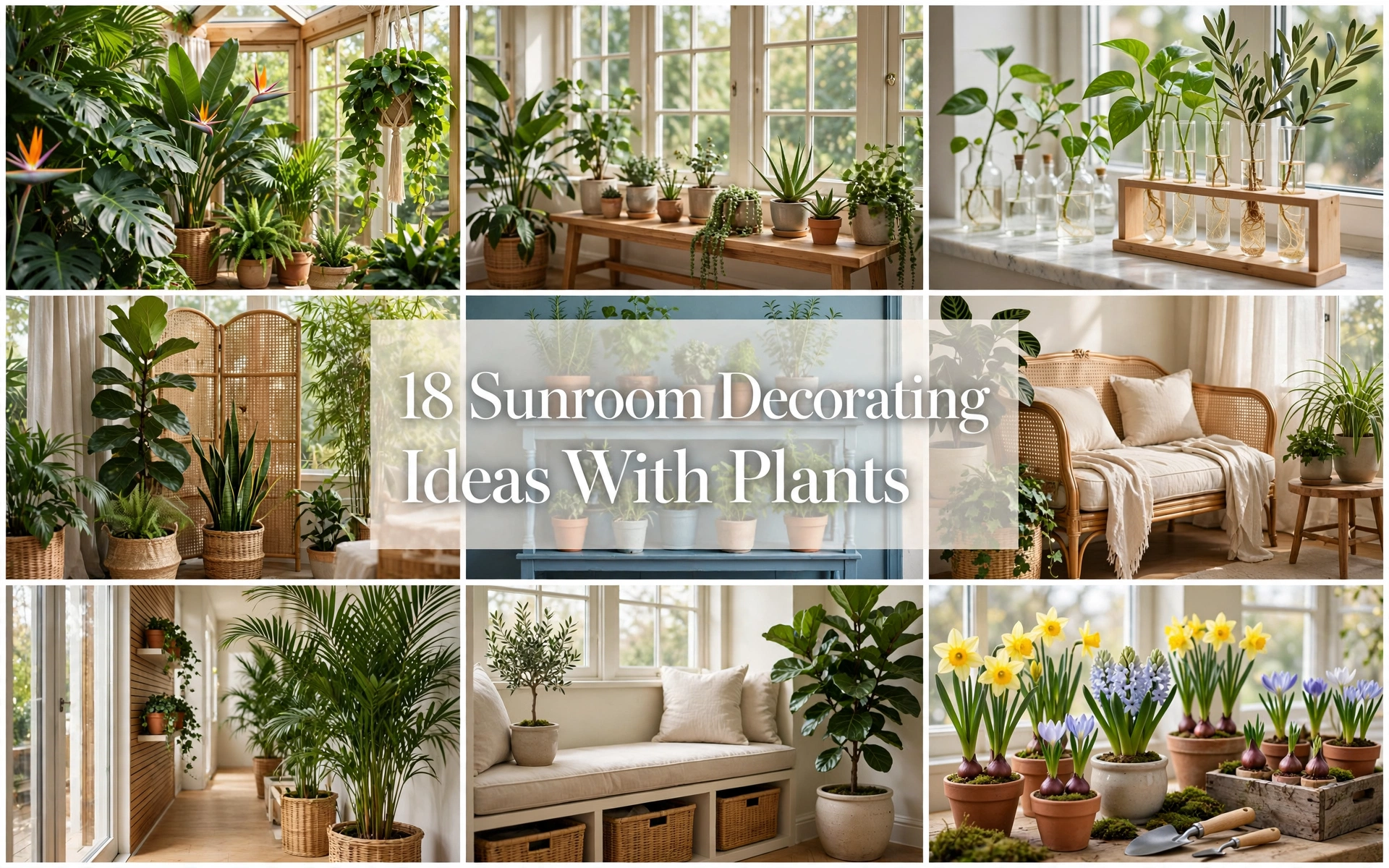
18 Sunroom Decorating Ideas With Plants
A sunroom can have plenty of light and still feel oddly unfinished. Add too many plants and it starts resembling a crowded greenhouse; add only a few small pots and they disappear against all that glass. The challenge is creating a room that feels lush without sacrificing comfortable seating, clear walkways, or a sense of calm.
The best sunroom decorating ideas with plants treat greenery as part of the design—not as an afterthought. Scale, placement, containers, furniture, and light exposure all matter. Below, you’ll find 18 practical ways to create anything from an airy reading retreat to a plant-filled dining room, including solutions for small spaces, low budgets, awkward corners, and changing seasons.
1. Frame a Cozy Reading Corner With Tall Plants

Quiet and cocooning, this arrangement turns one bright corner into a destination. Place a comfortable armchair at a slight angle rather than flat against the windows, then use one tall plant on either side to create a soft green frame. A bird of paradise and rubber plant provide height without needing dozens of pots.
Choose a slim floor lamp, a small round table, and a washable flat-weave rug. Keep foliage behind the chair arms so leaves do not crowd the seat. If afternoon sun is intense, pull the plants 12–24 inches from the glass or add a sheer shade.
Quick Win: Move two of your tallest houseplants behind an existing chair and add a throw in a color pulled from the pots. The corner will read as one intentional vignette immediately.
2. Build a Layered Plant Shelf Without Blocking the Windows

Airy and collected, a low shelf gives smaller plants presence while preserving the view. The design works because varied leaf shapes are grouped at three levels: trailing plants on top, compact foliage in the middle, and one or two upright plants beside the unit.
Use a bench-height shelf that stops below the window sill. Repeat two or three pot finishes—such as matte white, terracotta, and pale gray—so the display feels related rather than random. Leave roughly one-third of the surface empty and conceal saucers inside cachepots. This is a particularly useful approach for [small sunroom ideas with storage] when every piece needs to earn its footprint.
3. Create a Modern Sunroom With Sculptural Greenery

Refined and architectural, this look uses fewer plants with stronger silhouettes. A mature fiddle-leaf fig, sculptural euphorbia, or olive tree can act like living artwork when paired with clean-lined furniture and a restrained palette.
Choose oversized cylindrical planters in charcoal, sand, or chalky white. Keep at least 18 inches of open space around each specimen so its form remains readable. Pair warm white walls with black window frames, a low tan sofa, and one rounded coffee table to soften the geometry. Avoid scattering tiny pots across every surface; here, negative space is what makes the greenery look elevated.
Shop the Look
| Item | What to Look For | Approx. Price Range |
|---|---|---|
| Statement planter | Lightweight fiberstone, 16–22 inches wide | $70–$220 |
| Sculptural plant | Healthy, floor-standing specimen suited to your light | $60–$250 |
| Plant caddy | Low-profile, locking wheels | $20–$55 |
4. Use Hanging Plants to Free Up a Small Sunroom

Light and playful, overhead greenery adds volume without using precious floor space. Install two or three hanging plants at staggered heights near a side window, keeping the center of the room visually open. Trailing philodendron, hoya, and spider plants are reliable choices, but match each plant to the actual light level.
Anchor hooks into joists or use properly rated ceiling hardware; wet pots are heavier than they look. Select lightweight planters with removable liners and hang them away from door swings and head paths. A compact loveseat and nesting tables can sit below without making the room feel pinched.
Quick Win: Place one trailing plant on a high wall bracket rather than installing several ceiling hooks. It delivers the same upward movement and is much easier to water.
5. Pair Terracotta Pots With Natural Materials

Earthy and sun-washed, terracotta brings instant warmth to a glass-heavy room. Its matte, porous surface looks especially grounded beside rattan, jute, linen, and medium-toned wood. The trick is repeating the clay color in several sizes rather than lining up identical pots.
Cluster an odd number of plants near a rattan settee, raising one pot on a wooden stool and leaving another directly on the floor. Use cork pads and watertight saucers to protect wood or tile. Cream linen cushions and a faded rust stripe connect the seating to the pots without turning the palette orange.
For more texture-led rooms, link readers to [Internal Link: Natural Materials Decorating Ideas].
6. Turn the Dining Area Into a Garden Room

Lively yet polished, plants can soften a sunroom dining zone without competing with meals. Center a round pedestal table to improve circulation, then position greenery around the perimeter: a tall palm in an empty corner, a narrow console of herbs, and one restrained centerpiece.
Keep tabletop foliage below eye level—around 10 to 12 inches—so conversation stays easy. Washable seat covers and a flat-weave indoor-outdoor rug make the room practical for watering days. If the table sits in direct sun, use stoneware rather than delicate finishes that may fade or warp.
Quick Win: Replace a large floral arrangement with three small potted herbs on a tray. The grouping is easy to lift at mealtime and brings fragrance to the room.
7. Style a Neutral Sunroom With Tonal Planters

Calm and understated, a tonal scheme lets leaf color provide the contrast. Combine warm white, oatmeal, mushroom, and pale greige across upholstery, rugs, and pots, then vary texture so the room does not feel flat.
Try ribbed ceramic planters beside smooth plaster-look pots and a nubby linen sofa. Choose plants with distinct foliage—feathery fern, broad-leaf philodendron, and upright snake plant—rather than relying on pot color for interest. Keep soil bags and tools in a lidded basket. A few darker wood accents will ground the pale palette and make this neutral sunroom feel intentional rather than washed out.
8. Grow an Indoor Herb Wall Near the Kitchen

Fresh and functional, a vertical herb setup turns a sunny wall into useful decor. Mount two or three shallow rails or pocket planters where basil, thyme, mint, and parsley are easy to reach, but not pressed against hot glass.
Choose containers with removable inner pots and a drip-control system. Label placement outside the image is optional for real life, but keep the visual palette simple: black metal rails, white pots, and warm wood nearby. Herbs need different watering rhythms, so individual pots work better than one long shared trough. This idea connects naturally to [Internal Link: Indoor Herb Garden Ideas for Small Spaces].
Shop the Look
| Item | What to Look For | Approx. Price Range |
| Wall rails | Rust-resistant metal with secure brackets | $30–$90 |
| Removable herb pots | Drainage holes plus fitted drip trays | $6–$18 each |
| Compact grow light | Full-spectrum, timer-equipped bar | $25–$70 |
9. Make a Tropical Statement With One Dense Corner

Lush and immersive, this approach concentrates tropical foliage in one area instead of spreading it everywhere. Group five to seven plants by height: palms or bird of paradise at the back, monstera in the middle, and calathea or fern at the front.
Use matching dark saucers and pots in adjacent natural tones to quiet the mix. Plants grouped together can create a slightly more humid pocket, but they still need airflow; leave a few inches between leaves and inspect regularly for pests. Keep the rest of the sunroom simple with light seating and an open floor so the green focal point feels deliberate.
Quick Win: Hide mismatched nursery pots inside coordinated woven baskets and ceramic cachepots. Use waterproof liners so the fast visual upgrade does not create moisture damage.
10. Add a Plant Bench Beneath Awkward Windows

Orderly and practical, a custom-looking bench resolves low or unusually spaced windows. Use a narrow wood bench below the sill and arrange plants in a gentle height rhythm rather than a rigid row. It creates display space while keeping the glass unobstructed.
A budget version can be made from a sturdy unfinished bench sealed against moisture. Add felt-backed waterproof trays, then combine compact plants such as peperomia, African violet, and bird’s-nest fern. Avoid placing heavy pots near the edges, and confirm the bench can support the fully watered weight. The open area beneath can hold two uniform baskets for tools and spare pots.
11. Design a Budget Sunroom With Propagated Plants

Personal and easygoing, propagated cuttings create a green display without buying mature plants. Arrange clear glass vessels on a narrow console where roots can become part of the decoration, then mix in a few potted “parent” plants for visual weight.
Use containers with narrow necks to hold stems upright, and keep only healthy cuttings in fresh water. Repetition makes recycled bottles feel intentional: choose clear glass in two or three shapes and place them on one tray. Avoid a crowded science-lab look by limiting the display to seven vessels and leaving open space around it.
Quick Win: Take three pothos cuttings just below a node and place them in matching water glasses. Grouping identical vessels makes even a no-cost project look considered.
12. Use a Plant-Filled Console to Create Privacy
Soft and sheltered, a console-height line of foliage can screen an exposed sunroom without covering the entire window. Select plants that grow upright or gently outward, such as dracaena, bamboo palm, or compact schefflera, and stagger them rather than building a solid green wall.
Set the console several inches from the glass to allow air movement and curtain access. Pots should sit below the window’s midpoint while foliage reaches the desired sight line. This works best for a street-facing room where you want filtered views, not complete blackout. Pair it with bottom-up shades for adjustable privacy after dark.
13. Introduce Color Through Painted Plant Stands

Cheerful but controlled, painted stands add personality without committing the walls or furniture to a bold shade. Choose one accent color—dusty blue, olive, ochre, or muted coral—and repeat it on two stands of different heights.
Keep the pots neutral so color appears as a deliberate line beneath the foliage. A satin or exterior-grade finish handles occasional splashes better than flat paint. Place the taller stand behind a chair or near a blank wall, not directly in a busy walkway. Echo the color once in a cushion or throw; more repetition can make the scheme feel themed.
Quick Win: Sand and repaint a basic stool with leftover cabinet paint, then top it with one trailing plant. It is a quick way to lift foliage into the window light.
14. Mix Vintage Furniture With Botanical Layers

Storied and relaxed, vintage pieces prevent a plant-filled room from feeling showroom-perfect. Start with one functional anchor—a cane daybed, weathered farm table, or bentwood chair—then layer botanical prints, aged brass, and timeworn pottery around it.
Keep the palette edited so “collected” does not become cluttered. Olive, tobacco brown, cream, and faded black work well with greenery. Hang two framed botanical prints on an interior wall rather than competing with the windows. Check old furniture for stability and use trays beneath vintage pots, which may not be watertight.
For a broader collected look, add [Internal Link: Vintage-Inspired Decorating Ideas] as a supporting read.
15. Make a Narrow Sunroom Feel Larger With a Green End Point

Open and directional, a single plant focal point at the far end can visually lengthen a narrow sunroom. Keep the long sides relatively quiet, use furniture with exposed legs, and place one tall, airy specimen—such as a kentia palm—on the room’s centerline at the end.
Run a striped flat-weave rug lengthwise to reinforce the sight line. Wall-mounted lights and a shallow bench preserve floor width, while one or two small plants near the entrance create continuity. Avoid lining both sides with pots; that “corridor of plants” effect steals walking space and makes the room look narrower.
16. Add Hidden Storage Beneath a Window Seat
Cozy and hardworking, a built-in-style window seat combines lounging, plant display, and concealed storage. Use drawers or lift-up compartments for soil, watering cans, and seasonal textiles, then place plants on the side ledges rather than across the sitting surface.
Choose performance fabric for the cushion and ventilated storage for anything that may be damp. Keep large foliage away from the back cushion so leaves are not crushed. A pair of slim sconces makes the seat useful after sunset, while matching planters at each end give the whole feature symmetry.
Quick Win: No built-in required: place a storage bench beneath the window and add a made-to-measure cushion. Use one plant stand at each end to create the fitted look.
Shop the Look
| Item | What to Look For | Approx. Price Range |
| Storage bench | Moisture-resistant finish, lift-up or drawer storage | $180–$650 |
| Bench cushion | Removable performance-fabric cover | $70–$220 |
| Slim plant stands | Stable bases, coordinated finish | $35–$100 each |
17. Plan a Four-Season Plant Display

Adaptable and balanced, a four-season sunroom looks intentional even when light and temperature change. Put permanent, dependable plants in the main positions, then reserve one tray or pedestal for seasonal rotation—spring bulbs, summer herbs, autumn foliage, or winter cyclamen.
Measure temperatures near the windows before choosing plants; a heated room and an unheated porch are very different environments. Install sheer shades for summer glare and move sensitive pots away from cold glass in winter. Using lightweight cachepots or rolling caddies makes rearranging easier without redesigning the whole room.
Quick Win: Designate one tabletop tray as the seasonal zone. Swapping three small pots is faster and more cohesive than changing accessories throughout the room.
18. Finish With Evening Lighting Among the Plants

Warm and atmospheric, thoughtful lighting keeps the sunroom inviting after the daylight disappears. Use three layers: an overhead fixture for general light, a floor or table lamp beside seating, and a small uplight aimed through the leaves of one statement plant.
Choose warm bulbs around 2700K and keep cords secured away from watering zones. A dimmer prevents the glass from turning into a harsh mirror at night. Rather than illuminating every pot, highlight just two focal areas and let the remaining greenery fall into soft shadow. The result feels like a real living space—not a plant display that closes at sunset.
Shop the Look
| Item | What to Look For | Approx. Price Range |
| Plant uplight | Low-profile, warm LED, damp-location appropriate | $25–$80 |
| Floor lamp | Stable base, shaded warm light | $70–$250 |
| Dimmer solution | Compatible wall dimmer or plug-in unit | $20–$70 |
Conclusion
A plant-filled sunroom works best when greenery supports how you actually want to use the space. You do not need to recreate all 18 ideas—or buy an instant indoor jungle—to make the room feel finished. Start with one change that solves a real problem, whether that is framing a reading chair, clearing the floor, adding privacy, or creating storage. Then repeat a few materials or planter colors so the room feels connected. Let your light conditions, floor plan, style, and budget guide the final choices. For more inspiration, explore [Internal Link: Cozy Sunroom Ideas], [Internal Link: Small Sunroom Layout Ideas], and [Internal Link: Indoor Plant Styling Ideas].
Frequently Asked Questions
1. What plants are best for a bright sunroom?
Bird of paradise, citrus, many succulents, and some palms appreciate strong light, but “bright” does not always mean direct sun. Check each plant’s needs and observe how many hours of direct light the room receives.
2. How do I keep a sunroom from looking cluttered with plants?
Group plants into two or three intentional zones, repeat a limited pot palette, and leave visible empty surfaces. Varying plant height within clusters looks more organized than placing a separate pot in every gap.
3. How many plants should I put in a small sunroom?
There is no fixed number, but five well-scaled plants often have more impact than fifteen tiny ones. Start with one floor plant, one trailing plant, and a compact cluster, then assess the remaining walking space.
4. Can houseplants survive in an unheated sunroom?
Only if the winter temperatures stay within each plant’s safe range. Use a min-max thermometer near the windows, avoid cold glass, and move tropical plants indoors before temperatures drop below their tolerance.
5. How can I protect sunroom floors when watering plants?
Use watertight saucers or cachepots, cork-backed pads, and a washable mat at the main watering station. Empty standing water promptly, especially on wood, laminate, and porous stone.
6. What planter colors work best in a sunroom?
Terracotta creates warmth, pale neutrals keep the room airy, and charcoal suits a modern scheme. Limiting the display to two or three coordinated finishes helps mixed plant shapes feel cohesive.
7. How do I prevent leaves from scorching near sunroom windows?
Acclimate plants gradually, move sensitive leaves back from the glass, and use sheer solar shades during the strongest afternoon sun. Watch for bleached or crisp patches and adjust placement quickly.
8. What furniture materials pair well with lots of plants?
Rattan, sealed wood, metal, linen-look performance fabric, and indoor-outdoor textiles all complement greenery. Choose finishes that tolerate humidity, soil, and occasional water rather than delicate untreated surfaces.
9. How can plants create privacy without blocking all the light?
Stagger medium and tall foliage on a console or low bench instead of creating a dense wall. Plants with airy leaves filter views while allowing daylight to pass between stems.
10. Are hanging plants safe in a sunroom?
Yes, when hooks are anchored into suitable structure and rated for more than the wet pot’s weight. Keep hanging plants clear of doors, ceiling fans, and normal walking paths.
11. How often should I rotate sunroom plants?
Rotate pots a quarter turn every week or two if growth leans toward the windows. Some sensitive or flowering plants prefer less disturbance, so adjust the routine based on the species.
12. How do I decorate a sunroom with plants on a budget?
Propagate cuttings, reuse coordinated glass vessels, repaint existing stools as plant stands, and buy smaller healthy plants that can mature in place. Grouping inexpensive items intentionally matters more than buying many accessories.
13. Should every plant in a sunroom use the same pot?
No. Matching every container can feel rigid; repeating two or three colors or materials creates unity while allowing variation. Keep drainage needs and fully watered weight more important than appearance alone.


