
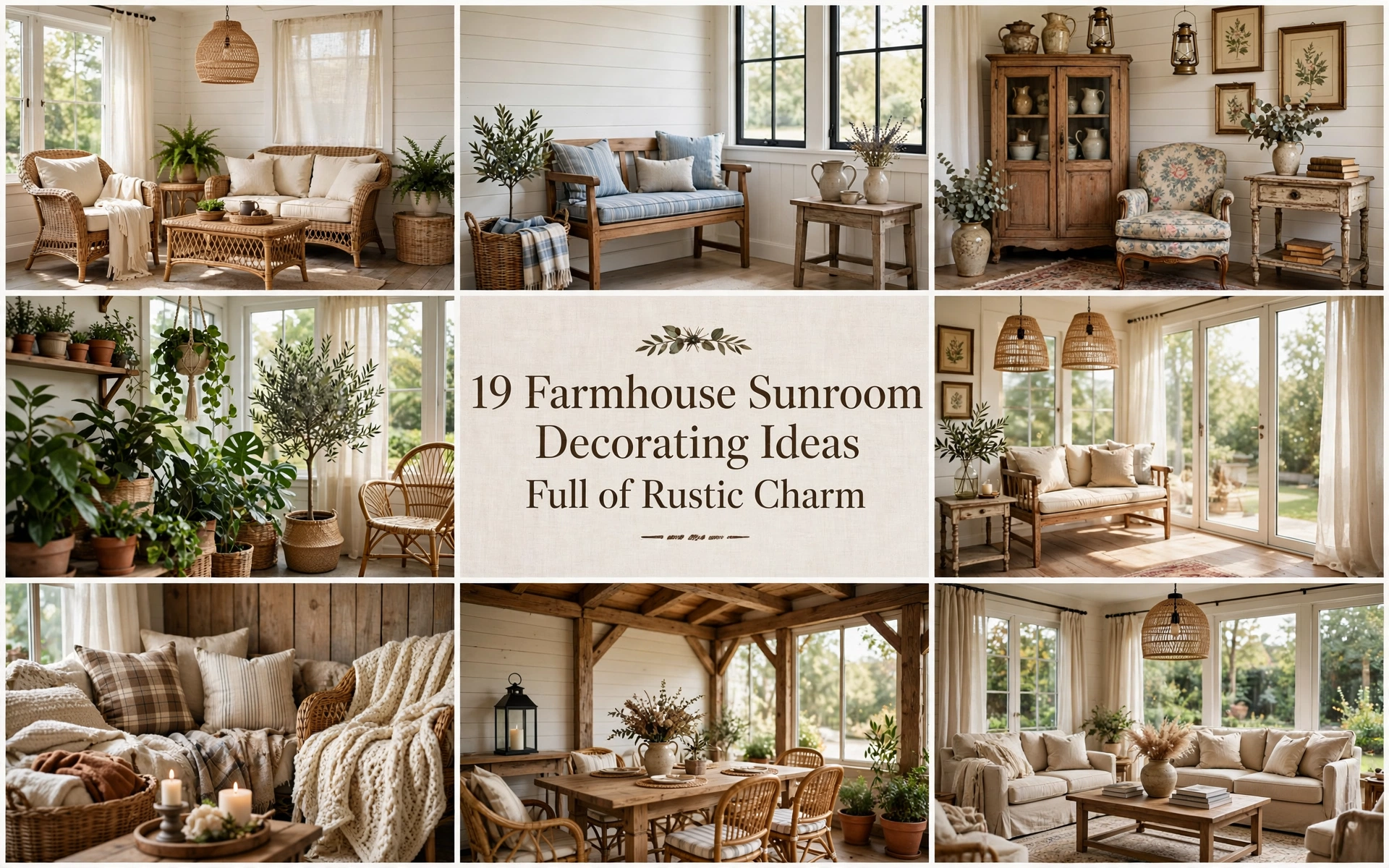
19 Farmhouse Sunroom Decorating Ideas Full of Rustic Charm
A sunroom should feel like the easiest room in the house, yet it often ends up caught between an indoor living space and an unfinished porch. Too much rustic decor can make it feel themed, while lightweight patio furniture may leave it cold and temporary. The answer is to combine farmhouse character with comfortable pieces, practical layouts, and finishes that respond well to abundant daylight. These 19 farmhouse sunroom decorating ideas cover warm color palettes, small-space seating, vintage accents, natural materials, storage, and four-season comfort. Each one offers a specific look you can recreate without remodeling the entire room. Start with the room’s permanent features, then layer in the idea that best suits how you actually want to use the space.
1. Build the Room Around Warm White and Reclaimed Wood

Sun-washed and grounded, this classic farmhouse pairing lets the windows remain the star without making the room feel bare. Choose a warm white with creamy undertones for the walls, then introduce reclaimed wood through a console, coffee table, or narrow ceiling beam. Medium-brown timber gives the pale shell enough visual weight.
Keep the furniture simple: a slipcovered sofa, two compact wood-frame chairs, and a woven basket for throws. Limit distressed finishes to one or two pieces so the rustic sunroom decor feels collected rather than staged. If the room receives harsh afternoon light, use washable oatmeal linen shades to soften glare while preserving the airy mood.
Quick Win: Replace a glossy or glass coffee table with a secondhand wood table in a warm mid-tone. A coat of clear matte wax can unify an uneven finish without erasing the age marks that give it farmhouse character.
| Item | What to Look For | Approx. Price Range |
| Slipcovered sofa | Washable warm-white or oatmeal fabric | $700–$1,800 |
| Reclaimed wood table | Solid top, matte finish, simple base | $150–$600 |
| Woven basket | Large seagrass or rattan weave | $35–$100 |
2. Turn One Sunny Corner Into a Farmhouse Breakfast Nook

Cheerful and intimate, a breakfast nook gives the sunroom a clear purpose while using less floor space than a full lounge arrangement. Place a round pedestal table near the brightest window; its single base keeps chair movement easy and makes a tight corner feel less crowded. Pair it with two spindle-back chairs and a short upholstered bench.
Use a small-scale ticking stripe or muted gingham on the bench cushion, then repeat one color in simple café curtains. A milk-glass pendant centered over the table adds farmhouse charm after sunset. Leave at least 30 inches behind movable chairs whenever possible, and explore more [Internal Link: Cozy Breakfast Nook Ideas] if dining is the room’s main job.
3. Mix Rattan Seating With Tailored Linen

Relaxed yet refined, rattan prevents a farmhouse sunroom from feeling too heavy with timber. The trick is to balance its casual texture with tailored upholstery. Use a rattan loveseat or two woven armchairs, then add boxy linen cushions in flax, ivory, or soft gray. A slim oak side table keeps the material mix connected.
Choose indoor-quality rattan rather than bulky outdoor resin when the space is fully enclosed. One striped lumbar pillow and a lightweight cotton throw are enough pattern; too many woven accessories can turn the room into a conservatory cliché. This mix is especially useful when you want a cozy farmhouse sunroom that still feels breezy in summer.
4. Use Muted Sage for an Earthy Farmhouse Sunroom

Calm and garden-connected, sage green bridges the view outdoors with the room inside. Paint lower wall paneling or a single solid wall in a gray-based sage, leaving the window-heavy surfaces warm white. Natural oak, aged brass, and cream upholstery keep the palette earthy rather than overly sweet.
Echo the green once or twice through a botanical pillow or glazed ceramic pot, but avoid matching every accessory. The design works because the color has room to breathe. For a durable finish near doors and plants, choose an eggshell or satin paint that wipes clean. Readers exploring this softer palette may also enjoy [Internal Link: Sage Green Living Room Ideas].
| Item | What to Look For | Approx. Price Range |
| Sage paint | Gray-based, washable eggshell or satin | $35–$75 per gallon |
| Brass table lamp | Aged or unlacquered finish, linen shade | $70–$220 |
| Ceramic planter | Matte or lightly glazed, simple shape | $30–$120 |
5. Make a Fieldstone Fireplace the Rustic Focal Point

Hearty and cocooning, a fieldstone fireplace turns a bright glass room into a space people use in colder months. Keep the stonework visually quiet by choosing a mortar color close to the stone and a plain reclaimed timber mantel. Arrange a sofa and two chairs in a U-shape so the fire—not the windows—anchors conversation.
Balance the rugged surface with smooth plaster walls and a low-pile wool rug. Skip tiny mantel accessories; one landscape painting, a crock, and a pair of iron candlesticks have better scale. If adding a working fireplace is unrealistic, a compact electric insert inside a simple stone-look surround can create a similar focal point with fewer structural changes.
Quick Win: Give an existing plain firebox more presence with a chunky salvaged-wood mantel shelf. Keep its depth proportional and install it to local clearance requirements; the single architectural change can establish the room’s rustic focal point.
6. Choose a Built-In Banquette for a Small Farmhouse Sunroom

Efficient and cozy, an L-shaped banquette makes awkward corners useful while freeing the center of a narrow room. Build the seat 18 to 20 inches high and about 20 inches deep before adding cushions, then include hinged lids or deep drawers for seasonal textiles. A small oval table avoids sharp corners in the walkway.
Paint the base the same warm white as the walls so it visually recedes. Use a durable performance fabric in oatmeal or a tiny windowpane check, and limit loose pillows so the bench remains practical. These small farmhouse sunroom ideas work best when every piece earns its footprint; more strategies appear in [Internal Link: Small Sunroom Ideas That Maximize Space].
Quick Win: Create the banquette effect without carpentry by placing two matching storage benches in an L shape. Secure them against shifting, add one continuous-looking cushion per side, and leave the corner free rather than overfilling it with pillows.
7. Layer Jute and Wool Rugs for Softness Underfoot

Textural and warm, layered rugs soften tile or painted floorboards without hiding their farmhouse character. Start with a flatwoven jute rug large enough to sit beneath the front legs of all main furniture. Center a smaller low-pile wool rug on top to define the seating area and add color.
Choose a faded rust, indigo, or olive pattern that can handle tracked-in dirt. A rug pad between slippery layers keeps the arrangement secure, especially near exterior doors. Keep at least six inches of jute visible around the upper rug so the layering looks intentional. This approach brings pattern into neutral sunroom furniture ideas without committing to colorful upholstery.
8. Add Black Window Frames for Modern Farmhouse Contrast

Graphic and polished, black window frames give a light sunroom definition without requiring layers of decoration. Let them be the strongest dark element, then repeat black sparingly in a slim floor lamp, chair legs, or a single metal-framed table. Warm white walls and pale oak flooring prevent the contrast from feeling severe.
For an affordable update, paint removable interior window trim only if the material and manufacturer allow it; do not cover tracks, seals, or hardware. Keep upholstery in camel, cream, and flax to warm the palette. Among modern farmhouse sunroom ideas, this one looks most convincing when surfaces remain restrained and the window grid stays clearly visible.
| Item | What to Look For | Approx. Price Range |
| Floor lamp | Slim matte-black stem, warm bulb | $80–$250 |
| Accent chair | Camel leather or easy-care faux leather | $300–$900 |
| Coffee table | Fine metal frame, simple wood or stone top | $150–$500 |
9. Style a Vintage Garden-Room Corner

Collected and nostalgic, a garden-room corner nods to traditional farmhouse utility without covering every surface in signs and ornaments. Place a scrubbed pine worktable beneath a window, then style it with terracotta pots, a galvanized watering can, and one task lamp. Hang a shallow peg rail above a solid wall for hand tools and an apron.
Keep soil and supplies inside lidded crocks or baskets so the display remains functional and tidy. This corner suits seed starting, flower arranging, or repotting small houseplants. Leave one-third of the tabletop clear for actual work; the negative space is what separates an intentional vignette from storage overflow.
Quick Win: Gather mismatched terracotta pots and soften their appearance with a dry brush rather than artificial heavy distressing. Group them in odd numbers on a single tray so watering is easier and the display reads as one composition.
10. Introduce Ceiling Beams Without Darkening the Room

Architectural and balanced, ceiling beams can give a plain sunroom instant farmhouse structure. The safest visual approach is a warm, medium wood tone against a white ceiling, with beams running perpendicular to the longest wall. Their rhythm can make a narrow space feel wider and more intentional.
Use lightweight faux beams when the ceiling cannot support solid timber, and keep their size proportionate—oversized dark beams can press down on a low ceiling. Repeat the wood tone once at eye level through a console or chair frame. If the roofline is vaulted, a single ridge beam may be more effective than several decorative crossbeams.
11. Soften French Doors With Relaxed Linen Panels

Quiet and graceful, linen panels soften hard door frames and control glare while maintaining the easy character of a farmhouse interior. Mount the rod several inches above the French doors and extend it beyond the frame so panels can stack clear of the glass. Choose unlined flax or warm-white linen for filtered light.
Let the fabric just skim the floor; puddled hems collect dust and moisture in a high-traffic sunroom. Simple black or aged-brass rings add a modest detail without feeling formal. If doors open outward, full-height curtains work well; for inward-opening doors, consider individual Roman shades to prevent fabric from catching.
Quick Win: Replace short curtain rods with one wider rod that lets the fabric sit beyond the door or window frame. More exposed glass creates an immediate sense of height and makes inexpensive panels look properly fitted.
12. Create a Daybed Reading Nook With Quilts

Snug and unhurried, a daybed turns a quiet end of the sunroom into a place for reading, napping, or hosting an occasional guest. Position it against the only solid wall so circulation remains open beside the windows. Choose a simple wood or painted frame with a real twin mattress for comfort.
Layer a lightweight cotton quilt, one Euro pillow, and two standard sleeping pillows rather than a mountain of cushions. A swing-arm sconce frees the small side table for a book and drink. If the room experiences strong sun, select washable, colorfast fabrics and rotate the quilt periodically to reduce uneven fading.
| Item | What to Look For | Approx. Price Range |
| Daybed frame | Simple wood or painted frame, twin size | $250–$900 |
| Cotton quilt | Lightweight, washable, colorfast | $70–$220 |
| Swing-arm sconce | Plug-in option with warm task light | $60–$200 |
13. Design a Rustic Sunroom Dining Space

Welcoming and sociable, a farmhouse dining setup works especially well in a larger sunroom connected to the kitchen. Choose a rectangular trestle table that leaves at least 36 inches of circulation around its busiest sides. Mix a bench on the window side with chairs on the aisle side to preserve the view and simplify movement.
Hang a linear iron or aged-brass fixture centered on the table, not the room. Use washable linen-look runners rather than a full cloth, which can feel formal and conceal the wood. A low bowl of branches keeps sightlines open. For more ways to furnish a multipurpose eating area, see [Internal Link: Farmhouse Dining Room Ideas].
14. Assemble a Budget Farmhouse Sunroom With Thrifted Pieces

Personal and unfussy, a thrifted room gains character through compatible shapes and colors rather than a matching set. Start with one dependable anchor—a neutral sofa or loveseat—then look for wood side tables, rush-seat chairs, iron lamps, and crocks that share warm undertones. Repeating the same finish on small frames or hardware creates continuity.
Inspect secondhand seating for sturdy joints, odors, and upholstery costs before buying. Avoid filling every gap just because an item is inexpensive; measure the room and keep a wish list with maximum dimensions. A cohesive budget farmhouse sunroom often looks richer when it contains fewer, better-scaled pieces with signs of genuine age.
Quick Win: Unify mismatched thrifted frames with one matte paint color, then fill them with botanical sketches or personal black-and-white photos. Keep the art sizes varied but the mat colors consistent for a collected, calm result.
15. Hide Clutter in a Window Seat With Drawers

Streamlined and practical, a window seat uses the lowest part of the room for both lounging and concealed storage. Deep drawers are easier to access than hinged lids when cushions are in place, and a recessed toe kick helps the unit feel built in. Stop the cabinetry below the sill so it never blocks the window.
Use drawers for board games, throws, pet supplies, or gardening gear, with dividers to prevent them becoming catchalls. Match the paint to the trim and use aged-brass cup pulls for quiet contrast. This is one of the most useful farmhouse sunroom decorating ideas for a busy household because the room can return to calm in minutes.
Quick Win: Add matching lidded baskets beneath an existing open bench before committing to cabinetry. Label the contents inside the lids—not on the visible front—to preserve a clean appearance while keeping everyday items easy to find.
16. Make a Four-Season Sunroom Feel Warm in Winter

Sheltered and layered, a winter-ready sunroom depends as much on comfort as appearance. Start with thermal cellular shades or lined curtains at the coldest glass, then add a dense wool rug and upholstered seating that does not feel chilly to the touch. Plaid, bouclé, and brushed cotton introduce warmth through texture.
Use warm 2700K bulbs in shaded lamps to balance blue winter daylight. Place seating away from noticeable drafts, but never block vents or safe heat sources. A slim electric stove can add atmosphere where properly installed and permitted. For seasonal continuity, keep the permanent palette neutral and swap only throws, pillows, and branches as the weather changes.
| Item | What to Look For | Approx. Price Range |
| Cellular shades | Light-filtering or thermal, fitted to each opening | $60–$250 per window |
| Wool rug | Dense low pile, large enough for seating group | $250–$1,200 |
| Electric stove | Slim profile, safety-certified, realistic flame | $180–$700 |
17. Freshen the Room With Faded Blue and Natural Fiber

Breezy and familiar, faded blue gives farmhouse style a summer lift without turning the room coastal. Begin with a warm neutral base, then use dusty blue on two or three movable elements: a striped chair cushion, cotton throw, and ceramic lamp. Natural jute and pale cane keep the scheme dry and textured.
Avoid bright navy-and-white contrast or seashell motifs if you want the look to remain rural. Instead, choose washed patterns that resemble old ticking or block print. A vase of meadow flowers adds soft color without competing with the view. When autumn arrives, the same foundation can shift easily to rust or olive accents.
Quick Win: Change only the cushion covers and one throw for the season. Faded blue textiles add a fresh note in under an hour, and storing covers instead of whole pillows saves valuable cabinet space.
18. Create a Collected Conservatory With Indoor Plants

Lush but orderly, a planted sunroom feels most inviting when greenery follows the architecture instead of obscuring it. Place taller plants at corners or between window bays, medium plants on a sturdy stand, and trailing varieties on one high shelf. This creates a varied canopy while preserving light and sightlines.
Choose plants for the room’s actual temperature and sun exposure, and protect wood floors with waterproof saucers. Repeat planter materials—aged terracotta, woven cachepots, and one dark metal stand—for consistency. Keep at least one window bay mostly clear. A focused collection is easier to water and looks more intentional than tiny pots scattered across every ledge.
19. Finish With Layered Evening Lighting

Glowing and restful, layered lighting makes the sunroom useful after the view disappears. Combine a dimmable central pendant for general light, shaded table or floor lamps at seated eye level, and one discreet accent light aimed at a beam, plant, or stone wall. Keep every bulb in the same warm color temperature.
Use plug-in sconces when outlets are limited, and route cords safely along baseboards rather than across walkways. Candles inside enclosed lanterns can add atmosphere, but flameless versions are safer near curtains and dried stems. This final layer turns a daytime-focused decorating scheme into a room that feels equally welcoming for evening conversation.
Quick Win: Put existing lamps on compatible dimmer plugs and replace mismatched bulbs with the same warm 2700K temperature. The room will look more cohesive immediately, with no rewiring and no need to buy new fixtures.
Conclusion
A farmhouse sunroom does not need a complete makeover to feel settled, useful, and full of character. Begin with the room’s purpose, whether that is morning coffee, family dining, reading, gardening, or evening conversation. Then borrow one or two ideas that solve a real need in your space. Warm wood, practical textiles, thoughtful lighting, and measured vintage accents can do more than a room full of themed decor. Let your windows and outdoor view guide the palette, and adjust the details to your climate and budget. For the next layer of inspiration, explore the related small-space, dining, color, and porch ideas below.
Frequently Asked Questions
1. What colors work best in a farmhouse sunroom?
Warm white, cream, oatmeal, muted sage, dusty blue, and soft olive complement natural light and rustic materials. Add medium wood tones or restrained black accents so a pale room still has definition.
2. How do I make a sunroom feel cozy without blocking the windows?
Build warmth from the floor and furniture level with a rug, upholstered seating, throws, and shaded lamps. Keep tall cabinets and heavy decor away from the main window bays.
3. What furniture is best for a farmhouse sunroom?
Choose furniture according to the room’s temperature and humidity. Slipcovered sofas, wood-frame chairs, indoor rattan, pedestal tables, benches, and storage seats all suit the style while remaining practical.
4. How can I decorate a small farmhouse sunroom?
Use a corner banquette, oval pedestal table, slim-arm seating, and storage benches. Keep the central walkway open and choose furniture with visible legs so more floor remains in view.
5. Can I combine modern and rustic farmhouse elements?
Yes. Pair clean upholstery and black window frames with warm oak, linen, jute, or one reclaimed-wood piece. Limit distressed decor so the contrast feels deliberate rather than themed.
6. What type of rug works in a sunroom?
Low-pile wool, flatwoven jute, washable cotton, and quality indoor-outdoor rugs are practical options. Consider moisture, fading, door clearance, and cleanability before choosing a fiber.
7. How do I prevent sunroom fabrics from fading?
Use colorfast or performance fabrics, rotate cushions, and install light-filtering shades for intense hours. Even fade-resistant textiles last longer when they are not exposed to direct sun every day.
8. Are curtains or blinds better for a farmhouse sunroom?
Linen curtains add softness, while fitted cellular shades or Roman shades save space and control glare. The best choice depends on door movement, insulation needs, and available wall area.
9. How can I decorate a farmhouse sunroom on a budget?
Invest in one reliable seating anchor, then add measured thrifted tables, rush-seat chairs, baskets, and frames. Paint or repeated hardware can make mismatched finds feel visually connected.
10. What plants suit a sunny enclosed porch?
Plant choice depends on heat, direct-sun hours, and winter temperature. Match each species to the actual conditions, group pots for simpler watering, and always protect the floor with waterproof saucers.
11. How can I make a three-season sunroom usable in cooler weather?
Add thermal shades, a dense rug, brushed textiles, and warm layered lighting. Use only heaters or electric stoves appropriate for the room and follow manufacturer and local safety requirements.
12. How much farmhouse decor is too much?
If decorative signs, distressed finishes, and small accessories compete with the view, edit them back. A few authentic materials—wood, linen, iron, stone, and pottery—usually communicate the style more effectively.
13. What lighting should a sunroom have at night?
Combine overhead ambient light, shaded lamps near seats, and one accent light. Matching warm-white bulbs around 2700K create a more comfortable, cohesive atmosphere than mixed color temperatures.