
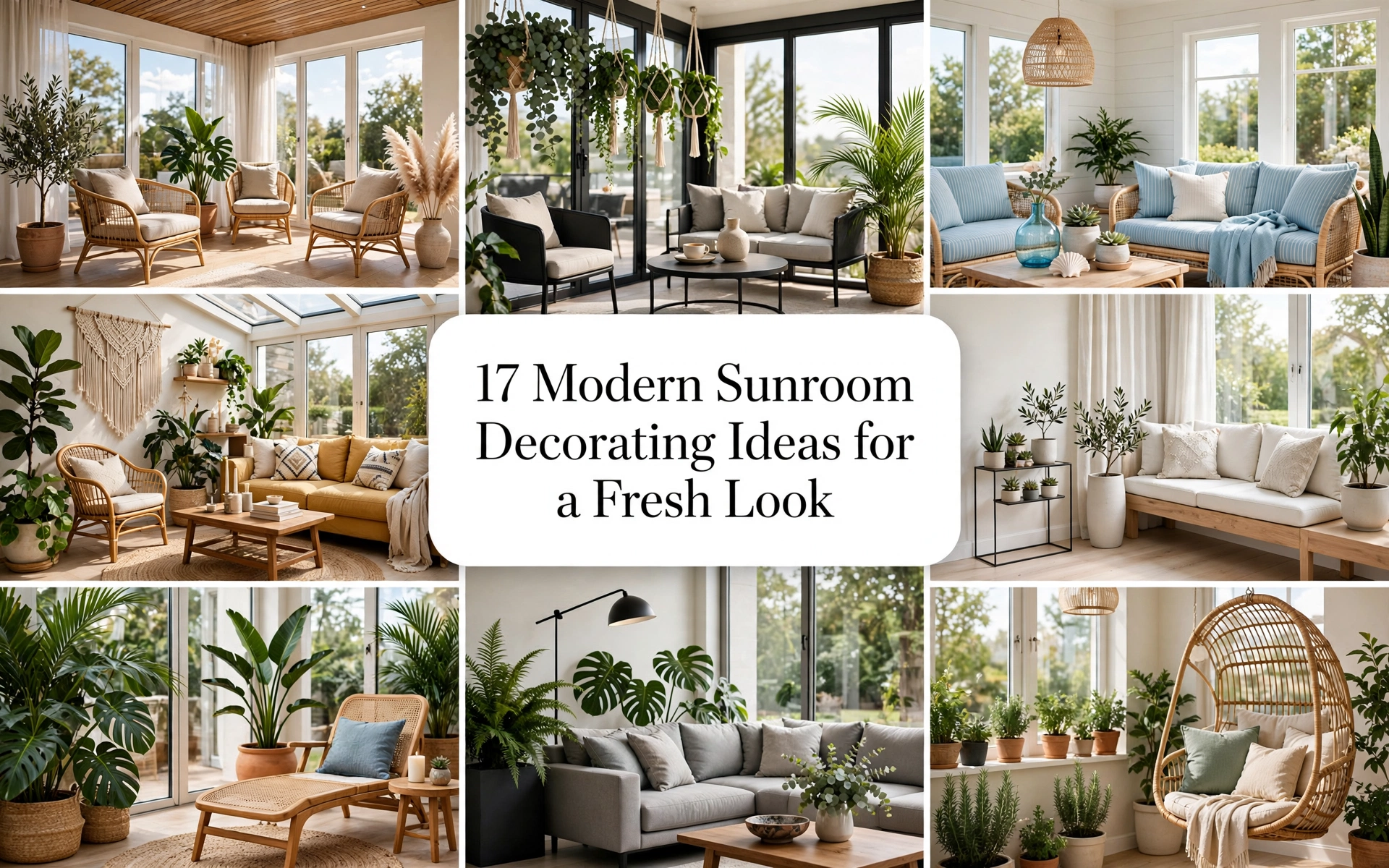
Top 17 Decorating Ideas for a Modern Sunroom
A sunroom should be the easiest room in the house to love, yet all that glass can make decorating surprisingly awkward. Too little furniture leaves it feeling unfinished; too much blocks the light and turns a bright retreat into a crowded pass-through. Heat, glare, limited wall space, and mismatched outdoor views complicate things further. The good news is that a successful sunroom needs neither a full renovation nor a showroom-sized budget. It needs a clear purpose, a controlled palette, and a few materials that look better in natural light. These 17 modern sunroom decorating ideas cover airy layouts, cozy textures, smart shade solutions, compact furniture, storage, plants, and budget-friendly updates—so you can create a fresh room that is comfortable at every hour of the day.
1. Build an Airy Neutral Sunroom Around One Deep Sofa

Calm and sun-washed, this approach gives the room a comfortable anchor without competing with the windows. Choose one low-profile sofa in oatmeal, stone, or warm gray, then keep surrounding pieces visually light: an oak coffee table, a slim floor lamp, and one woven lounge chair. The contrast between substantial seating and open-legged furniture preserves breathing room.
Place the sofa against the least-glazed wall when possible, leaving 30–36 inches for the main walkway. Add two textured pillows and a washable flatweave rug rather than layers of small accessories. The restraint makes the natural view feel like part of the decor.
Quick Win: Remove one undersized chair or side table, then center the remaining furniture around the largest seat. Simply creating a clear focal point can make a scattered sunroom look intentional in under an hour.
2. Layer Natural Materials for a Warm Modern Look

Grounded rather than rustic, a natural-material palette softens the hard lines of glass and metal. Pair medium oak or walnut with rattan, linen, jute, and matte ceramic. The trick is to repeat each material at least twice—a rattan chair echoed by a woven basket, for example—so the room feels cohesive rather than collected at random.
Keep the palette edited to warm white, honey brown, and muted olive. A jute rug defines the seating area, while linen curtains or Roman shades filter glare without making the room heavy. For more ideas that balance texture and restraint, add an internal link to [Internal Link: Decorating With Natural Materials for a Warm Home].
| Item | What to Look For | Approx. Price Range |
| Jute-blend rug | Low-profile weave with a soft backing | $90–$350 |
| Rattan accent chair | Reinforced frame and comfortable seat depth | $180–$600 |
| Linen-blend shades | Light-filtering fabric in warm white | $50–$180 per window |
3. Use Black Window Frames as the Main Design Feature

Refined and graphic, black-framed windows can do the decorating for you. Instead of introducing several bold colors, repeat the dark lines in only a few places: a thin metal coffee-table base, a black swing-arm sconce, or narrow piping on a cushion. This creates rhythm without turning the room into a high-contrast grid.
Choose pale upholstery and warm wood to prevent the scheme from feeling cold. Keep furniture slightly below the center line of the windows so the architecture remains visible. If your frames are white, removable black trim tape can suggest the same look on interior mullions—but test a hidden area first and avoid applying it to hot glass.
4. Create a Small Sunroom Breakfast Nook

Cheerful and efficient, a café-style breakfast nook turns a narrow sunroom into a room you will use every day. A 30–36-inch round pedestal table fits circulation better than a square table and removes corner collisions. Pair it with two or three armless chairs that slide fully underneath.
Place the table near the best view but outside the door swing. A washable rug or bare sealed floor handles crumbs and damp shoes, while one pendant centered over the table visually defines the nook after sunset. This is especially useful when your kitchen lacks casual seating; see [Internal Link: Small Breakfast Nook Ideas] for more compact layouts.
Quick Win: Put a small tray on the table with a bud vase, napkins, and coasters. It gives the nook a finished focal point while keeping everything easy to lift away at mealtime.
5. Add Light-Filtering Shades for Comfort Without Darkness

Luminous and controlled, solar or woven shades solve the glare problem while keeping the room connected to the outdoors. Choose light-filtering fabric with a subtle texture rather than blackout material; an openness factor around 3–5% on solar shades offers useful glare reduction while retaining some view.
Mount shades consistently—inside every frame or above every window—and match the hardware color to the frames. In a west-facing sunroom, motorized shades are worth considering for tall or hard-to-reach glass. Avoid mixing several shade styles, which can make a window-heavy room feel busy.
| Item | What to Look For | Approx. Price Range |
| Solar roller shade | 3–5% openness and UV-resistant fabric | $60–$250 per window |
| Woven shade | Lined, cordless design in pale reed tones | $90–$300 per window |
| Motorized upgrade | Rechargeable motor and simple remote | $150–$450 per window |
6. Bring in Oversized Plants Without Creating a Jungle

Fresh and sculptural, two or three substantial plants usually make a stronger statement than a dozen tiny pots. Use one tall specimen—such as a bird of paradise, ficus, or indoor olive—near a bright corner, then balance it with a lower plant on the opposite side. Check each plant’s light and temperature needs before buying; sunrooms can become much hotter than the rest of the house.
Repeat one planter finish, such as matte sand or aged terracotta, and leave open floor around the foliage. A wheeled plant caddy makes rotation and cleaning easier. The greenery adds life, while the limited count keeps the room unmistakably modern.
Quick Win: Group three existing small plants inside one wide planter or on a single low stand. They will read as one intentional feature instead of several bits of visual clutter.
IMAGE PROMPT: Vertical 2:3 photorealistic modern sunroom with restrained oversized greenery: one tall bird of paradise in a large matte-sand planter at the far window corner and one broad lower philodendron in a matching pot opposite, caramel leather chaise, slim travertine side table, pale concrete floor, abundant open space around plants, low diagonal camera angle making foliage sculptural without crowding the room, clear midday natural light, realistic leaf translucency and shadows, crisp focus, balanced green tan and cream palette, calm revitalizing mood, high resolution, no excessive plants, no people, no text, no logos or watermarks.
7. Try a Blue-and-White Coastal Sunroom Without the Clichés

Breezy and tailored, modern coastal style works best through color and texture rather than themed signs or shell collections. Start with warm white upholstery, then introduce dusty blue through striped pillows, a small ottoman, or a bordered rug. Light oak and woven cane add warmth so the blue does not feel chilly.
Choose one restrained pattern and keep the rest solid. A ceramic lamp in deep navy can provide a single crisp accent, while natural linen balances its formality. Skip anchors, rope accessories, and overly distressed finishes; the aim is a relaxed room that hints at the coast without becoming a set.
8. Turn One End Into a Modern Reading Corner
Quiet and cocooning, a dedicated reading corner gives an open sunroom a reason to slow down. Place a supportive lounge chair at a slight angle to the windows, not directly facing glare. Add a compact C-table for a drink and an adjustable floor lamp for cloudy days and evening use.
A small wool rug beneath the chair creates a room-within-a-room without blocking the main layout. Keep the palette related to the larger space, then introduce one richer note—rust, forest green, or ink blue—to signal a more intimate zone. Explore [Internal Link: Cozy Reading Nook Ideas for Small Spaces] if you need layouts with less floor area.
Quick Win: Move a favorite chair into the brightest unused corner and borrow a lamp and side table from another room. Live with the arrangement for a week before purchasing anything new.
9. Mix Curved Furniture With Straight Window Lines

Soft and contemporary, curved furniture offsets the rigid geometry created by rows of windows. An oval coffee table, barrel chair, or gently arched sofa interrupts the grid and makes circulation feel more fluid. You need only one or two curved pieces; too many can make the room feel themed.
Leave enough space around the rounded edges so their shape is easy to read. Pair a cream curved loveseat with a dark wood oval table and a rectangular rug for balance. This combination works particularly well in square sunrooms, where conventional furniture can exaggerate a boxy footprint.
10. Add Hidden Storage With a Window Bench

Orderly and practical, a built-in or freestanding storage bench uses the low wall beneath windows without sacrificing the view. Choose lift-up seats or deep drawers for throws, games, gardening tools, or pet supplies. A bench height of roughly 18 inches feels natural for seating; add a firm 2–3-inch cushion so it does not overwhelm the window base.
Paint the bench to match the walls for an integrated look, then use one long cushion rather than several loose pads. Verify that the construction does not block vents, outlets, or access to window hardware. For more dual-purpose solutions, link to [Internal Link: Built-In Storage Ideas for Small Rooms].
| Item | What to Look For | Approx. Price Range |
| Freestanding storage bench | Low profile, lift-up lid, finished back | $180–$650 |
| Bench cushion | Dense foam, removable UV-resistant cover | $80–$250 |
| Drawer organizers | Breathable bins sized to the interior | $20–$80 |
11. Refresh the Floor With Modern Checkerboard Tile

Playful but polished, a large-scale checkerboard floor gives a plain sunroom architectural character. Instead of sharp black and white, use softer combinations such as limestone and warm gray, terracotta and cream, or muted sage and ivory. Larger squares look cleaner and help a modest room feel broader.
Run the pattern square with the room for a calm effect or diagonally to create movement. Keep furniture and textiles mostly solid so the floor remains the focal point. For a budget update, paint a sound wood or concrete floor with porch-and-floor paint, then protect it with the manufacturer’s recommended topcoat.
Quick Win: Test the pattern before committing by arranging peel-and-stick tile samples in a four-square grid. View them in morning and afternoon light; sunroom colors can shift dramatically through the day.
12. Use Earthy Terracotta and Olive for Year-Round Warmth

Earthy and enveloping, terracotta and olive make a sunroom feel warm even when the garden outside is gray. Use creamy walls as the base, olive on one substantial piece such as a loveseat, and terracotta in two smaller accents. The unequal color proportions keep the palette sophisticated.
Walnut, antique brass, and off-white boucle complement both shades. Avoid distributing each color evenly across every surface; clustered accents feel more deliberate. A faded geometric rug can connect the palette without looking overly coordinated, and textured pottery reinforces the natural character.
13. Style a Budget Sunroom With Paint and Secondhand Pieces

Collected and personal, a budget sunroom looks intentional when mismatched pieces share one unifying element. Paint thrifted wood furniture the same soft charcoal, warm white, or muted green, then repeat a single upholstery color across new seat cushions. Consistent finishes create cohesion more effectively than buying a matching set.
Spend first on comfort and condition: sturdy frames, washable covers, and a rug that lies flat. A vintage side table can become a plant stand, while an old bench gains purpose with a tailored cushion. Keep the best natural patina on one piece so the room retains character rather than looking freshly staged.
Quick Win: Replace a mix of small cushion covers with two pairs in the same fabric family. Coordinating what you already own is faster and cheaper than replacing the furniture beneath them.
14. Make an Indoor-Outdoor Sunroom With Durable Fabrics

Relaxed and resilient, an indoor-outdoor scheme handles muddy shoes, pets, strong sunlight, and open doors without sacrificing style. Select solution-dyed performance upholstery, a washable polypropylene or PET rug, and powder-coated metal or sealed wood tables. These finishes suit a sunroom’s changing temperature and light better than delicate materials.
Echo the patio through one repeated color or material—perhaps charcoal frames and teak surfaces—so the two areas feel connected. Keep the path to the exterior door unobstructed and place the most washable seating closest to it. The result feels polished but never too precious to use.
| Item | What to Look For | Approx. Price Range |
| Performance cushions | UV-, stain-, and mildew-resistant covers | $35–$120 each |
| Indoor-outdoor rug | Flat weave with washable construction | $70–$300 |
| Side table | Powder-coated metal or sealed teak | $80–$350 |
15. Introduce Soft Evening Light at Three Heights

Glowing and intimate, layered lighting stops a sunroom from disappearing after sunset. Combine ambient light overhead, task lighting beside a chair, and a low accent light on a console or floor. Three heights create depth and prevent the harsh, flat effect of relying on one bright ceiling fixture.
Use warm 2700K LEDs and put fixtures on dimmers where possible. Closed fabric or opal-glass shades reduce distracting reflections in the windows at night. If hardwiring is not practical, rechargeable table lamps and plug-in sconces offer a clean alternative with minimal installation.
Quick Win: Replace cool bulbs with matching warm-white LEDs, then place one rechargeable lamp in the darkest corner. The room will feel more balanced as soon as daylight fades.
16. Create a Flexible Sunroom Office That Packs Away

Focused and uncluttered, a flexible office lets the sunroom work hard without turning it permanently corporate. Use a shallow writing desk or wall-mounted drop-leaf surface on the most solid wall, positioned perpendicular to the windows to reduce screen glare. Choose a compact chair that can double as dining or guest seating.
Hide cables in a paintable channel and store supplies in one lidded basket or slim drawer unit. At the end of the day, close the laptop and clear the desktop so the room returns to relaxation mode. A small table lamp provides softer task light than a bright overhead fixture.
Quick Win: Gather every charger into one under-desk cable sleeve and place office supplies on a single tray. Being able to clear the work surface in one motion makes a dual-purpose room far easier to maintain.
17. Finish With One Oversized Art Piece on the Solid Wall

Confident and gallery-like, one oversized artwork gives a glass-heavy sunroom a focal point that is not another window. Choose a piece that fills roughly two-thirds of the wall width above a console, bench, or sofa. Abstract landscapes, tonal botanical forms, and textural canvases complement outdoor views without trying to copy them.
Pull two or three subdued colors from the artwork into nearby textiles, but resist matching every accessory. UV-filtering glazing helps protect works on paper, while canvas or fiber art avoids reflective glass entirely. With one strong final gesture, the room feels curated rather than merely furnished.
Conclusion
A sunroom becomes more inviting when the decor supports the light instead of fighting it.
You do not need to adopt all 17 ideas—or replace everything at once—to create a noticeable shift.
Begin with the change that solves your biggest frustration, whether that is glare, clutter, an awkward layout, or a lack of evening comfort.
Then build slowly with colors, materials, and furniture that suit your actual space and budget.
Even one grounded seating area, practical shade, or well-scaled focal point can make the room feel purposeful.
For your next project, explore the related guides below and save the ideas that best match how you want to use your sunroom.
Frequently Asked Questions About Sunroom Decorating
1. What is the best color for a modern sunroom?
Warm white, soft greige, pale clay, and muted green work well because they respond gently to changing daylight. Add darker colors in controlled accents so the room keeps its airy character.
2. How can I make my sunroom feel cozy?
Introduce a defined rug, supportive seating, linen or wool textures, and lighting at several heights. Warm 2700K bulbs are especially helpful once the windows turn dark at night.
3. What furniture works best in a small sunroom?
Choose low-profile, armless, or open-legged pieces that preserve sightlines and circulation. A compact loveseat, round pedestal table, nesting tables, and storage bench can provide function without crowding the room.
4. How do I decorate a sunroom on a budget?
Start with paint, rearrange what you own, and unify secondhand furniture with one finish or cushion color. Prioritize comfortable, sturdy pieces before spending on purely decorative accessories.
5. What type of rug should I use in a sunroom?
A low-pile, flatwoven, washable, or indoor-outdoor rug is usually the most practical choice. Select UV-resistant fibers in rooms with intense direct sunlight, and use a non-slip pad underneath.
6. How can I reduce glare without making the room dark?
Install light-filtering roller, solar, or woven shades consistently across the windows. Solar fabric with a 3–5% openness factor can soften glare while preserving part of the outdoor view.
7. Are houseplants suitable for a hot sunroom?
Yes, but plant choice depends on heat, direct-sun hours, and winter temperatures. Check each species’ needs, move foliage away from extremely hot glass, and use wheeled caddies for easy rotation.
8. Should sunroom furniture match outdoor furniture?
It does not need to match exactly. Repeating one color, wood tone, or frame finish across both areas creates a smoother visual connection without making the spaces look like a furniture set.
9. How should I arrange furniture in a long, narrow sunroom?
Create two compact zones, such as a loveseat grouping and a reading or breakfast corner, rather than lining every piece against the glass. Maintain one clear walkway from the entrance to exterior doors.
10. Can a sunroom be used as a home office?
Yes, if the desk sits perpendicular to the windows to limit screen glare. A shallow or foldaway desk, concealed cables, and closed storage help the room return to a relaxing space after work.
11. What window treatments are best for a sunroom?
Light-filtering solar shades suit modern rooms, while lined woven shades add warmer texture. Choose cordless or motorized controls for safety and convenience, especially on tall windows.
12. How do I make a sunroom look more expensive?
Use fewer, better-scaled objects; repeat finishes; conceal cords; and hang shades at consistent heights. One oversized artwork or well-fitted bench cushion often looks more refined than many small accessories.
13. What flooring is most practical for a sunroom?
Porcelain tile, sealed concrete, luxury vinyl, and properly finished wood are common durable options. The right choice depends on moisture, temperature variation, subfloor conditions, and whether the room is climate-controlled.


