
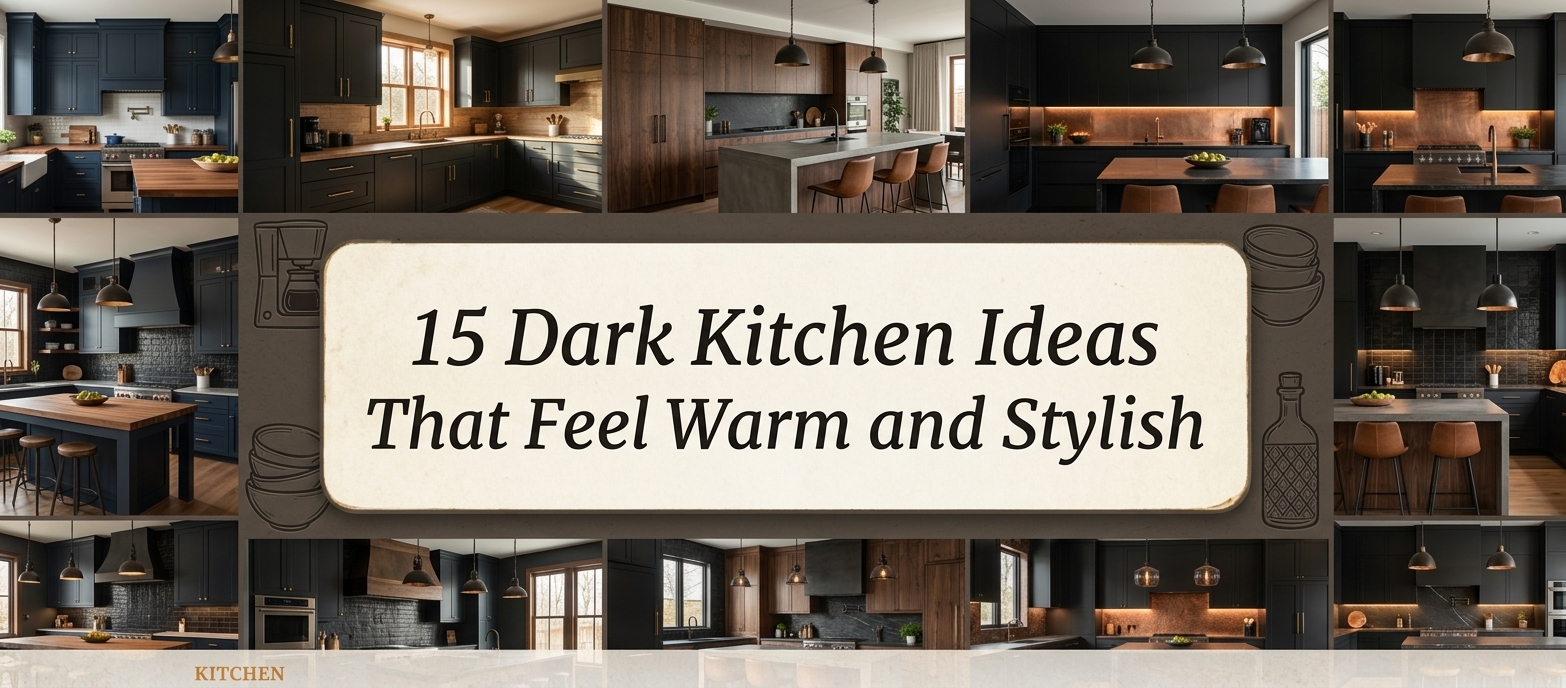
15 Dark Kitchen Ideas That Feel Warm and Stylish
Dark kitchens can look incredibly inviting, but getting the balance right is the tricky part. Too much black can make a small kitchen feel enclosed, while the wrong lighting can flatten all those rich colors and textures. The good news is that a dark kitchen doesn’t have to feel gloomy. Warm wood, reflective surfaces, thoughtful lighting, and carefully chosen hardware can make deep colors feel sophisticated and welcoming. Whether you’re planning a full renovation or simply want to update your existing cabinets, these ideas show how to use dark finishes without sacrificing warmth, character, or practicality.
1. Pair Black Cabinets With Warm Wood

One of the easiest ways to make a dark kitchen feel welcoming is to introduce natural wood. Matte black or charcoal cabinets look grounded beside warm oak shelving, a wood island, or timber bar stools. The contrast keeps the room from feeling visually heavy while adding an organic layer that works in both modern and transitional kitchens. If your existing kitchen already has dark cabinets, even a few wooden accessories can soften the overall effect without requiring a major renovation.
Quick Win: Add two or three warm wood elements—such as cutting boards, stools, or open shelves—to break up large areas of dark cabinetry.
2. Try Deep Green Instead of Pure Black

If black feels too dramatic, deep green offers a softer alternative while maintaining the moody character of a dark kitchen. Forest, olive, and rich sage-green cabinets pair beautifully with creamy walls, natural wood, aged brass, and stone surfaces. The color becomes especially appealing in kitchens with natural light because changing daylight reveals subtle variations in the green throughout the day. This approach works particularly well in traditional, cottage, and modern farmhouse spaces.
3. Add Brass Hardware for Warmth

Dark cabinets can sometimes look flat when every finish in the room is equally cool. Brass hardware introduces a small amount of warmth and catches the light beautifully against charcoal, navy, or black cabinetry. Choose brushed, aged, or unlacquered brass for a more sophisticated appearance rather than highly polished finishes. Matching the cabinet pulls with a faucet or a small lighting detail can create enough repetition to make the kitchen feel intentionally designed.
Quick Win: Replace existing cabinet pulls with warm brass handles before changing anything else. A relatively small update can dramatically alter the character of dark cabinetry.
4. Use a Light Stone Countertop

A pale countertop can completely change the visual balance of a dark kitchen. Creamy quartz, light marble-look surfaces, or softly veined limestone create a bright horizontal surface that reflects available light without making the room feel stark. For a cohesive look, repeat the countertop’s warmer tones in the backsplash or nearby wood accents. This combination is especially useful when you want dark cabinetry but still need the kitchen to feel open and practical.
5. Create a Moody Kitchen With Layered Lighting

Lighting matters more in a dark kitchen than almost any other design element. Instead of relying on one ceiling fixture, combine recessed lighting with under-cabinet strips, pendant lights, and ambient illumination. Warm white bulbs help preserve the cozy character of dark cabinetry, while task lighting keeps countertops functional. The trick is to make different parts of the kitchen glow independently so the room still feels dimensional after sunset.
6. Go Dramatic With a Black Backsplash

For a confident, contemporary look, continue a dark finish from the cabinets into the backsplash. Black zellige-style tile, honed stone, or dark rectangular tile can create a rich envelope around the cooking area. To prevent the room from becoming visually flat, choose materials with texture or subtle variation rather than perfectly uniform surfaces. Warm lighting and lighter countertops can provide enough contrast to keep the design balanced.
7. Make a Dark Kitchen Feel Bigger With Glass

Glass-front cabinet doors can lighten a wall of dark cabinetry without abandoning the moody palette. Use them selectively rather than covering every cabinet front. Display simple white ceramics, clear glassware, or natural-toned dishes inside so the contents become a subtle source of contrast. Glass also reflects light and gives the eye a visual break, making this approach particularly useful in compact kitchens.
Quick Win: Replace one or two upper cabinet doors with glass fronts and keep the displayed items simple and coordinated.
8. Add a Dark Kitchen Island as the Focal Point

You don’t have to make every cabinet dark to enjoy the look. A dark island can become a strong architectural focal point while surrounding cabinets remain cream, natural wood, or soft gray. This is a practical option for homeowners who want a moody kitchen without committing to an entirely dark room. Use the island color again in stools, pendant fixtures, or small accessories to create visual continuity.
9. Mix Black Cabinets With Natural Stone

Natural stone brings movement and character to a dark kitchen. A dramatic marble or quartzite with soft cream, gray, or warm veining can keep black cabinetry from looking one-dimensional. Rather than covering every surface with the same stone, use it strategically on the island or backsplash so the pattern remains a focal point. This combination works especially well when the rest of the decor is kept relatively restrained.
10. Use Navy for a Softer Dark Kitchen

Navy blue gives you the drama of a dark kitchen while feeling slightly softer than black. Deep navy cabinetry works beautifully with white or creamy countertops, brushed brass, warm oak, and aged bronze. It can suit both modern and classic kitchens, depending on the cabinet profile and hardware. In rooms with plenty of daylight, navy can create a rich backdrop without overpowering the rest of the interior.
11. Warm Up Dark Cabinets With Creamy Walls

Dark cabinets don’t always need another strong color beside them. Sometimes the most effective contrast is a warm cream wall. Unlike stark white, creamy paint keeps the room feeling soft and connected to natural wood, brass, and warm lighting. This is a particularly useful approach for kitchens with limited daylight because the lighter wall surface can bounce available light around the room while the cabinetry provides depth.
Quick Win: If repainting is possible, choose a warm off-white or creamy neutral instead of a blue-based white to soften dark cabinetry.
12. Choose Matte Finishes for a Contemporary Look

Matte finishes give dark kitchens a quiet, sophisticated quality because they absorb rather than strongly reflect light. Matte charcoal, black, and deep green cabinetry can look especially sleek when paired with simple slab doors and minimal hardware. To avoid a flat appearance, introduce contrasting textures through stone, wood, ceramic, or brushed metal. The result feels contemporary without relying on excessive decoration.
13. Try Dark Wood for a Richer Look

Dark kitchens don’t have to rely on painted cabinetry. Walnut, smoked oak, or deep-stained wood can provide the same dramatic effect while adding visible grain and natural warmth. Pair dark wood with stone countertops, simple metal hardware, and soft lighting to create a kitchen that feels collected rather than overly formal. This approach is especially appealing in larger kitchens where extensive dark cabinetry can become a major architectural feature.
14. Keep a Small Dark Kitchen Simple

A small kitchen can absolutely embrace dark colors, but restraint becomes important. Choose one dominant dark finish and keep the surrounding surfaces lighter and visually quiet. Open shelving, reflective hardware, glass, and a pale countertop can help prevent the space from feeling crowded. Instead of filling every available surface with decor, let the cabinetry provide most of the visual impact.
Quick Win: Clear unnecessary countertop accessories and let one dark cabinet color, one light surface, and one warm accent become the main palette.
15. Finish the Look With Warm Accessories

The final layer can make a dark kitchen feel personal rather than overly designed. Use woven baskets, wooden boards, handmade ceramics, linen textiles, warm-toned artwork, and a small amount of greenery to introduce softness. Keep the palette controlled so accessories complement the dark cabinetry instead of competing with it. This approach is ideal if you already have a dark kitchen and want a noticeable refresh without replacing cabinets or countertops.
Frequently Asked Questions
Are dark kitchens still stylish?
Yes. Dark kitchens can work across modern, traditional, farmhouse, transitional, and contemporary interiors. The overall effect depends heavily on lighting, material contrast, and how the dark color is balanced with lighter or warmer elements.
What colors work best with a dark kitchen?
Warm white, cream, natural wood, brass, muted green, navy, and soft stone tones are all useful companions for dark cabinetry. The best combination depends on the amount of natural light and the style of the room.
Do dark kitchen cabinets make a room look smaller?
They can make a room feel more enclosed when used without enough contrast or lighting. In a small kitchen, pairing dark cabinets with light countertops, glass, reflective surfaces, and good task lighting can help maintain a sense of openness.
What countertop looks best with black cabinets?
Light quartz, marble-look stone, quartzite, limestone, and other pale natural stones can create strong contrast. If you prefer a more dramatic kitchen, a darker stone with subtle variation can create a layered monochromatic effect.
How can I make a dark kitchen feel warmer?
Natural wood, warm lighting, brass or bronze hardware, woven textures, ceramics, and creamy neutrals can all soften dark cabinetry. You don’t need to add every element—two or three warm materials may be enough.
Is brass hardware suitable for dark cabinets?
Yes. Aged, brushed, or unlacquered brass can create a warm contrast against black, charcoal, navy, and deep green cabinetry. It also provides a subtle reflective detail that can catch kitchen lighting.
Can I use dark cabinets in a small kitchen?
Absolutely. Keep the design relatively simple and introduce lighter countertops, walls, or backsplashes. Glass-front cabinets and strategically placed lighting can also help the room feel less visually heavy.
What lighting is best for a dark kitchen?
A combination of ambient, task, and accent lighting usually works better than a single ceiling fixture. Under-cabinet lighting is especially useful because it illuminates work surfaces while adding depth after dark.
Should a dark kitchen have a light backsplash?
It doesn’t have to. A light backsplash provides contrast and can make the room feel brighter, while a dark textured backsplash creates a more dramatic, enveloping look.
How do I decorate a dark kitchen without making it cluttered?
Choose a small number of useful decorative pieces, such as wooden boards, ceramics, greenery, or a woven basket. Keeping the countertop relatively clear allows the cabinetry and materials to remain the main visual focus.
What wood works well with black kitchen cabinets?
Warm oak and walnut are particularly effective. Oak creates lighter contrast, while walnut produces a deeper and more sophisticated palette.
Are matte black cabinets difficult to maintain?
Matte surfaces can show fingerprints, dust, or grease depending on the finish. Regular cleaning with the cabinet manufacturer’s recommended method is important, particularly around handles and cooking areas.
Can a dark kitchen have a farmhouse style?
Yes. Deep green, charcoal, or navy cabinets can work beautifully with farmhouse elements such as natural wood, apron-front sinks, simple hardware, handmade ceramics, and warm stone surfaces.
How can renters create a dark kitchen look?
Focus on removable elements such as dark peel-and-stick backsplash materials where appropriate, temporary hardware changes, textiles, artwork, lighting, and accessories. Always check the rental agreement before making changes to fixtures or surfaces.
What is the biggest mistake when designing a dark kitchen?
Using too many dark finishes without enough variation in texture or lighting can make the room feel flat. Introducing natural wood, stone, reflective hardware, or lighter surfaces creates visual depth.


