
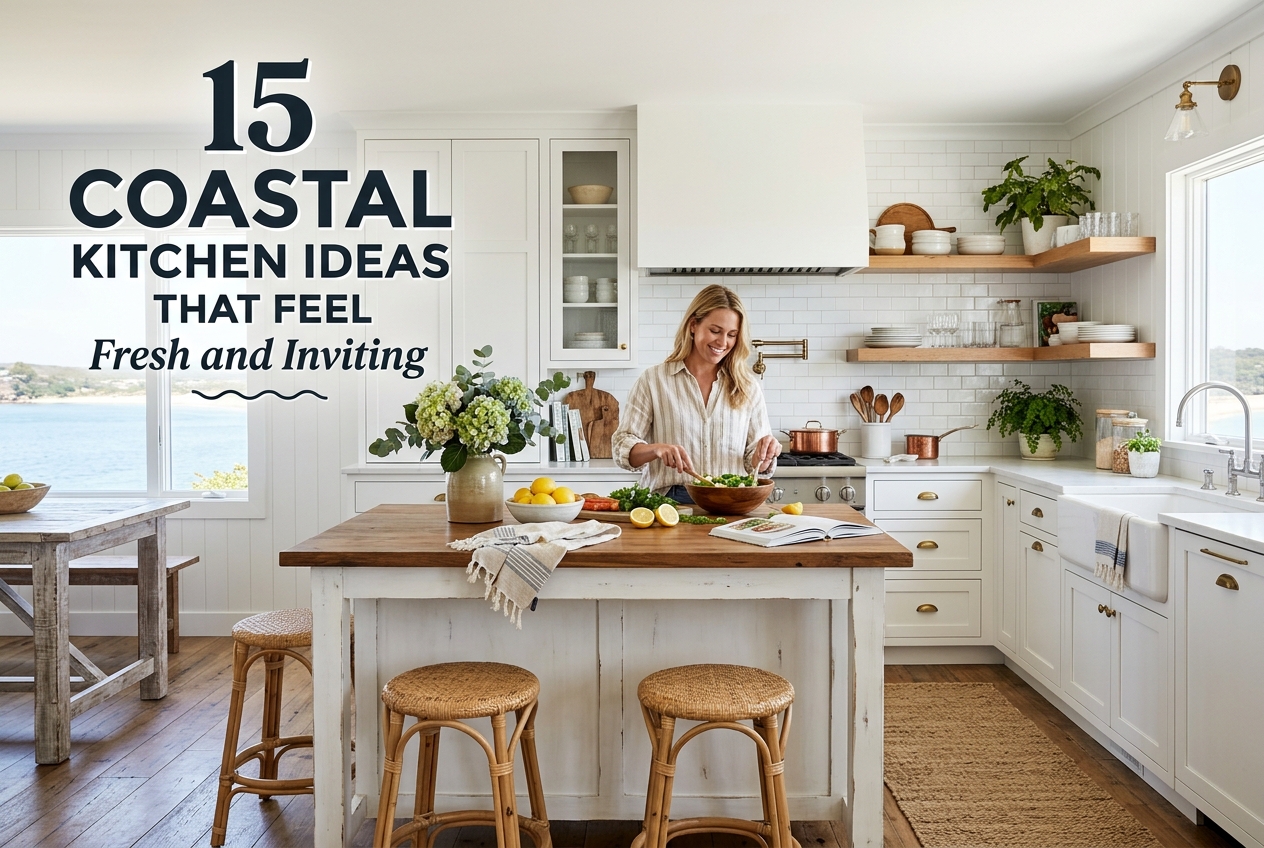
15 Coastal Kitchen Ideas That Feel Fresh and Inviting
A coastal kitchen can look wonderfully relaxed—or unexpectedly flat and themed—depending on how the details are handled. If your kitchen feels dark, dated, or disconnected from the light and airy look you want, you don’t need to cover everything in seashells and blue. The better approach is to borrow the feeling of the coast through soft colors, natural materials, weathered textures, and plenty of visual breathing room. These coastal kitchen ideas show how to create that atmosphere in both large and small spaces, whether you’re starting a full renovation or simply changing a few finishes and accessories.
1. Pair Crisp White Cabinets With Pale Blue Accents

White cabinetry creates the clean foundation many coastal kitchens need, while pale blue introduces just enough color to keep the room from feeling sterile. Try creamy or warm white cabinets with powder blue backsplash tile, blue-gray bar stools, or a muted blue runner. The trick is to keep the blue slightly softened rather than intensely saturated. Medium-tone wood and brushed brass can add warmth, making this palette especially useful in kitchens that receive plenty of natural light.
Quick Win: Add a washable blue runner and two coordinating counter stools before committing to permanent blue finishes.
2. Choose Natural Wood for a Warm Coastal Kitchen

Natural wood prevents an airy coastal kitchen from becoming overly cool. A pale oak island, exposed wood shelving, or simple oak bar stools can introduce warmth while maintaining the relaxed character of the style. Look for finishes with visible grain rather than highly glossy surfaces. Pair the wood with white walls, linen textiles, and muted blue accessories for a balanced look that feels organic instead of heavily themed.
3. Install a Soft Blue-Gray Backsplash

A blue-gray backsplash can become the visual bridge between classic white cabinetry and natural coastal materials. Handmade-look ceramic tile adds gentle variation without overwhelming the room, while a slightly uneven surface catches daylight beautifully. Keep surrounding finishes quiet—white cabinets, pale counters, and natural wood are enough. This approach works particularly well if you want a coastal kitchen that feels sophisticated enough to transition into other decorating styles.
Quick Win: If replacing tile isn’t practical, use a removable backsplash solution in a soft blue-gray or sea-glass-inspired tone.
4. Add Woven Pendant Lights Over the Island

Lighting is one of the easiest ways to give a kitchen coastal character without changing its architecture. Woven rattan or seagrass pendants bring texture and cast a softer visual warmth over a kitchen island. Choose fixtures with simple silhouettes rather than highly decorative beach motifs. Two or three matching pendants can define the island while connecting beautifully with wood cabinetry, linen window treatments, and natural baskets.
5. Use Shiplap as a Subtle Architectural Detail

Shiplap can reinforce a coastal mood, but covering every wall can make the room feel overly themed. Instead, use it selectively on an island end panel, breakfast nook wall, or small section behind open shelving. Paint it warm white or a very pale gray-blue so it supports the kitchen rather than competing with cabinetry. This is especially effective in farmhouse-inspired kitchens where architectural texture already feels natural.
Quick Win: Paint an existing tongue-and-groove or paneled section in the same warm white as your cabinets for an inexpensive coastal update.
6. Bring in Sea-Glass Colors Without Going Overboard

Sea-glass shades—soft aqua, muted turquoise, blue-green, and gray-green—can give a kitchen a gentle coastal personality. The key is repetition: choose one subtle shade and echo it in two or three places rather than introducing many competing colors. A sea-glass pendant, ceramic pitcher, backsplash tile, or window textile can be enough. Against warm white and natural wood, these colors feel fresh without turning the kitchen into a beach-themed room.
7. Create a Relaxed Coastal Farmhouse Kitchen

For a more traditional interpretation, combine coastal colors with farmhouse materials. Think white shaker cabinets, a deep apron-front sink, natural oak, aged brass, simple subway tile, and woven accessories. This combination works because each element has a practical visual purpose rather than simply announcing a theme. It is particularly useful for older homes where classic architectural details can become part of the overall coastal character.
8. Use Open Shelving for an Airier Look

Open shelving can make a coastal kitchen feel lighter by breaking up a long wall of upper cabinets. Use pale wood shelves against a white or softly colored wall, then display only the pieces you use or genuinely enjoy: handmade mugs, white dishes, a small plant, or a blue ceramic bowl. Leave generous gaps between objects. If your kitchen is small, this can also create a more visually open feeling.
Quick Win: Remove the doors from one small upper cabinet and style the interior shelves with a limited collection of everyday dishes.
9. Add a Coastal-Inspired Runner

A kitchen runner is an easy way to introduce color, softness, and personality without permanent changes. Look for faded blue, sandy beige, cream, or subtle stripe patterns that suggest the coast without literal shells or anchors. Place the runner where you actually stand—along the sink or work zone—and choose a washable material if the kitchen receives heavy traffic. This is one of the simplest options for renters or budget-conscious decorators.
10. Mix Brass Hardware With Coastal Neutrals

Warm metal hardware can keep a coastal kitchen from feeling too cool. Brushed or aged brass works particularly well with creamy white, pale blue, natural oak, and sandy beige. Use the finish consistently across cabinet pulls, faucets, and perhaps one lighting fixture. You don’t need dozens of metallic accents; a few repeated touches are enough to create cohesion and a more finished appearance.
11. Design a Small Coastal Kitchen With Light Finishes

Small kitchens benefit from the same visual principles that make coastal rooms feel spacious: light colors, reflective surfaces, simple furniture, and limited visual clutter. Use warm white cabinets, pale countertops, light wood accents, and one soft blue feature rather than multiple bold colors. If upper cabinets feel heavy, combine closed storage with one section of open shelving. The result can feel brighter and more generous without physically changing the footprint.
Quick Win: Replace dark countertop accessories and bulky decorative items with a small group of light-colored, functional pieces.
12. Layer Linen and Natural Textures

Coastal style is not only about color; texture creates much of its relaxed character. Add linen café curtains, a woven pendant, rattan baskets, cotton towels, and a lightly textured runner to a simple white kitchen. Because these materials are visually soft, they can make modern cabinetry feel less stark. Keep the palette restrained so the different textures are noticeable without making the kitchen look busy.
13. Try a Moody Coastal Kitchen With Deep Blue Cabinets

Coastal kitchens don’t have to be white and pale. Deep navy or blue-gray cabinetry can create a richer interpretation while maintaining a connection to the sea. Balance dark cabinets with warm white walls, pale counters, natural wood, and plenty of daylight. This approach works especially well in larger kitchens or spaces with strong natural light, where the deeper color can create depth without making the room feel closed in.
14. Add a Simple Coastal Breakfast Nook

If your kitchen has an unused corner, turn it into a casual breakfast nook rather than filling the area with extra cabinets. A built-in or freestanding bench with linen cushions, a small round wood table, and a simple pendant can create an inviting spot for morning coffee or casual meals. Keep the styling practical and compact. This works particularly well in open-plan homes where the kitchen needs a softer transition into living spaces.
Quick Win: Place a small round wooden table and two lightweight chairs near a sunny kitchen window to create a flexible breakfast corner without construction.
15. Finish With Restrained Beach-Inspired Accessories

The final layer should suggest the coast rather than recreate a beach souvenir shop. Choose a handmade ceramic bowl, a pale wooden cutting board, a small piece of abstract blue artwork, a woven tray, or a simple vase with greenery. Natural objects and useful kitchen pieces usually feel more sophisticated than collections of shells or nautical signs. This approach is also easy to change seasonally or when your decorating taste evolves.
Conclusion
A coastal kitchen doesn’t need to look like a literal beach house. The most adaptable spaces borrow the coast’s best qualities—light, natural texture, relaxed color, useful materials, and an uncluttered feeling. Start with the elements that suit your existing kitchen and budget, whether that’s a blue runner, natural wood, woven lighting, or a new backsplash. Choose a few details that feel like you, and let the room develop naturally rather than trying to recreate every idea at once.
Frequently Asked Questions
What colors work best in a coastal kitchen?
Warm white, cream, pale blue, blue-gray, soft aqua, sandy beige, and natural wood tones work particularly well. Deeper navy can also work when balanced with lighter finishes and natural light.
How can I make my kitchen look coastal without renovating?
Focus on reversible details such as runners, linen curtains, woven baskets, blue ceramics, artwork, stools, and lighting. These changes can introduce coastal character without replacing cabinets or countertops.
Are white cabinets necessary for a coastal kitchen?
No. White cabinets are popular because they create an airy foundation, but pale blue, blue-gray, natural wood, and even deep navy cabinetry can create a coastal look.
What wood looks best in a coastal kitchen?
Pale and medium natural woods such as oak are particularly versatile. Choose finishes with visible grain and a relatively natural appearance rather than very glossy or heavily stained surfaces.
Can a small kitchen have a coastal style?
Absolutely. Light cabinetry, pale countertops, open shelving, simple furniture, and limited visual clutter can help a small kitchen feel brighter and more spacious.
What backsplash is best for a coastal kitchen?
Soft white, blue-gray, sea-glass, and handmade-look ceramic tiles are versatile choices. A lightly textured tile can add character while maintaining the relaxed quality of the style.
How do I avoid making my kitchen look too beach-themed?
Avoid using too many literal nautical accessories at once. Instead, communicate the coastal feeling through color, natural materials, woven textures, light wood, and restrained accessories.
Does brass work with coastal kitchen decor?
Yes. Brushed or aged brass can add warmth to white, blue, and natural wood palettes. Repeating the finish in a few functional elements helps the room feel cohesive.
What lighting works well in a coastal kitchen?
Woven rattan, seagrass, linen, and simple natural-material pendant lights work especially well. Warm lighting can also balance cooler blue and white finishes.
Can coastal and farmhouse styles be combined?
Yes. White shaker cabinets, an apron-front sink, natural wood, simple tile, woven accessories, and muted blue accents can create a natural coastal farmhouse kitchen.
Is shiplap still suitable for coastal kitchens?
Shiplap can work when used selectively. An accent wall, island panel, or breakfast nook can provide architectural texture without making the entire room feel themed.
How can renters create a coastal kitchen?
Use removable or easily changed elements such as runners, artwork, peel-and-stick backsplash products, temporary hardware where permitted, textiles, baskets, and countertop accessories.
What countertop colors suit coastal kitchens?
White, cream, light gray, and softly veined stone-look surfaces pair naturally with coastal palettes. Pale countertops can also help smaller kitchens feel brighter.
How do I make a coastal kitchen feel more expensive?
Focus on consistency and restraint rather than adding more decoration. Coordinated hardware, natural materials, quality-looking lighting, simple styling, and a limited color palette can make the overall design feel more intentional.
Can I use dark colors in a coastal kitchen?
Yes. Navy and deep blue-gray can create a sophisticated coastal look when paired with lighter walls, pale countertops, natural wood, and sufficient natural light.


