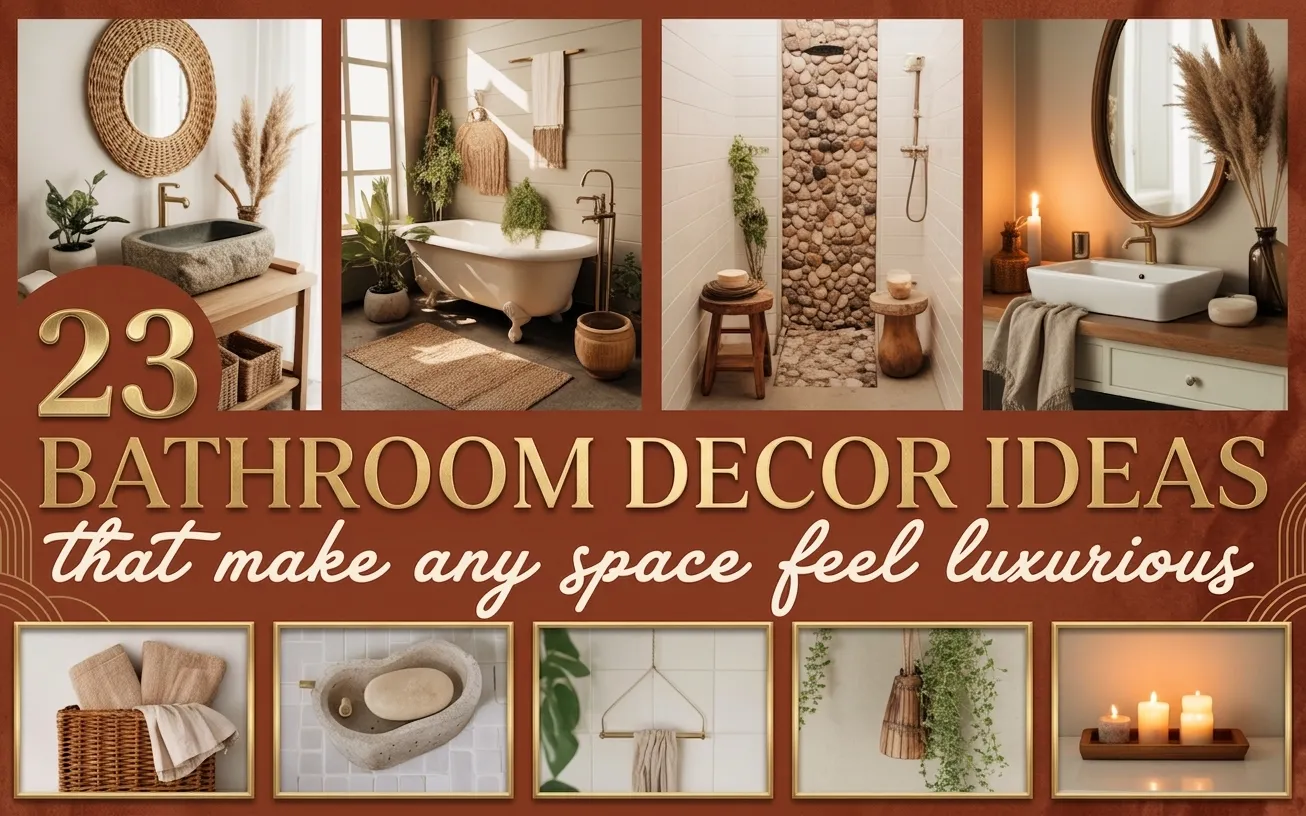
23 Bathroom Decor Ideas That Make Any Space Feel Luxurious
You stand in your bathroom, towel in hand, and something feels off. The tile is fine, the fixtures work, but the room still looks unfinished, almost like nobody lives there. So you add a candle, maybe a new hand towel, and somehow it still falls flat.
That is because small swaps rarely fix a bathroom that lacks a real point of view. What actually changes the room is a handful of intentional choices working together, the right print on the wall, better lighting, a texture that catches the eye, storage that hides the clutter instead of announcing it.
Here are 23 ideas worth saving and trying in your own home.
1. Stone Tray Styling

A tray creates a boundary, which makes loose items feel curated instead of cluttered. Stone adds visual weight, while glass and ceramic bring contrast through smooth texture and light reflection.
Choose one rectangular or oval tray that fits beside the sink without crowding the faucet. Keep only three items on it: soap, a small scent element, and one folded or rolled towel.
Replace a plastic soap bottle with an amber glass pump dispenser for an immediate boutique-hotel effect.
If you want a bathroom counter to feel more luxurious, grouping daily items on one stone tray is the most effective approach because it creates order, symmetry, and visual calm.
2. Backlit Mirror

Backlighting softens the edges of a mirror and creates depth against the wall. The light halo adds ambient lighting, while the reflective glass visually expands the room.
Use a warm LED backlit mirror between 2700K and 3000K for a flattering glow. Keep the vanity wall simple so the light becomes the main design feature.
3. Marble Accent Wall

A single accent wall uses contrast and scale without overwhelming the bathroom. Carrara marble, a classic Italian stone known for gray veining, gives the space architectural character even when used as porcelain tile.
Choose large-format marble-look porcelain tiles with subtle veining instead of high-contrast patterns. Larger tiles mean fewer grout lines, which makes the wall feel cleaner and more expensive.
Use peel-and-stick marble-look wall panels behind open shelves if tile installation is not possible.
4. Hotel Towel Stack

Repetition creates a sense of order. Matching towels in one color reduce visual noise, while soft cotton adds texture against tile, wood, or painted walls.
Buy towels in one shade instead of mixing many colors. Fold bath towels into thirds lengthwise, then stack them with the folded edge facing outward for a clean display.
5. Warm Brass Details

Brass adds warmth and contrast against cool tile, white paint, or gray stone. Repeating one metal finish creates unity, which makes even affordable fixtures feel deliberate.
Choose one brass tone and repeat it across the faucet, towel ring, cabinet knobs, and mirror frame. Avoid mixing yellow brass, antique brass, and champagne brass unless the difference is intentional.
Swap only the vanity knobs and towel hook first if a faucet upgrade is not in the budget.
If you want a white bathroom to feel warmer, repeating brass accents in three places is the most effective approach because it creates visual rhythm and prevents the room from feeling flat.
6. Fluted Glass Shower

Fluted glass creates vertical lines that make the shower area feel taller. The ribbed texture diffuses light and softens hard bathroom surfaces while still keeping the layout open.
Use a fluted glass panel for a walk-in shower or choose a fluted shower screen for a tub-shower combination. Pair it with simple tile so the glass texture remains the hero.
7. Oversized Wall Mirror

Large mirrors visually double space by reflecting walls, light, and clean surfaces. This is especially useful in bathrooms where square footage is limited but wall space is available.
Choose a mirror that is at least as wide as the vanity or slightly wider if the wall allows. Keep the frame slim so the mirror feels architectural rather than bulky.
Add a simple black or brass peel-and-stick mirror frame kit to upgrade a plain builder mirror.
8. Floating Wood Vanity

A floating vanity creates negative space under the cabinet, which makes the bathroom feel lighter. Walnut or oak adds organic texture, while a clean wall-mounted shape keeps the design modern.
Select a floating vanity with drawers instead of open cubbies if you need daily storage. Mount it high enough to leave visible floor beneath, but keep the sink comfortable for everyday use.
If you want a small bathroom to look larger, a floating vanity is the most effective approach because it exposes more floor area and reduces visual weight.
9. Sage Green Walls

Sage green sits between gray and green, so it adds color without overwhelming the room. It works especially well with warm whites, natural wood, brass, and handmade ceramic textures.
Paint the walls in a muted sage with a washable satin or eggshell finish. Benjamin Moore October Mist is a useful reference shade for a soft, nature-inspired bathroom palette.
If painting is not possible, use sage towels and a matching bath mat to create the same color direction.
10. Statement Floor Tile

Patterned floors use contrast and repetition to create movement. When walls and fixtures stay simple, the tile becomes a controlled focal point instead of visual chaos.
Use patterned porcelain or encaustic-style tile in a limited palette like black, white, cream, or gray. Keep rugs minimal so the pattern remains visible.
11. Arched Niche Shelves

An arched niche breaks up straight grout lines and adds a custom architectural shape. The curve brings visual softness, while the recessed shelf keeps shower products organized.
If renovating, plan the niche before tile installation so it aligns with the grout layout. Use matching tile inside the niche for a seamless look or stone trim for subtle contrast.
For renters, use an arched metal wall shelf near the tub to echo the same shape without construction.
12. Layered Vanity Lighting

Layered lighting uses more than one light source to control brightness and shadow. Side sconces light the face more evenly than a single ceiling fixture, while ambient light keeps the room from feeling flat.
Place sconces at about eye level on either side of the mirror when space allows. Use warm bulbs around 2700K to 3000K for a softer bathroom glow.
If you want bathroom lighting to feel more flattering, side sconces are the most effective approach because they reduce shadows under the eyes and chin.
13. Woven Storage Baskets

Bathrooms have many hard finishes, so woven storage adds needed softness and texture. Baskets also lower visual clutter by hiding small items in one consistent material.
Choose lidded baskets for items you do not want visible and open baskets for towels. Water hyacinth, rattan, and seagrass are natural materials that work well in warm neutral bathrooms.
Use two matching baskets instead of several mismatched bins for a more intentional storage zone.
14. Spa Shower Curtain

Hanging a shower curtain higher draws the eye upward and makes the ceiling feel taller. A waffle or linen texture adds depth without using strong color or pattern.
Install the curtain rod close to the ceiling and choose an extra-long 84-inch or 96-inch curtain if your bathroom height allows. Keep the color white, ivory, or oatmeal for a clean spa effect.
15. Framed Bath Art

Wall art creates a focal point in bathrooms that lack architectural detail. Frames add structure, while muted artwork connects towels, tile, and hardware colors.
Choose moisture-safe framed prints or place art away from direct shower spray. Use colors already present in the room, such as taupe, ivory, black, sage, or muted clay.
Print digital art in a standard 11×14 size and use two matching frames for a fast symmetrical wall update.
16. Japandi Bath Stool

Japandi design blends Japanese simplicity with Scandinavian warmth, making it ideal for bathrooms that need calm and function. A small stool adds natural material and gives the tub area a purposeful resting surface.
Choose teak, cedar, or bamboo because these woods handle bathroom humidity better than untreated soft woods. Keep the top styled with only one towel and one small object.
17. Glass Jar Display

Clear containers create order while keeping everyday items accessible. Repeating glass jars in similar shapes makes storage feel coordinated instead of random.
Use three jars in different heights but the same material. Fill them with cotton rounds, bath salts, and small soaps, then leave empty space around them so the shelf does not feel crowded.
If you want open bathroom shelves to look organized, matching glass containers are the most effective approach because they turn small supplies into one clean visual system.
18. Matte Black Contrast

Matte black creates contrast, which helps light walls, tile, and counters feel more defined. It works best when repeated carefully so the room feels intentional rather than patchy.
Use matte black on three elements: faucet, mirror frame, and towel hook. Keep larger surfaces light so the black accents feel tailored, not heavy.
Start with black robe hooks and a black-framed mirror before changing plumbing fixtures.
19. Reeded Vanity Fronts

Reeded or fluted cabinet fronts create shadow lines that make wood feel more architectural. The texture adds interest while staying quieter than bold color or patterned tile.
Choose a vanity with vertical reeded drawer fronts or add fluted wood panels to flat cabinet doors. White oak is a strong choice because its pale grain feels warm but not heavy.
20. Candlelit Tub Corner

Candlelight adds low-level ambient light, which changes the mood more than overhead lighting. Grouping candles in varied heights creates visual rhythm without needing many decorative objects.
Place candles on a stone tray or a safe ledge away from fabric, water splash, and daily clutter. Use unscented ivory pillars for a cleaner visual look.
Battery-operated flameless candles give the same soft glow for homes where open flame is not practical.
21. Built-In Ledge

A built-in ledge adds horizontal structure and gives the eye a resting point. It also keeps decor off the tub rim, which makes the whole bath area feel cleaner.
During a renovation, build a shallow ledge behind or beside the tub and tile it in the same finish as the wall. If renovating is not possible, use a narrow wall-mounted shelf above the bath.
If you want a tub area to feel custom, a tiled ledge is the most effective approach because it combines storage, display, and architecture in one detail.
22. Matching Dispenser Set

Product packaging often introduces too many colors and fonts into a small bathroom. Matching dispensers create consistency, which makes the counter feel calmer and easier to style.
Choose two or three refillable dispensers in amber glass, white ceramic, or matte stoneware. Use waterproof labels only if they are simple and match the room’s finish.
Decant hand soap and lotion first, then add shampoo and conditioner bottles later for a matching shower setup.
23. Zellige Tile Glow

Zellige tile, a traditional Moroccan glazed ceramic, has a slight surface variation that reflects light differently across each piece. This gives neutral bathroom movement without relying on bright colors or busy patterns.
Use zellige or zellige-look tile on one shower wall, backsplash, or vanity wall. Pair it with simple grout close to the tile color to keep the effect soft and seamless.
How To Start Your Luxury Bathroom Transformation
The best first step for a luxury bathroom transformation is replacing visual clutter with one coordinated vanity setup. Start with a stone or ceramic tray, a refillable soap dispenser, and one folded hand towel in white, ivory, or taupe. This anchors the counter before you spend money on larger upgrades.
The most common mistake in luxury bathroom styling is mixing too many finishes at once. Chrome, brass, black, wood, marble, and bright color can compete in a small room if there is no clear palette. Choose one main metal, one main neutral, and one texture to repeat.
For under $50, start with an amber glass soap dispenser, a white waffle hand towel pair, and a small ceramic vase with faux eucalyptus. These three items instantly make the vanity feel more finished.
In one weekend, you can change towels, dispensers, shelves, hooks, art, and lighting bulbs. A 1–3 month update can include mirrors, faucets, wall paint, and storage. A starter version can cost $75–$250, while a fuller room refresh often ranges from $600–$2,500, depending on fixtures, tile, and vanity changes.
Final Thoughts
These 23 ideas show how color, lighting, storage, mirrors, textiles, tile, and small decorative details can make a bathroom feel more luxurious without starting from scratch. You do not need to change everything at once; starting small is often the smartest way to build a room that feels calm and intentional. The easiest way to start is to clear your vanity and style one tray with a dispenser, towel, and small vase. Use these bathroom decor ideas as a guide, save your favorites on Pinterest, try one this week, and share the article with someone planning a bathroom refresh.
Frequently Asked Questions About Luxury Bathroom Styling
What makes a bathroom look luxurious?
A bathroom looks luxurious when it feels clean, coordinated, well-lit, and calm. The easiest signs of luxury are matching towels, warm lighting, uncluttered counters, quality-looking hardware, and one strong focal point such as a mirror, tile wall, or vanity. You do not need a full remodel to create this effect. Even a $30 tray and matching dispenser set can make a plain counter feel more intentional.
What colors make a bathroom feel expensive?
Warm whites, greige, soft taupe, muted sage, charcoal, and stone beige make a bathroom feel more expensive. These colors work because they look calm, natural, and easy to pair with brass, chrome, wood, marble-look tile, and soft cotton towels. Avoid using too many bright colors at once in a small bathroom. A controlled palette usually feels more polished.
How much does it cost to decorate a bathroom?
A simple bathroom refresh usually costs $75–$250, while a fuller decorative upgrade can cost $600–$2,500. The lower range covers towels, trays, art, baskets, hooks, and dispensers. The higher range may include a new mirror, faucet, light fixtures, wall paint, shelving, and vanity updates. Tile or plumbing changes will raise the budget quickly.
Can a small bathroom still feel luxurious?
Yes, a small bathroom can feel luxurious when it uses light colors, smart storage, reflective surfaces, and fewer visible products. A large mirror, warm LED lighting, wall hooks, floating shelves, and matching containers can make a compact bathroom feel more open. The key is editing, not adding more decor. Every visible item should have a purpose.
What should I buy first for a bathroom refresh?
The best first purchase for a bathroom refresh is a coordinated vanity tray setup. A tray, a refillable soap dispenser, a folded towel, and a small vase create an immediate focal point for very little money. Choose materials that match your style, such as stone for luxury, wood for organic warmth, or ceramic for a clean spa look. This first upgrade helps guide the rest of the room.