
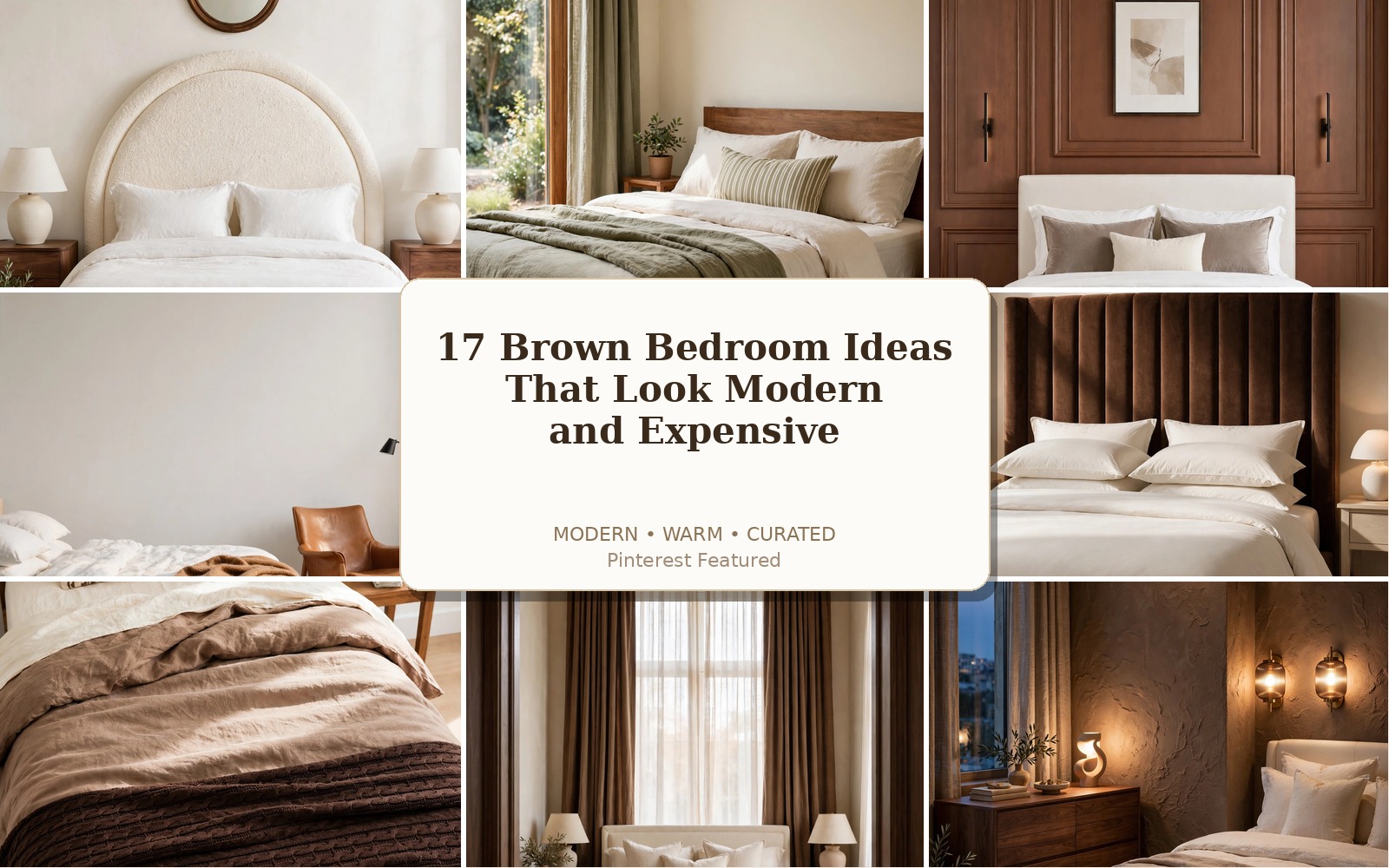
17 Brown Bedroom Ideas That Look Modern and Expensive
Brown can make a bedroom feel rich and inviting—or heavy and dated. The difference usually isn’t the color itself; it’s how the shades, textures, lighting, and furniture finishes work together. Too much flat brown can drain the room of contrast, while mismatched undertones can make even expensive pieces look accidental.
The good news is that modern brown bedrooms are surprisingly flexible. Chocolate paint can create drama, pale oak can keep a small room airy, and warm neutrals can soften the entire scheme. These 17 brown bedroom ideas show you how to use color, materials, lighting, and styling to create a polished space at a realistic budget. Whether you want a calm retreat or a moodier statement room, there’s an approach here you can adapt.
1. Layer Chocolate Brown With Warm White

Refined and balanced, this color combination gives you the richness of chocolate brown without making the bedroom feel enclosed. The warm white provides clean contrast, while its creamy undertone prevents the scheme from becoming stark.
Paint the wall behind the bed deep chocolate brown and leave the remaining walls warm white. Repeat the darker shade through two or three details, such as a bench, lamp base, or narrow border on the bedding. Choose walnut or medium-oak furniture instead of gray-toned wood.
Keep the ceiling and curtains light to reflect daylight around the room. This controlled use of contrast is what makes the finished bedroom look intentional and expensive.
💡 Quick Win: Replace cool white pillowcases with ivory or oatmeal linen covers. The warmer fabric will connect dark brown furniture to pale walls without requiring paint or new flooring.
2. Build a Tonal Brown Bedroom

A tonal palette feels enveloping and sophisticated because every surface belongs to the same color family. The key is varying depth and texture rather than matching every brown exactly.
Begin with light taupe-brown walls, then add a caramel upholstered headboard, walnut nightstands, cocoa bedding, and one espresso-colored accent. Use matte paint, woven fabric, smooth wood, and softly brushed metal so the room doesn’t look flat.
Allow the palest shade to cover the largest area and reserve the deepest brown for smaller details. This creates hierarchy and keeps the eye moving. Tonal decorating works especially well when you want a cozy brown bedroom without introducing several competing colors.
3. Pair Espresso Brown With Aged Brass

Moody and tailored, espresso brown becomes noticeably more luxurious beside aged brass. The metal’s muted warmth lifts the dark palette without creating the flashy effect of bright polished gold.
Use espresso on a headboard wall, wardrobe, or substantial wooden bed. Add aged-brass reading sconces, drawer pulls, or a slender curtain rod. Two or three metal accents are enough; repeating brass everywhere can make the room feel overly themed.
Balance the dark elements with flax-colored bedding and a pale rug. Warm bulbs around 2700K will enhance both the wood and metal finishes at night. For more lighting inspiration, see [Internal Link: Bedroom Lighting Ideas for a Warm and Relaxing Space].
Shop the Look
| Item | What to Look For | Approx. Price Range |
| Wall sconces | Aged or antique brass with simple shades | $60–$200 per pair |
| Hardware | Unlacquered or antiqued brass pulls | $20–$80 per set |
| Linen duvet cover | Flax, oatmeal, or natural beige | $80–$220 |
4. Soften Brown With Dusty Rose

Warm and quietly romantic, dusty rose brings softness to brown without turning the bedroom overly sweet. Both colors contain warm undertones, so they blend more naturally than a cool pink would.
Keep brown dominant through wood furniture, a rug, or painted walls. Introduce rose with washable elements: a quilt, lumbar pillow, ceramic lamp, or small upholstered chair. Add cream bedding between the two colors to give the palette breathing room.
Choose muted clay-pink rather than bubblegum or icy blush. The result feels grown-up, especially when paired with walnut, dark bronze, and simple silhouettes. If you enjoy gentle color combinations, explore [Internal Link: Warm Neutral Bedroom Ideas With Subtle Color].
💡 Quick Win: Fold a dusty-rose throw across the lower third of a cream-covered bed. Add one matching pillow rather than an entire coordinated set for a more relaxed designer look.
5. Use Pale Oak in a Small Brown Bedroom

Airy and natural, pale oak is one of the easiest ways to use brown in a compact bedroom. Its visible grain adds warmth, but the light finish reflects more light than walnut or espresso furniture.
Choose a bed with exposed legs, slim oak nightstands, and wall-mounted lighting to preserve visible floor space. Pair the wood with warm white walls, oatmeal bedding, and a low-contrast rug. Avoid a bulky matching furniture set, which can make a small room feel crowded.
Keep taller storage close to the wall color so it visually recedes. These small brown bedroom ideas create warmth through material rather than dark paint, leaving the space brighter and more open.
💡 Quick Win: Remove one bulky bedside table and replace it with a small oak wall shelf. You’ll gain floor space while keeping a useful surface for a book, phone, and glass of water.
6. Add Brown Through Natural Textures

Earthy and relaxed, a texture-led bedroom uses brown without relying on large areas of dark color. Jute, rattan, linen, leather, and wood each introduce a slightly different natural tone.
Start with quiet cream or sand-colored walls. Layer a jute rug beneath the bed, add a woven headboard, use linen bedding, and bring in one smooth element such as a cognac leather cushion or walnut stool. Limit the palette so the varied surfaces remain connected.
The contrast between coarse, soft, woven, and polished materials gives the room depth. Avoid filling every surface with baskets; a few carefully chosen natural pieces look more elevated than an abundance of rustic accessories.
7. Color-Drench the Room in Cocoa Brown

Cocooning and dramatic, color drenching turns brown into an architectural statement. Painting the walls, trim, and doors in one cocoa shade reduces visual breaks and can make an ordinary room feel custom-designed.
Choose a brown with red or golden undertones rather than a flat gray-brown. Use a matte finish on walls and a subtle satin finish on trim to create gentle variation. Keep the ceiling lighter if the room has limited daylight; in a bright or high-ceilinged room, it can join the color scheme.
Add pale bedding, reflective metal, and soft lamps so the space feels atmospheric rather than gloomy. Always test the paint during morning and evening light before committing.
💡 Quick Win: Not ready to paint the whole room? Paint the wall, baseboard, and door behind the bed in one cocoa shade. The uninterrupted block of color creates a convincing color-drenched effect from the main viewpoint.
8. Mix Walnut With Cream Bouclé

Polished and tactile, walnut and cream bouclé create the kind of high-contrast material pairing often found in boutique hotels. Walnut provides clean structure while bouclé softens its straight lines.
Use a walnut bed frame or pair walnut nightstands with a cream bouclé headboard. Repeat the nubby fabric only once—perhaps on a small bench or chair—so it remains a feature rather than a theme. Add smooth cotton or linen bedding to prevent excessive texture.
Choose medium-to-dark walnut with a visible grain and simple furniture profiles. Rounded lamps or an oval mirror can soften the geometry further. This combination looks expensive because every material has a clear role.
Shop the Look
| Item | What to Look For | Approx. Price Range |
| Headboard | Cream bouclé with a clean, gently curved shape | $180–$600 |
| Nightstand | Walnut veneer or solid wood with minimal hardware | $150–$500 |
| Accent bench | Compact bouclé seat with wood or bronze legs | $180–$550 |
9. Introduce Olive Green Accents

Grounded and restorative, olive green gives a brown bedroom subtle color while preserving its natural character. It works because both shades appear together in landscapes and share muted, earthy undertones.
Begin with walnut, tobacco, or medium-brown furniture. Add olive through a quilt, upholstered chair, or floor-to-ceiling curtains, then use warm ivory to separate the two darker hues. A small plant can reinforce the palette, but it shouldn’t be the only source of green.
Keep patterns restrained—a narrow stripe or small botanical motif is enough. Olive is an especially useful update when an existing brown bedroom feels too monochromatic but you don’t want a dramatic redesign.
💡 Quick Win: Swap two decorative cushions for olive velvet or washed-linen covers. Place them against ivory pillows so the green and brown don’t visually merge.
10. Create a Modern Brown Bedroom With Wall Paneling

Architectural and tailored, brown wall paneling adds depth before furniture or accessories enter the room. Simple molding can make a plain wall appear more considered without requiring a full renovation.
Install slim picture-frame molding behind the bed, then paint the entire wall a medium chestnut or mushroom brown. Align the central panels with the width of the bed so the composition feels balanced. Keep artwork minimal because the paneling already provides visual structure.
Renters can recreate the effect with removable molding strips or a paneled-look wall treatment. Pair the finished wall with simple bedding and streamlined sconces so the architecture stays in focus.
11. Warm a Minimalist Bedroom With Caramel

Understated yet welcoming, caramel prevents minimalist decor from feeling cold. Its golden undertone adds warmth while allowing simple shapes and open surfaces to remain the focus.
Use a caramel leather headboard, wool blanket, or single lounge chair against warm white walls. Pair it with pale wood, white bedding, and matte black details for definition. Leave space around furniture rather than adding decor to every empty area.
The trick is choosing one dominant caramel feature and allowing it to stand alone. Skip matching leather accessories, which can make the room feel coordinated rather than curated. This restrained approach is ideal for anyone drawn to [Internal Link: Minimalist Bedroom Ideas That Still Feel Cozy].
💡 Quick Win: Add one caramel wool throw to an all-white or beige bed. Drape it loosely across a lower corner instead of folding it perfectly to introduce warmth without disturbing the minimalist look.
12. Combine Brown With Black for Crisp Contrast

Confident and contemporary, black gives brown sharper definition. This pairing works best when brown remains warm and tactile while black appears in thin, controlled lines.
Use walnut or cognac as the foundation, then introduce black through a metal bed frame, narrow picture frames, lamps, or curtain hardware. Add plenty of cream, flax, or warm white to prevent the darker elements from dominating.
Avoid combining very dark brown furniture with large black surfaces unless the room receives strong daylight. Instead, let black outline the space and brown provide warmth. This distinction keeps the bedroom modern without sacrificing comfort.
13. Add a Statement Brown Upholstered Bed

Plush and composed, an upholstered brown bed gives the room an immediate focal point. It can also replace the visual weight of several smaller decorative pieces, which helps the design feel calmer.
Choose a tall headboard in mushroom velvet, tobacco linen, or cinnamon bouclé. Keep the shape simple if the fabric is heavily textured; channel stitching or a gentle curve is enough detail. Allow at least a few inches of visible wall on both sides so the bed doesn’t look squeezed into place.
Use quieter nightstands and solid bedding around it. A statement bed looks most expensive when competing patterns and oversized artwork are kept to a minimum.
Shop the Look
| Item | What to Look For | Approx. Price Range |
| Upholstered bed | Tall headboard in mushroom, tobacco, or cinnamon | $500–$1,800 |
| Bedside lamps | Compact ceramic or aged-metal bases | $80–$300 per pair |
| Neutral coverlet | Cotton or linen in ivory, flax, or stone | $70–$250 |
14. Use Brown Bedding as a Budget-Friendly Update

Cozy and approachable, brown bedding can transform the room without replacing furniture or repainting walls. It is also easy to adjust seasonally as the light and temperature change.
Build the bed in layers rather than buying one matching set. Start with cream sheets, add a camel or mocha duvet, fold a darker chocolate throw across the foot, and use one patterned lumbar pillow to connect the shades. Crisp white walls and an existing wood bed can remain unchanged.
Mixing linen, cotton, and knit fabrics creates depth even when the colors are similar. Washable covers are practical for everyday use and allow you to test brown bedroom decor before making a larger commitment.
💡 Quick Win: Start with a mocha duvet cover and use the cream sheets you already own. One contrasting lumbar pillow can make the combination look deliberate in minutes.
15. Frame the Bed With Brown Curtains

Soft and dramatic, floor-to-ceiling brown curtains add height, texture, and symmetry. They can make an ordinary wall feel architectural while also improving privacy and light control.
Mount the curtain rod close to the ceiling and extend it beyond the window frame. Choose lined taupe, tobacco, or medium-brown panels that just skim the floor. If the window sits behind the bed, center the furniture between the curtains rather than blocking the entire opening.
Use sheer inner panels if you want privacy during the day. Keep the wall color lighter so the curtains frame the bed without making the room feel narrow.
16. Style a Vintage-Inspired Brown Bedroom

Collected and soulful, a vintage brown bedroom gains its richness from age, patina, and contrast rather than matching furniture. The result should feel assembled gradually—not designed as a themed set.
Pair an antique-style walnut dresser with a simple iron or upholstered bed. Add a faded Persian-style rug, pleated lampshades, warm cream bedding, and one landscape or still-life artwork in a dark wood frame. Leave some surfaces lightly styled so the room remains functional.
Mixing eras is important: one contemporary lamp or streamlined nightstand will prevent the vintage elements from looking dated. Look for secondhand wood pieces with solid construction and minor cosmetic wear that can be cleaned or refinished.
💡 Quick Win: Replace a plain modern lampshade with a small pleated fabric shade. Its soft shape instantly complements dark wood and vintage artwork without requiring a new lamp base.
17. Finish With Hotel-Style Layered Lighting

Calm and luxurious, layered lighting is often what separates an attractive bedroom from one that truly feels finished. It gives brown surfaces dimension after sunset and prevents dark corners from flattening the design.
Combine three levels of light: a ceiling fixture for general illumination, bedside sconces or lamps for reading, and a small accent light on a dresser or shelf. Choose warm bulbs around 2700K and install dimmers where possible.
Position light so it grazes wood grain, textured walls, or curtains rather than shining directly into your eyes. Matching bedside lights bring symmetry, while one sculptural accent lamp adds personality. Even a simple room feels more expensive when its lighting can change with the time of day.
💡 Quick Win: Replace mismatched cool bulbs with warm bulbs in the same color temperature. This inexpensive change makes brown paint, wood, and beige fabrics appear richer and more cohesive immediately.
Conclusion
Brown offers far more possibilities than matching dark furniture with beige walls.
It can feel airy, tailored, organic, dramatic, or softly vintage depending on the materials and colors around it.
You don’t need to recreate an entire room to make the palette work.
Start with one change—a warmer bulb, textured bedding, an olive accent, or a more intentional wall color.
Then build on the elements that suit your room, natural light, personal style, and budget.
For your next project, explore the related bedroom guides below and create a combination that feels distinctly yours.
Frequently Asked Questions About Brown Bedroom Ideas
1. Is brown a good color for a bedroom?
Yes. Brown has a naturally warm, grounding quality that works well in rooms designed for rest. The result depends on balancing it with lighter colors, varied textures, and enough well-placed lighting.
2. How do I make a brown bedroom look modern?
Use streamlined furniture, simple bedding, limited accessories, and clear contrast. Warm white, matte black, aged brass, and pale oak can make brown look contemporary rather than dated.
3. What colors go well with brown in a bedroom?
Warm white, cream, olive green, dusty rose, caramel, black, and muted blue can all complement brown. Check the undertones first: warm browns usually look most cohesive with softened, warm-leaning colors.
4. How can I keep a dark brown bedroom from feeling gloomy?
Use pale bedding, light-colored flooring or rugs, layered lamps, and curtains that allow daylight through. Reserving dark brown for one focal wall can also provide drama without overwhelming the room.
5. What color bedding works with brown furniture?
Ivory, flax, oatmeal, muted olive, dusty rose, and soft white bedding all pair well with brown furniture. Layering two or three related neutrals usually looks more considered than using one flat color.
6. Can brown work in a small bedroom?
Absolutely. Choose pale oak, mushroom, camel, or light taupe rather than covering every surface in dark chocolate. Furniture with exposed legs, light walls, and low-contrast textiles will help preserve an open feeling.
7. How do I make a brown bedroom look more expensive?
Prioritize texture, proportion, and lighting over numerous accessories. Quality-looking linen, substantial curtains, warm bulbs, simple furniture silhouettes, and one intentional focal point can elevate the room.
8. What wood tones can be mixed in a brown bedroom?
Pale oak, medium walnut, and dark espresso can coexist when they share warm undertones. Repeat each finish at least once or connect them with a rug or fabric containing several brown shades.
9. Does gray go with brown bedroom decor?
It can, but warm gray or greige is usually easier to combine with brown than a cool blue-gray. Add cream or natural textiles between them to keep the room from feeling dull.
10. What type of metal looks best with brown?
Aged brass, bronze, and matte black are reliable choices. Brass emphasizes warmth, bronze creates subtle continuity, and black provides crisp contrast for a more modern bedroom.
11. Should brown curtains match brown furniture?
They do not need to match exactly. Curtains can be one or two shades lighter than the furniture, provided both colors share similar warm or cool undertones.
12. How can renters add brown without painting?
Use brown bedding, removable curtains, a textured rug, peel-and-stick wall treatments, artwork, and wood-toned furniture. These changes create a cohesive palette without permanently altering the room.
13. What lighting is best for a brown bedroom?
Warm white bulbs around 2700K generally flatter brown paint and natural wood. Combine overhead, bedside, and accent lighting so the room remains functional while gaining depth and atmosphere.
14. How many shades of brown should a bedroom include?
Three or four related shades usually provide enough variety: a light neutral, a medium brown, a deep accent, and perhaps a caramel tone. Varying materials is just as important as varying color.
15. Can brown bedroom decor work year-round?
Yes. Keep the major pieces neutral, then adjust the lighter layers seasonally. Airy linen and cream accents suit warmer months, while wool, velvet, and deeper cocoa tones create extra coziness in cooler weather.


