
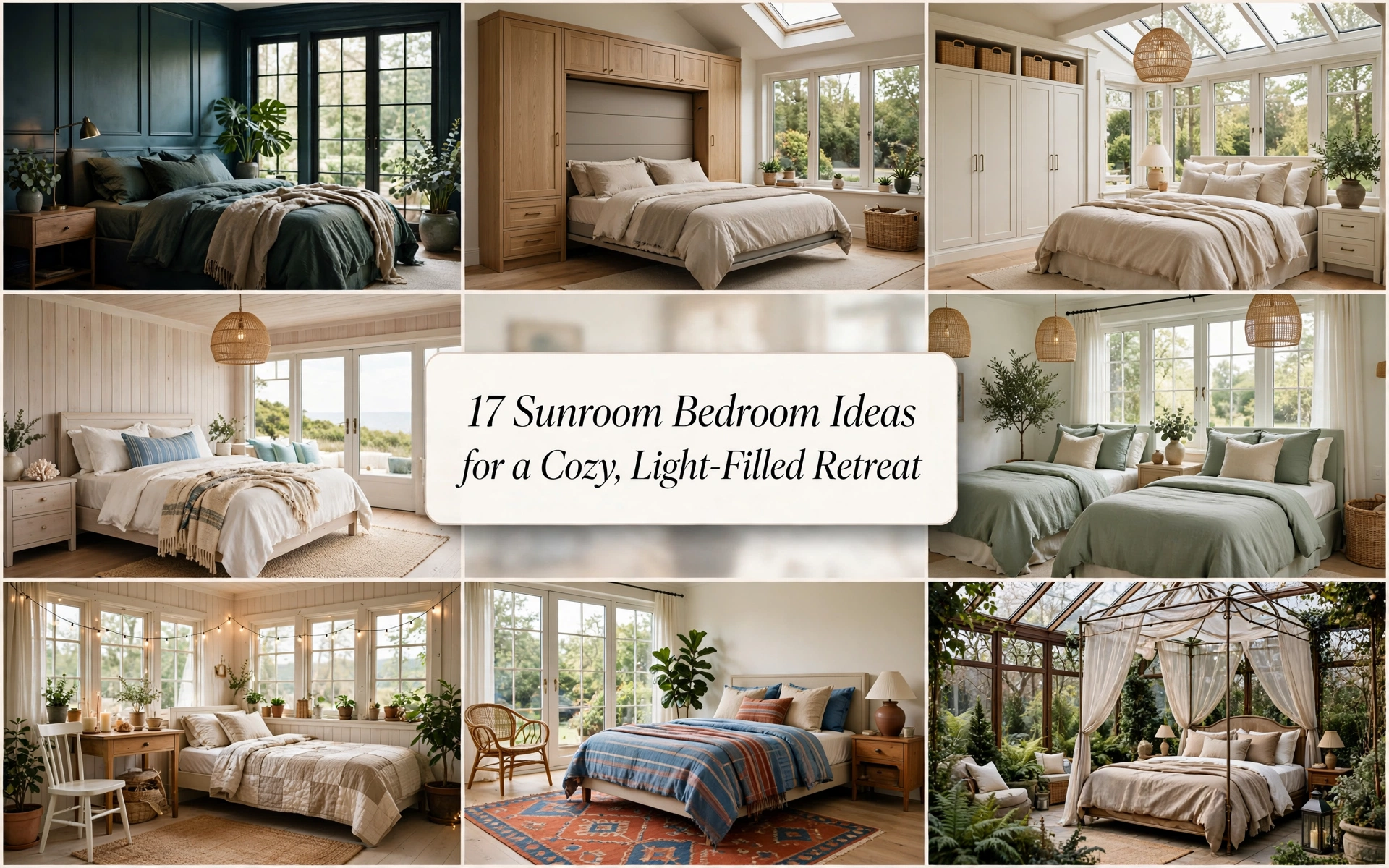
17 Sunroom Bedroom Ideas for a Cozy, Light-Filled Retreat
A sunroom seems like a dreamy place to sleep—until bright morning glare, chilly windows, and a lack of privacy make it feel more like a porch than a bedroom. Filling it with heavy furniture or dark curtains can solve one problem while erasing the airy character that made the room appealing in the first place.
The better approach is to treat sunlight, comfort, and function as parts of the same design. With the right bed placement, layered window treatments, warm textures, and space-smart furniture, even a compact sunroom can become a restful retreat. These sunroom bedroom ideas cover relaxed guest rooms, year-round sleeping spaces, budget updates, storage solutions, and several distinct decorating styles—without hiding all that wonderful natural light.
1. Build a Warm Neutral Retreat Around the View

Calm and sun-washed, a warm neutral palette lets the outdoor view remain the room’s strongest feature. The key is using several soft tones instead of one flat shade: warm white walls, oatmeal linen, pale oak, and touches of camel or sand create depth without making the glass-lined space feel busy.
Position a low-profile bed where it faces the best view but does not block a doorway or window. Add a washable jute-blend rug beneath it, then use linen-look shades for filtered daytime light. Blackout curtain panels at the bed wall provide nighttime comfort while keeping most windows visually open.
💡 Quick Win: Replace cool white bedding with an ivory duvet and add one camel throw. That small temperature shift makes a glass-heavy room feel warmer without repainting or buying new furniture.
2. Create Privacy With Layered Window Treatments

Soft and secluded, this approach solves the most obvious challenge of sleeping in a sunroom: too much exposure. Pair inside-mounted woven shades with ceiling-height curtain panels. The shades control glare and views during the day, while lined drapes create darkness and privacy at night.
Choose curtains close to the wall color so the room does not feel chopped into sections. Mount rods several inches beyond each window whenever wall space allows; pulled-back fabric will frame the glass instead of covering it. For a true bedroom, use blackout lining and cordless shades, especially around children or pets. This layering also helps soften echoes in rooms with many hard surfaces.
3. Fit a Daybed Into a Small Sunroom Bedroom

Airy and efficient, a daybed lets a narrow sunroom function as a reading lounge until guests stay over. Its single-depth footprint preserves a clear walkway and avoids the cramped feeling created by placing a full bed in the center of a small room.
Set the daybed against the least windowed wall, then use one long lumbar pillow and two supportive back cushions rather than a pile of decorative pillows. A wall-mounted sconce keeps the floor clear, while a C-shaped side table can hold a book or drink. If you need room for two guests, choose a daybed with a pullout trundle and confirm there is enough clearance to extend it fully.
💡 Quick Win: Style the mattress with a fitted cover in a durable linen-look fabric. It instantly reads more like a tailored sofa during the day and is much easier to reset than loose layers.
Shop the Look
| Item | What to Look For | Approx. Price Range |
| Daybed | Slim frame with supportive slats | $250–$800 |
| Wall sconce | Plug-in or hardwired, adjustable arm | $45–$180 |
| C-table | Narrow base that slides under the frame | $40–$140 |
4. Add Cottage Character With Florals and Painted Wood

Cheerful and collected, a cottage-style sunroom bedroom welcomes pattern without overwhelming the architecture. Start with a painted spindle bed in soft sage, dusty blue, or creamy white. Then use a small-scale floral quilt and repeat one of its quieter colors in the curtains or bedside lamp.
Keep the larger surfaces simple: warm white walls and a natural fiber rug give florals room to breathe. An old wood stool can replace a bulky nightstand, while a narrow peg rail holds a robe and woven hat. The result should feel gathered over time, not themed—so avoid matching every print or covering the room with distressed signs.
5. Use an Upholstered Bed to Soften All That Glass

Quiet and cocooning, a fabric bed introduces the softness a window-filled room naturally lacks. A channel-tufted or gently curved headboard absorbs sound, creates a comfortable place to lean, and gives the sleeping zone a clear visual anchor.
Choose textured performance fabric in oatmeal, mushroom, or muted olive; delicate pale upholstery can fade or stain quickly in a high-use sunroom. Place the headboard against a solid interior wall if possible and leave a few inches for airflow. Echo its texture with a wool rug and simple cotton-linen bedding, but balance the softness with one clean-lined wood or metal table.
💡 Quick Win: If a new bed is out of budget, fit a slipcover over an existing headboard or hang a padded wall panel behind the mattress. It creates the same softer focal point with less expense.
6. Ground a Modern Sunroom With Black Accents

Crisp and architectural, slim black details give a bright sunroom definition without making it dark. This works especially well with black-framed windows, but the effect can also come from a narrow metal bed, picture frames, sconces, and one graphic stripe.
Limit black to roughly ten percent of the room and balance it with white oak, warm white, and soft taupe. A low platform bed keeps sightlines open, while matching wall sconces create symmetry without consuming nightstand space. Skip heavy black dressers or large rugs; the goal is to trace the room’s lines, not dominate them. For more streamlined inspiration, connect this section to [Internal Link: Modern Bedroom Ideas for a Calm, Uncluttered Space].
7. Layer Natural Materials for an Earthy Bedroom

Grounded and relaxed, rattan, wood, linen, and wool connect an indoor sleeping space to the landscape outside. What makes this look work is contrast: pair the open weave of a cane headboard with smooth cotton sheets, a nubby blanket, and a substantial wood table.
Use no more than three dominant wood tones so the room stays cohesive. Medium oak and walnut pair naturally with olive, clay, and cream, while a jute rug adds texture underfoot. Because direct sun can dry or fade natural fibers, rotate cushions and choose UV-filtering shades for the brightest exposures. One large plant is more effective—and easier to care for—than a crowded collection.
💡 Quick Win: Add a lidded rattan basket at the end of the bed for spare blankets. It introduces texture, hides guest-room essentials, and can move easily when floor space is needed.
8. Make a Moody Palette Work Without Losing the Light

Enveloping rather than gloomy, a moody sunroom can feel restful while the windows keep it from becoming heavy. Paint the one or two solid walls in deep blue-green, charcoal, or earthy plum, leaving the ceiling and window trim warm white to preserve lift.
Repeat the dark color in a single textile, then introduce cognac leather, aged brass, or walnut for warmth. Choose breathable off-white bedding so the bed remains a bright focal point. Test paint on each solid wall for several days—the surrounding greenery can noticeably alter green and blue undertones. At night, use two or three warm, dimmable light sources rather than one harsh ceiling fixture.
9. Turn a Sunroom Into a Flexible Guest Bedroom

Welcoming and adaptable, a guest-focused layout should make visitors comfortable without preventing everyday use. A Murphy bed, cabinet bed, or streamlined sleeper sofa frees the floor for reading, stretching, or working when no one is staying overnight.
Place a small chest near the entry so guests have a surface and two empty drawers. Add a reading lamp, reachable charging point, luggage rack, and an opaque window covering that can be operated from the bed. Keep bedding in a labeled storage bin nearby rather than filling the room with permanent layers. If this room must serve several purposes, [Internal Link: Multipurpose Guest Room Ideas That Work Harder] is a natural related resource.
💡 Quick Win: Create a guest tray with a carafe, glass, charging cable, and small card containing the Wi-Fi details. It makes the space feel thoughtfully prepared without adding permanent decor.
10. Frame the Bed With Built-In Storage

Tailored and space-smart, shallow built-ins transform an awkward sunroom wall into a complete sleeping zone. Cabinets or wardrobes on either side of the bed provide clothing storage, while a bridge shelf above can hold a few books or baskets.
Keep units around 12 to 18 inches deep when circulation is tight, and verify that doors will open without hitting the mattress. Painting cabinets and wall the same warm white makes the installation feel architectural rather than bulky. Integrate reading lights and outlets before construction, and leave the area directly above the sleeper visually quiet. More storage ideas can lead readers to [Internal Link: Small Bedroom Storage Ideas That Save Floor Space].
11. Create a Breezy Coastal Sunroom Bedroom

Breezy and unfussy, coastal style suits a bright room when it relies on texture and faded color rather than obvious nautical decor. Combine chalky white, sandy beige, and washed denim blue with pale wood and woven fibers.
Use a simple slatted or woven headboard, striped cotton blanket, and relaxed Roman shades. A vintage-style blue glass lamp adds color without introducing anchors, shells, or themed signs. Keep the windows visually light and allow plenty of open floor around the bed. For rooms near humid climates, washable cotton, performance fabric, and moisture-resistant finishes are more practical than delicate raw linen.
💡 Quick Win: Fold a faded blue striped throw across the lower third of a plain white bed. It creates a coastal color story in minutes and is easy to swap when your style changes.
12. Use Twin Beds for a Welcoming Guest Sunroom

Balanced and sociable, twin beds make a sunroom more useful for siblings, friends, or grandchildren. Place them parallel with one narrow table between them, or form an L-shaped arrangement when the room is long and tight.
Matching headboards and coverlets create order, while different accent pillows keep the room from feeling institutional. Choose bed frames with at least six inches of clearance for storage bins, and install one shared wall light or two compact sconces. Preserve a 24- to 30-inch walkway where possible; if that is unrealistic, use armless beds and rounded furniture to ease movement.
Shop the Look
| Item | What to Look For | Approx. Price Range |
| Twin bed frames | Slim profile with underbed clearance | $180–$600 each |
| Shared nightstand | 16–22 inches wide with a drawer | $80–$300 |
| Matching coverlets | Washable cotton or matelassé | $50–$160 each |
13. Carve Out a Reading Nook Beside the Bed

Restful and personal, a reading corner makes the sunroom enjoyable before bedtime and useful throughout the day. Choose a compact chair with a supportive back rather than an oversized recliner, then angle it toward the view instead of lining every item against the walls.
Anchor the nook with a small round rug or let the main bedroom rug extend beneath the chair’s front legs. Add a narrow floor lamp behind the shoulder, a tiny drink table, and a basket for current reads. Maintain enough space to open curtains and walk around the bed. The zone should feel intentional but not compete with the sleeping area.
💡 Quick Win: Move an existing dining or accent chair into the sunniest corner and add a lumbar cushion plus a small stool. You can test whether the nook gets used before investing in new furniture.
14. Refresh the Room With Budget-Friendly Updates

Fresh and attainable, a budget sunroom bedroom depends on a few high-impact changes rather than a full renovation. Paint the solid walls, simplify the bedding, and repeat one accent color three times—for example, sage in a throw, lamp, and small artwork.
Shop your home before buying: a narrow console can become a bedside table, leftover curtain panels may soften one wall, and a sturdy bench can hold folded linens. Use matching curtain rods and consistent bulbs to make mixed furnishings feel deliberate. Avoid scattering money across many tiny accessories; one correctly sized rug or pair of substantial lamps will change the room more convincingly.
15. Let a Statement Rug Define the Sleeping Zone

Layered and grounded, a well-sized rug gives the bed a visual boundary in an open, glass-heavy room. It also adds warmth underfoot and reduces the hollow acoustics common in sunrooms with tile or wood floors.
For a queen bed, an 8-by-10-foot rug usually allows a generous border; in a tighter room, place a 6-by-9 rug beneath the lower two-thirds of the bed. Choose a low-pile wool blend or indoor-outdoor flatweave that can handle strong sunlight and frequent cleaning. A muted geometric or vintage-inspired pattern hides wear while adding character. Keep bedding quieter so the rug remains the clear focal point.
💡 Quick Win: Rotate the rug 180 degrees every few months to encourage even fading. This is especially useful when one side sits directly beside south- or west-facing glass.
16. Prepare a Four-Season Sunroom for Better Sleep

Comfortable and considered, a year-round sunroom bedroom needs more than attractive textiles. Temperature swings, condensation, glare, and drafts can undermine even the prettiest design, so address the room’s envelope before treating it as a permanent sleeping space.
Use insulated cellular shades, lined curtains, a quiet ceiling fan, and a properly sized heating or cooling solution recommended for the room. Keep the bed away from visibly drafty glass and ensure vents are unobstructed. A breathable mattress protector and humidity monitor add practical protection. Before converting the space, confirm local requirements for egress, electrical service, heating, and legal bedroom use with the appropriate building professional.
17. Design a Romantic Canopy Without Blocking the Windows

Dreamy and refined, a slim canopy bed gives a sunroom bedroom a sense of enclosure while allowing light to move through it. Choose an open metal or pale wood frame with straight, narrow posts; a heavy carved canopy can crowd the windows and lower the visual ceiling.
Leave the frame bare for a modern look or drape only the head of the bed with lightweight linen-look fabric. Keep fabric away from heaters, vents, and open flames, and secure it so it cannot tangle with a fan. Pair the canopy with quiet ivory bedding, one quilted coverlet, and minimal bedside furniture. It is a strong final touch because it creates intimacy without sacrificing the room’s defining openness.
Shop the Look
| Item | What to Look For | Approx. Price Range |
| Canopy bed | Slim posts and an open, stable frame | $450–$1,500 |
| Fabric panels | Lightweight linen-look fabric | $60–$220 per pair |
| Coverlet | Washable cotton with subtle texture | $70–$240 |
A Sunroom Bedroom Should Still Feel Like a Sunroom
The most successful conversion does not cover every window or fill every corner. It keeps the natural light and outdoor connection, then adds just enough privacy, softness, storage, and climate control to make sleeping comfortable.
You do not need to copy all 17 ideas. Start with the issue your room needs solved most—perhaps glare, an awkward layout, insufficient warmth, or nowhere for guests to unpack. Then choose the palette and furnishings that fit your style and budget. A layered shade, correctly sized rug, or lower bed may be all it takes to change the space. For the next step, explore the related bedroom guides below and build your retreat one thoughtful layer at a time.
Frequently Asked Questions About Sunroom Bedrooms
1. Can a sunroom legally be used as a bedroom?
That depends on local building codes and the room’s construction. A legal bedroom may need compliant egress, minimum dimensions, permanent heating, smoke and carbon-monoxide alarms, and suitable electrical service; ask your local authority or a qualified building professional before converting it.
2. Where should the bed go in a sunroom?
Place the headboard against a solid interior wall whenever possible, away from the draftiest glass. Keep doors, vents, window controls, and required exit routes clear, and orient the bed toward the best view if the circulation allows.
3. How do I make a sunroom bedroom private?
Layer light-filtering woven or cellular shades with lined blackout curtains. The shades preserve soft daylight, while the curtains provide full nighttime privacy; privacy film can help on selected lower panes but may not replace opaque coverings after dark.
4. How can I darken a sunroom for sleeping?
Use inside-mounted blackout shades with side channels or pair cellular shades with ceiling-height blackout curtains. Address transom and door glass too, since even a small uncovered pane can send strong early-morning light across the bed.
5. What colors work best in a sunroom bedroom?
Warm whites, oatmeal, sage, muted blue, clay, and pale wood complement abundant daylight. Test samples throughout the day because exterior greenery, brick, and changing sun can noticeably shift how undertones appear indoors.
6. How do I keep a sunroom bedroom warm in winter?
Start with weather sealing and insulated window treatments, then use an appropriately sized heating system approved for the space. Rugs and lined curtains improve comfort, but they cannot correct inadequate insulation or an unsafe temporary heating setup.
7. How do I keep the room cool in summer?
Use solar shades or insulated cellular shades, exterior shading where appropriate, a ceiling fan, and correctly sized cooling. Close coverings before peak sun reaches the glass, and choose breathable cotton or linen-blend bedding for a more comfortable sleep surface.
8. What furniture is best for a small sunroom bedroom?
Choose a daybed, low platform bed, or wall bed with shallow tables and wall-mounted lights. Furniture with visible legs maintains a sense of floor space, while underbed drawers or bins add storage without requiring another cabinet.
9. Will sunlight fade bedroom furniture and fabrics?
Strong UV exposure can fade wood, rugs, artwork, and textiles over time. Use UV-filtering window treatments, select fade-resistant performance fabrics, rotate rugs and cushions, and avoid placing delicate or irreplaceable pieces in direct sun.
10. What flooring works well in a sunroom bedroom?
Engineered wood, suitable luxury vinyl, tile with a large rug, or manufacturer-approved laminate can work depending on climate and the existing structure. Check moisture and temperature requirements before installation, especially in rooms that are not fully conditioned.
11. How can I make a sunroom bedroom feel cozy without clutter?
Concentrate softness around the bed with an upholstered headboard, one substantial rug, layered bedding, and two or three warm light sources. Limit small accessories and leave open space near windows so the room still feels bright and breathable.
12. Is a sunroom bedroom better as a guest room or everyday bedroom?
A guest room is often easier because occasional use tolerates more temperature variation and flexible furniture. Everyday sleeping requires dependable climate control, privacy, darkness, storage, safety, and code compliance—not simply an attractive bed and curtains.


