
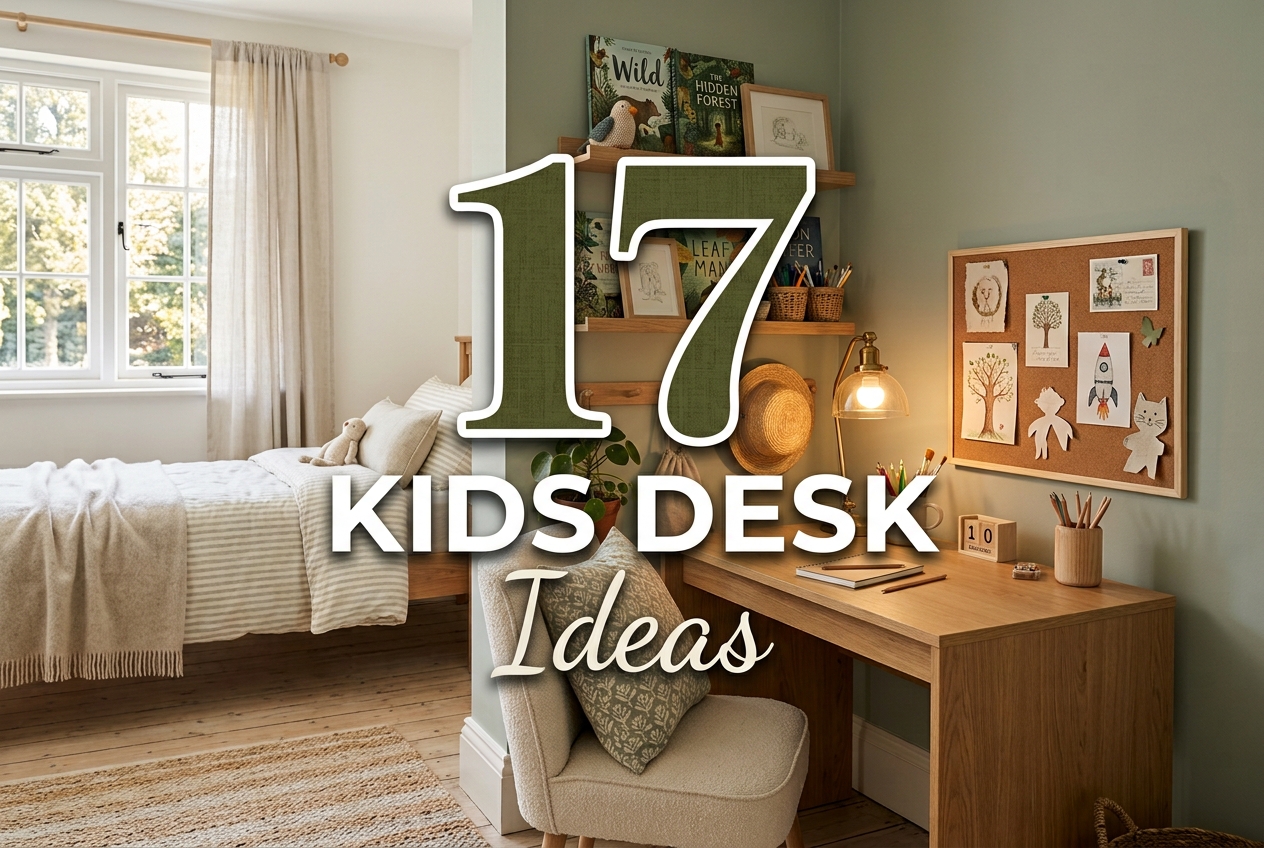
17 Kids Desk Ideas for a Cozy Bedroom Nook
Creating a desk in a child’s bedroom does not always mean giving up a large section of floor space. The awkward corner beside a wardrobe, the empty stretch beneath a window, or even a narrow wall can become a useful little homework and creativity zone with the right layout. The trick is to make the desk feel like part of the bedroom rather than an office squeezed into it. These kids desk ideas for a bedroom nook show how smart storage, comfortable proportions, warm materials, and playful details can turn even a small corner into a space your child actually wants to use.
1. Tuck a Compact Desk Into an Empty Corner

An unused bedroom corner can become an efficient study nook with a slim rectangular desk and a comfortable chair. Choose a desk with shallow depth so it does not visually crowd the room, then use the wall above it for a small shelf or pinboard. Light oak, creamy white, or pale birch keeps the setup visually light. This approach works especially well in smaller bedrooms where every inch of floor space matters.
Quick Win: Keep only daily-use supplies on the desktop. A small pencil cup and one tray can make a compact desk feel much less cluttered.
2. Create a Built-In Desk Beneath Shelving

If the bedroom has an awkward alcove, a built-in desk can make it feel intentional. A simple wood countertop fitted between two walls creates a custom workspace without taking up unnecessary floor area. Add open shelves above for books, artwork, and school supplies, keeping frequently used items within easy reach. Painting the shelving and surrounding walls one color gives the nook a cohesive, architectural feel.
3. Turn a Window Nook Into a Bright Homework Station

A desk beneath a bedroom window gives children plenty of natural light for drawing, reading, and homework. Keep the furniture low enough that it does not block the view, and use a simple roller shade or lightweight curtain for glare control. Pale wood paired with warm white walls creates an airy look, while a small task lamp keeps the space useful when daylight fades.
4. Add Pegboard Storage Above the Desk

For children who collect pencils, craft materials, notebooks, or small toys, a pegboard can make the wall work harder. Mount one directly above a simple desk and add small cups, hooks, shelves, and clips for flexible organization. Choose a neutral pegboard for a calmer bedroom or a muted color for more personality. Because accessories can move around, the setup can evolve as your child grows.
Quick Win: Place the most frequently used supplies at eye level and reserve higher sections for items used less often.
5. Use a Floating Desk for a Tiny Bedroom

A floating desk is one of the easiest ways to create a study zone when floor space is limited. A wall-mounted wood or white desktop leaves the floor underneath open, making the bedroom feel less crowded. Pair it with a lightweight chair that can slide underneath when not in use. Add a shallow shelf above for books without building a bulky storage unit.
6. Frame the Nook With a Painted Accent Wall

A small painted section can visually define a children’s desk without adding furniture. Paint the wall behind the desk in dusty blue, sage, muted peach, or warm clay, keeping the surrounding walls lighter. The color acts almost like a backdrop and gives a basic desk more presence. This is particularly useful when you want a dedicated study area without installing permanent built-ins.
7. Pair the Desk With a Cozy Reading Nook

If the bedroom has enough room, combine a small homework desk with a nearby reading corner. Keep the desk simple and use the opposite side of the nook for a compact lounge chair, floor cushion, or small book basket. This creates a multifunctional area for homework, drawing, and quiet reading rather than a workspace that feels overly formal.
Quick Win: Use one shared color palette—such as cream, warm wood, dusty blue, and rust—to make the two zones feel connected.
8. Make a Desk Fit Beside the Wardrobe

The wall beside a wardrobe is often overlooked, but it can be just wide enough for a narrow desk. Choose furniture with clean lines and a similar finish to the wardrobe so the two pieces look intentional together. Vertical shelving can provide extra storage without widening the footprint. This arrangement is particularly useful in rectangular children’s bedrooms where the center floor needs to stay open for play.
9. Choose a Desk With Built-In Drawers

When a bedroom nook has limited wall space, let the desk provide the storage. A compact desk with two or three drawers can hide pencils, worksheets, chargers, and craft supplies while keeping the surface clear. Look for rounded edges and child-friendly hardware. Warm wood or painted furniture can make the piece feel more like bedroom furniture than office equipment.
10. Create a Colorful Art-and-Homework Nook

For a creative child, the desk can double as an art station. Keep the larger furniture neutral and introduce color through washable desk accessories, artwork, storage bins, and a cheerful chair cushion. A wall-mounted rail or shallow shelf makes paper and supplies easy to reach. The result feels playful without turning the entire bedroom into a brightly colored playroom.
Quick Win: Add a washable desk mat to protect the desktop from markers, paint, glue, and everyday creative projects.
11. Add a Long Desk for Two Siblings

A shared bedroom can benefit from one longer desktop rather than two separate desks. A wall-mounted counter with two child-sized chairs gives each sibling a defined working area while keeping the room visually cohesive. Use individual storage trays, hooks, or small shelves so each child has a place for personal supplies. A shared lamp or two slim lamps can illuminate the whole surface.
12. Use a Curved Desk for a Softer Look

A curved or gently rounded desk can soften the harder lines found in many children’s bedrooms. Pair it with a rounded-back chair and simple circular wall art for a cohesive look. Cream, pale oak, and muted blush or sage create a calm palette that can work for younger children without feeling overly themed. Rounded furniture is also a practical choice for busy bedrooms where sharp corners are best avoided.
13. Build a Desk Into a Closet Alcove

A shallow closet alcove can become a surprisingly useful homework station. Remove visual clutter by keeping the desk surface simple, then add shelves or closed cabinets above for school materials. If the surrounding walls are painted the same color as the bedroom, the nook can feel like a natural architectural feature rather than an extra piece of furniture. This is especially effective in bedrooms with awkward recessed areas.
14. Keep It Calm With Scandinavian-Inspired Styling

A Scandinavian-inspired desk nook works beautifully when you want the bedroom to feel peaceful rather than visually busy. Combine pale wood, warm white, soft gray, and simple woven textures. Choose one or two practical storage pieces instead of filling the shelves with accessories. The clean palette makes a small nook feel brighter and leaves room for your child’s personality to appear through artwork and books.
Quick Win: Swap several small decorations for one oversized piece of children’s artwork to create a stronger focal point with less visual clutter.
15. Add Vertical Storage Above a Narrow Desk

When the floor area is limited, think upward. A narrow desk can be paired with two or three vertical shelves that use the wall without stealing walking space. Store books, notebooks, headphones, and small boxes at different heights to make the arrangement practical and visually balanced. Keep the lower shelf within easy reach while reserving the upper levels for occasional-use items.
16. Create a Cozy Desk With Warm Evening Lighting

A desk nook does not have to look clinical when the overhead bedroom light goes on. Add a warm-toned table lamp with a fabric or frosted shade, then balance it with soft textiles and natural wood. A small pinboard, a favorite book, and one meaningful decorative object can make the area feel personal. This setup is ideal for older children who use their desk for reading and quiet projects after school.
17. Give the Nook a Grown-Up Look That Can Evolve

The smartest kids desk may be one that does not look overly child-specific. Choose a timeless desk in oak, white, or walnut, then personalize it with artwork, stationery, and accessories that can easily be replaced as your child grows. A comfortable adjustable chair and flexible shelving extend the usefulness of the nook for years. This approach also makes it easier to update the room without replacing the main furniture.
Conclusion
A bedroom desk does not need to dominate the room to become one of its most useful features. Whether you have a tiny corner, a window alcove, or a generous shared bedroom, the right combination of scale, storage, lighting, and personality can create a nook that feels genuinely inviting. Choose the idea that fits your child’s age, habits, and available space, then personalize it gradually. A few thoughtful details can make a simple homework corner feel like their own special place.
Frequently Asked Questions
What is the best desk for a small kids’ bedroom?
A shallow floating desk, narrow writing desk, or built-in countertop usually works well in a small bedroom. These options preserve floor space while still providing enough room for homework and creative activities.
How much space does a kids’ desk nook need?
A compact desk can work in surprisingly little space. Prioritize enough depth for comfortable writing and enough clearance for your child to pull out the chair and move around safely.
Where should a kids’ desk be placed in a bedroom?
A desk can work beside a wardrobe, beneath a window, inside an alcove, or against an unused wall. Natural light is helpful, but avoid positioning the desk where direct glare makes screens or writing uncomfortable.
What colors work well for a kids’ study nook?
Warm white, sage green, dusty blue, pale wood, soft beige, muted terracotta, and gentle gray are versatile choices. You can introduce brighter colors through artwork and accessories instead of committing to a strong wall color.
How can I make a kids’ desk nook look less cluttered?
Use vertical storage, drawers, labeled boxes, and a limited number of desktop accessories. Keeping frequently used items accessible while storing everything else away makes the nook easier to maintain.
Is a floating desk a good option for children?
A properly installed floating desk can be an excellent space-saving solution. Make sure it is securely attached to the appropriate wall structure and has a comfortable height for the child using it.
How can I create a kids’ desk nook without spending much?
Start with a simple secondhand or budget desk and improve the area with paint, a comfortable chair, inexpensive shelves, and attractive organization. A well-styled wall can make basic furniture feel much more intentional.
Should a kids’ desk face the wall or window?
Either arrangement can work. Facing a wall may reduce distractions and make storage easy to reach, while facing a window can provide natural light and a more open feeling.
How do I make a kids’ study nook work for different ages?
Choose timeless furniture and make the personality easy to change. Neutral desks, adjustable seating, flexible shelving, and replaceable artwork can transition from early elementary years into the teenage years.
What should be kept on a child’s desk?
Keep everyday essentials such as pencils, notebooks, a lamp, and perhaps one current project within reach. Everything else can go into drawers, baskets, or nearby shelves to preserve usable workspace.
How can I make a shared kids’ desk work for siblings?
Give each child a defined section of the desktop and individual storage. A long built-in desk can create separate work zones while maintaining a cohesive appearance.
What lighting is best for a kids’ desk?
Combine natural daylight with a dedicated task lamp. Choose a lamp that provides comfortable, even illumination without creating harsh glare on books or screens.
Are built-in kids’ desks worth it?
A built-in desk can make excellent use of an awkward alcove and provide integrated storage. It is particularly useful when you expect the desk to remain in the bedroom for several years.
How can I make a kids’ desk nook feel cozy?
Use warm wood, soft textiles, a comfortable chair, gentle lighting, and a few personal objects. Avoid filling every shelf; a little breathing room helps the nook feel calm rather than crowded.
What are common mistakes when creating a kids’ desk nook?
Oversized furniture, inadequate lighting, insufficient storage, and too many decorative accessories can make a desk nook frustrating to use. Scale the furniture to the child and leave enough clear space around the chair.


