
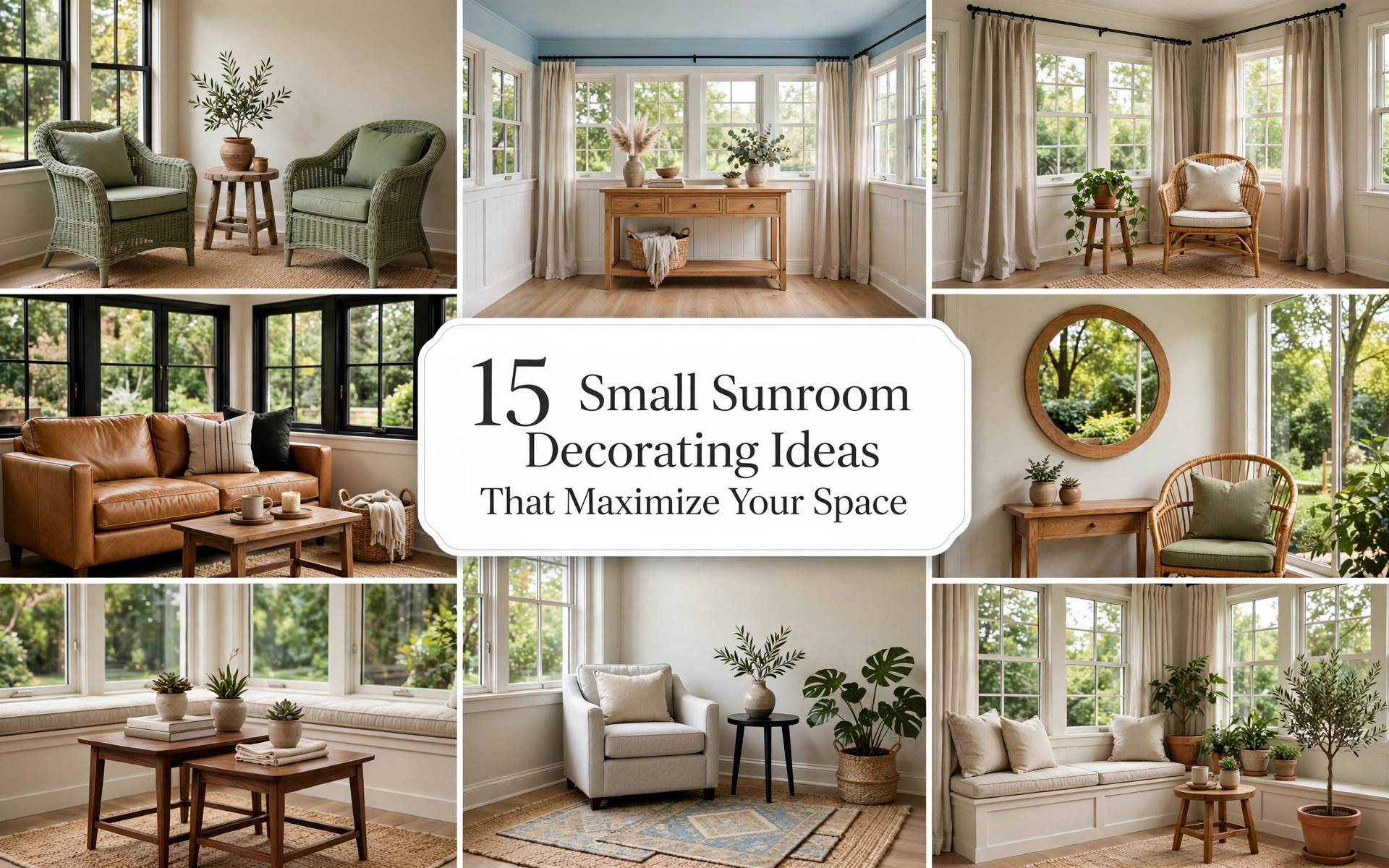
15 Small Sunroom Decorating Ideas That Maximize Your Space
A small sunroom should feel like an escape—not a crowded passageway filled with furniture that almost fits. Yet narrow layouts, multiple windows, awkward doors, and limited wall space can make even simple decorating decisions frustrating. Oversized seating blocks the view, too many accessories create visual noise, and unused corners quickly become clutter zones.
The good news is that a compact footprint can work in your favor. With smarter furniture proportions, light-enhancing colors, flexible storage, and a few purposeful focal points, you can make the room feel more open and useful. These small sunroom decorating ideas cover cozy reading corners, dining layouts, plant displays, budget updates, and multifunctional solutions you can realistically recreate.
1. Choose Low-Profile Furniture for an Airy Sunroom

An airy sunroom starts with furniture that stays below the window line. Low-backed lounge chairs, an armless loveseat, and a slim coffee table preserve outdoor views while allowing sunlight to travel across the room.
Choose pieces with exposed legs instead of heavy skirted bases. Pale oak, natural cane, and warm white upholstery keep the arrangement visually light. Leave several inches between furniture and windows so curtains can hang freely and air can circulate.
In a narrow room, position the loveseat against the shortest solid wall and angle one chair toward it. This creates conversation space without forming a rigid furniture corridor.
Quick Win: Remove one bulky side table and replace it with a small C-shaped table that slides beneath a chair. You will gain floor space while keeping a convenient surface for coffee or a book.
2. Build a Cozy Sunroom Reading Nook

For a cozy retreat, give one corner a clear purpose. A compact armchair placed diagonally near the brightest window creates an inviting reading spot without requiring a complete room makeover.
Pair the chair with a narrow drink table and a wall-mounted swing-arm lamp. The lamp provides evening light without occupying the floor space needed for a traditional floor lamp. Add one lumbar pillow and a washable throw in rust, olive, or muted ochre to warm up a neutral room.
A small footstool can double as an extra seat. If the room feels especially tight, choose a nesting stool that tucks beneath the table when it is not needed.
Shop the Look
| Item | What to Look For | Approx. Price Range |
| Compact armchair | Narrow arms and a seat under 30 inches wide | $180–$500 |
| Swing-arm lamp | Plug-in design with an adjustable shade | $45–$140 |
| Small drink table | Stable base and a 10–14-inch top | $35–$100 |
3. Use a Built-In Bench to Add Hidden Storage

A built-in window bench gives a small sunroom a grounded, tailored look while solving two problems at once: seating and storage. Drawers beneath the seat can hold gardening supplies, outdoor cushions, games, or seasonal decor.
Run the bench along one uninterrupted wall or beneath a wide window. Keep the seat depth around 18–22 inches so it feels comfortable without projecting too far into the room. A firm bench cushion in a subtle stripe adds softness, while two or three pillows provide support without overwhelming the windows.
Paint the base the same color as the walls. This helps the storage blend into the architecture rather than resemble another bulky piece of furniture.
Quick Win: If custom cabinetry is outside your budget, line up two sturdy storage benches and top them with one continuous made-to-measure cushion. Matching paint will make the separate pieces look more intentional.
4. Create a Small Sunroom Dining Area with a Round Table

A small dining sunroom feels relaxed and sociable when the furniture encourages easy movement. A round pedestal table eliminates sharp corners and gives chairs more flexibility than a rectangular design.
Choose a table between 30 and 40 inches wide, depending on the room. Pair it with two lightweight dining chairs and keep a folding chair nearby for occasional guests. A pale wood tabletop, woven seats, and a simple ceramic vase create a sun-washed look without requiring much decoration.
Center the table beneath a pendant only if the ceiling height allows it. Otherwise, a flush-mount fixture keeps the sightline open. Explore more compact layouts in [Internal Link: Small Dining Room Ideas That Save Space].
5. Layer White, Sand, and Pale Blue for a Coastal Look

A coastal sunroom can feel fresh without relying on nautical signs or themed accessories. The trick is to build the palette from colors already associated with daylight: warm white, soft sand, misty blue, and lightly weathered wood.
Start with warm white walls and a natural jute or sisal rug. Add pale blue through washable cushion covers or a subtle ticking-stripe curtain. Keep larger furniture sandy beige so the room remains calm even when patterns are introduced.
One woven pendant or rattan tray supplies texture, but avoid filling every surface with baskets. A restrained mix of linen, wood, and woven fibers looks more refined—and makes the sunlight the main decorative feature.
Quick Win: Replace dark pillow covers with two pale blue linen-look covers and add a sand-colored throw. This fast color change can lighten the entire room without replacing furniture or repainting walls.
6. Turn One Wall into a Vertical Plant Display

An earthy plant wall introduces greenery without sacrificing the floor. This is especially useful when your sunroom has excellent light but little room for freestanding planters.
Install two or three narrow shelves on a solid wall, leaving enough height between them for foliage. Mix trailing pothos, compact peperomia, and small herbs rather than using plants with identical shapes. Matching terracotta or matte cream pots keep the display cohesive.
Before drilling, confirm how much direct sunlight reaches the wall and select plants accordingly. Use saucers beneath every pot, and avoid placing wet planters directly on wood shelves. One larger floor plant can anchor the arrangement without turning the room into an obstacle course.
7. Use a Daybed for Flexible Lounging and Guests

A sunroom daybed creates a soft, laid-back atmosphere while giving the room more than one job. It can function as a sofa during the day, a nap spot in the afternoon, and an occasional guest bed at night.
Position it along the longest solid wall rather than directly in front of a door or operable window. A backless design keeps the room from feeling boxed in. Choose a washable fitted cover, then layer two large back cushions with one smaller patterned pillow.
Storage drawers or baskets underneath can hold bedding. Keep the remaining furniture minimal—a small side table and a wall sconce may be all the room needs.
Shop the Look
| Item | What to Look For | Approx. Price Range |
| Daybed | Backless frame with under-bed clearance | $250–$800 |
| Washable cover | Durable cotton or linen-blend fabric | $60–$180 |
| Under-bed storage | Low baskets or fitted drawers | $35–$150 |
8. Make the Room Feel Larger with One Oversized Rug

A single large rug gives a compact sunroom a calm, unified foundation. Several small rugs break up the floor and can make limited square footage feel even more fragmented.
Choose a rug large enough for at least the front legs of every main seat to rest on it. A low-contrast pattern in ivory, taupe, or faded sage adds character without creating a busy focal point. Flatweave and indoor-outdoor materials are practical for rooms exposed to strong sunlight, damp shoes, or garden traffic.
Leave a consistent border of visible flooring around the rug. This clean outline defines the seating zone while preserving a sense of space.
Quick Win: Test the correct rug size with painter’s tape before buying. Mark the corners on the floor, confirm that doors still open freely, and check that the seating arrangement feels connected.
9. Add Slim Console Storage Without Blocking Windows

When wall space is scarce, a narrow console can provide understated storage without dominating the room. Look for a piece 10–14 inches deep that fits beneath a window or behind a compact sofa.
Closed cabinets are useful for hiding chargers, games, and everyday clutter. If you choose an open console, place two matching baskets on the lower shelf and leave the rest of the surface mostly clear. A small lamp, shallow tray, and one plant are enough.
Match the console finish to an existing wood tone in the room. Repeating pale oak, walnut, or painted white helps the new storage feel integrated rather than squeezed into the layout.
10. Hang Ceiling-Height Curtains to Stretch the Room

Soft, ceiling-height curtains make a low or compact sunroom feel taller. Mounting the rod several inches above the window draws the eye upward, while panels that extend beyond the frame expose more glass when open.
Choose lightweight linen-blend curtains in warm white, oatmeal, or pale greige. Avoid heavy fabric that gathers into bulky stacks beside narrow windows. If privacy is a concern, combine curtains with woven shades mounted inside the frames.
Let the panels lightly touch the floor rather than pooling. The clean vertical line looks polished and is easier to maintain in a room that may collect dust, pollen, or moisture.
11. Try a Warm Modern Sunroom with Black Accents

A modern sunroom gains definition from a few carefully repeated black details. Thin black window frames, a streamlined floor lamp, and a dark metal coffee-table base create structure without making the room feel heavy.
Balance those sharper elements with warm white walls, camel upholstery, medium oak, and a textured cream rug. Limit black to roughly 10 percent of the visible palette; too much can overpower a small glass-filled room.
Use simple shapes and leave space around each object. One sculptural vessel or framed abstract print is more effective than a crowded collection. For a coordinated adjoining space, see [Internal Link: Warm Modern Living Room Ideas].
12. Decorate with Mirrors to Redirect Natural Light

A mirror can make a sunroom feel more luminous, but placement matters. Rather than hanging it directly opposite intense sunlight, position it on a side wall where it can reflect greenery or a softly lit part of the room.
Choose one medium-to-large mirror instead of several small designs. A rounded wood frame softens angular windows, while a thin brass frame creates a more polished effect. Check the reflected view before installing it; the mirror should capture plants, sky, or an attractive seating area—not a cluttered doorway.
Avoid placing delicate artwork directly where reflected sunlight may become concentrated. Used thoughtfully, the mirror adds depth without creating glare.
Quick Win: Lean a mirror on a console temporarily and observe it at several times of day. Once you find a position that reflects the best view without harsh glare, secure it properly to the wall.
13. Create a Budget Sunroom with Secondhand Wicker

A collected sunroom feels warm and personal when vintage wicker replaces matching showroom furniture. Look for one sturdy loveseat or a pair of compact chairs with intact frames; minor finish wear can add character.
Unify mismatched pieces by painting them the same soft white, sage, or muted charcoal. Replace tired cushions with high-density foam and washable indoor-outdoor fabric. A small secondhand side table can be refreshed with stain or paint to complete the arrangement.
Inspect woven furniture for broken supports, mildew, and unstable joints before buying. One well-chosen vintage piece looks intentional, while too many unrelated finishes can make a small room feel chaotic.
Shop the Look
| Item | What to Look For | Approx. Price Range |
| Secondhand wicker chair | Solid frame with repairable surface wear | $30–$150 |
| Replacement seat cushion | High-density foam and washable cover | $40–$120 |
| Indoor-outdoor fabric | Fade-resistant, tightly woven material | $15–$45 per yard |
14. Establish a Focal Point with a Painted Ceiling

A painted ceiling introduces character without using valuable wall or floor space. Soft sky blue gives the room a fresh, open quality, while pale sage or warm beige creates a more cocooning effect.
Keep the walls lighter than the ceiling so the color feels intentional rather than oppressive. Use a durable matte or eggshell finish that disguises minor surface imperfections, and test a large sample because overhead color often appears darker than expected.
Limit the remaining palette to two or three quiet tones. With the ceiling doing the visual work, simple furniture and restrained accessories prevent competition and help the architectural detail feel more expensive.
Quick Win: If painting the entire ceiling feels risky, sample two colors on large poster boards. Hold them overhead during morning and evening light before choosing the softer, more flattering shade.
15. Design a Flexible Sunroom with Nesting Furniture

A flexible layout keeps a tiny sunroom useful throughout the day. Nesting tables, folding stools, and lightweight chairs can shift easily between morning coffee, plant care, reading, and entertaining.
Start with one primary seat, then choose movable pieces instead of filling every wall. Two nesting tables occupy a small footprint together but separate when guests need extra surfaces. A folding stool can work as a plant stand and become emergency seating in seconds.
Give each movable piece a designated resting place so flexibility does not turn into clutter. This adaptable approach is ideal when the sunroom connects to a patio or serves several household routines.
Quick Win: Place small felt pads beneath movable tables and chairs. They protect the floor and make it easier to reconfigure the room without dragging, lifting, or damaging delicate surfaces.
Conclusion
A small sunroom does not need more decor; it needs better choices.
Start with the change that solves your biggest frustration, whether that is bulky furniture, missing storage, limited seating, or a room that feels visually crowded.
You can borrow one palette, layout, or space-saving detail without recreating an entire design.
Measure carefully, preserve clear pathways, and let the windows remain part of the room’s appeal.
Work within your style and budget, then add layers only when they serve a purpose.
For more inspiration, explore the related small-space and seasonal decorating guides below.
Frequently Asked Questions
1. How do you make a small sunroom look bigger?
Use low-profile furniture, one appropriately sized rug, and curtains mounted close to the ceiling. Keeping pathways open and repeating a limited color palette will also reduce visual fragmentation.
2. What furniture works best in a small sunroom?
Choose armless chairs, compact loveseats, pedestal tables, storage benches, and pieces with exposed legs. Measure doors and walkways before buying so the arrangement does not interfere with circulation.
3. What colors make a sunroom feel bright?
Warm white, cream, pale blue, soft sage, and sandy beige reflect light while keeping the room welcoming. Avoid using stark white everywhere, which can appear washed out under intense sunlight.
4. How can I make my sunroom feel cozy?
Introduce tactile materials such as linen, wicker, wood, and a low-pile rug. Add warm-toned cushions, an adjustable reading light, and one soft throw without covering every surface.
5. Can a small sunroom be used as a dining room?
Yes. A 30–40-inch round pedestal table with two lightweight chairs creates a practical dining area while preserving movement. Folding chairs can provide occasional extra seating without remaining in the room permanently.
6. How do I add storage without making the room crowded?
Use a built-in bench, shallow console, or baskets beneath a daybed. Closed storage in the same color as the walls is particularly effective because it visually recedes.
7. What type of rug is best for a sunroom?
A fade-resistant flatweave, low-pile, or indoor-outdoor rug handles strong light and frequent foot traffic well. Select one large enough to connect the main furniture rather than several small rugs.
8. Are curtains a good choice for a small sunroom?
Lightweight curtains soften the windows and provide privacy without feeling heavy. Hang them high and wide so the panels expose as much glass as possible when open.
9. How many plants should I put in a small sunroom?
There is no fixed number, but varying height is more important than quantity. Combine a vertical shelf display with one floor plant instead of scattering numerous pots through the walkway.
10. How can I decorate a sunroom on a budget?
Refresh secondhand wicker, replace cushion covers, rearrange furniture, and update one prominent surface such as the rug or ceiling. Small coordinated changes usually create more impact than numerous inexpensive accessories.
11. Will dark accents make a small sunroom feel smaller?
Not when used selectively. Thin black frames, a lamp, or a table base can add definition, provided they are balanced with light walls, warm wood, and pale upholstery.
12. How do I protect sunroom furniture from fading?
Choose UV-resistant indoor-outdoor fabric and rotate cushions periodically. Woven shades or light-filtering window treatments can reduce intense exposure during the brightest part of the day.
13. Can I turn a small sunroom into a guest space?
A daybed with hidden bedding storage is the most efficient solution. Use a washable cover during the day, then add privacy shades or curtains for overnight guests.
14. What should I avoid when decorating a small sunroom?
Avoid oversized furniture, blocked windows, too many tiny accessories, and several competing wood finishes. Do not sacrifice a clear pathway simply to add another seat or table.
15. How can I make a small sunroom useful year-round?
Add layered window treatments, washable textiles, flexible furniture, and balanced task lighting. Depending on the room’s construction, an appropriate fan, heater, or climate-control solution may improve seasonal comfort.


4 Comments