
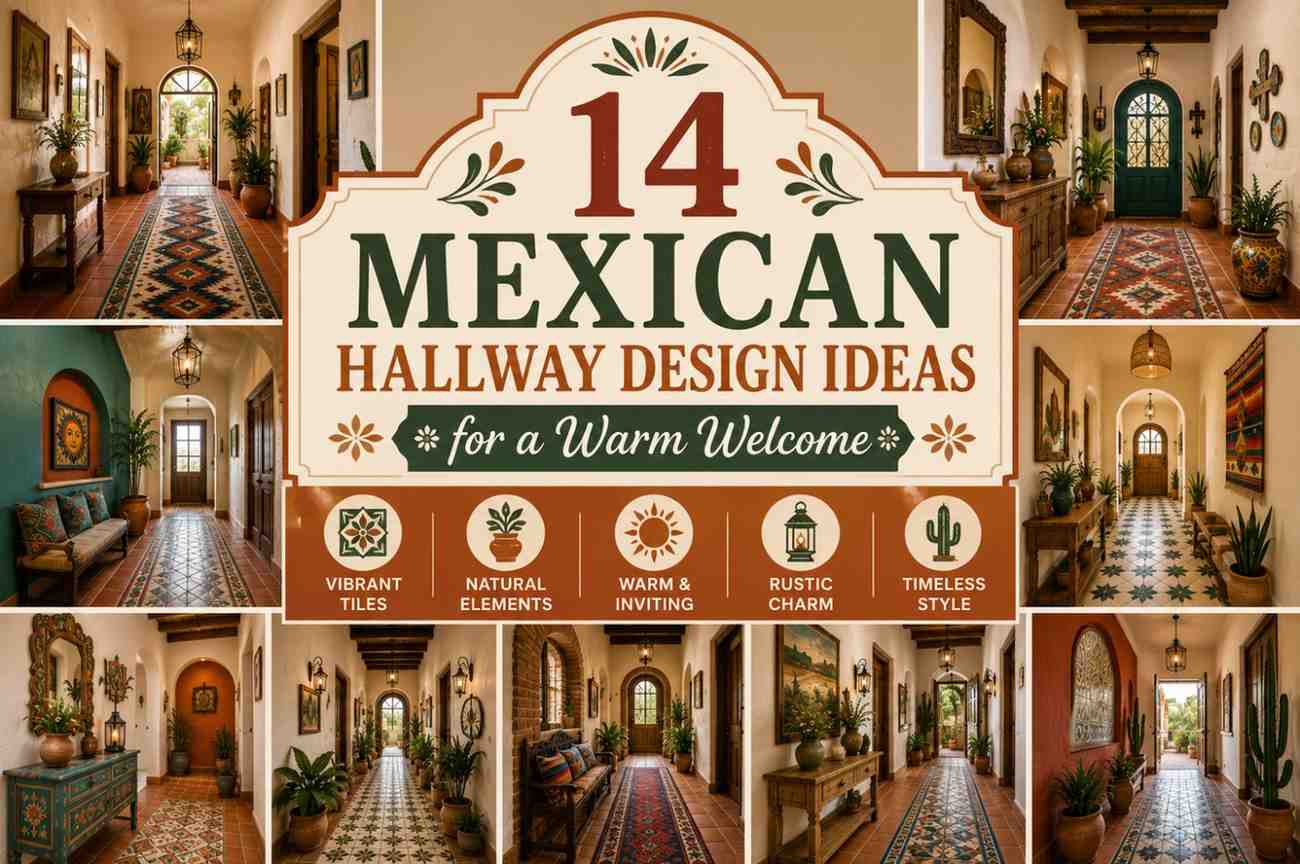
14 Mexican Hallway Design Ideas for a Warm Welcome
Mexican hallway design is an interior style that layers saturated color, handmade tile, and natural materials like wood and iron to turn a passageway into a warm, welcoming moment. This guide walks through 14 mexican hallway design ideas you can adapt at any budget.
The feeling is unmistakable: sun-warmed walls, the cool click of Saltillo tile underfoot, a hallway that hums with color instead of hiding in beige. In my experience, the smallest hallways often hold the boldest color the best, because there’s no big furniture competing for attention. Light bounces off whitewashed plaster, papel picado flutters near an open door, and every surface feels touched by hand rather than mass-produced. Here are 14 ideas worth saving — and stealing.
Why Mexican Style Works So Well
Mexican interior design draws on centuries of Talavera pottery from Puebla, hand-cut Saltillo tile from Coahuila, and the modern minimalism Luis Barragán brought to hacienda architecture in the mid-20th century. It sits apart from pared-back looks like Scandinavian or Japandi hallway design ideas because it embraces saturation rather than restraint, and it’s just as far from the ornate carved millwork found in Victorian hallway ideas, favoring handmade texture over formal detail. Core materials include terracotta, whitewashed adobe plaster, wrought iron (herrería), unfinished pine, and hand-glazed ceramic tile, paired with shop-ready tones like cobalt blue, marigold, cochineal red, and warm terracotta.
The style is trending now as part of a broader shift toward maximalism and craft-driven decor, a reaction to years of minimalist beige interiors and a renewed interest in handmade, sustainably sourced pieces. Mexican hallway design works in small spaces because color and pattern read as intentional rather than cluttered when confined to one accent wall or a single tiled runner; the main limitation is scale, since oversized furniture or multiple bold patterns can overwhelm a narrow footprint.
Style at a Glance
| Element | Core Trait 1 | Core Trait 2 |
| Philosophy | Handcraft over mass production | Warmth through color, not clutter |
| Materials | Terracotta, Saltillo tile, wrought iron | Unfinished pine, whitewashed plaster |
| Color palette | Cobalt, marigold, cochineal red | Warm terracotta, adobe white |
14 Mexican Hallway Design Ideas to Try
1. A Cobalt Blue Accent Wall

Vibe: Grounded and confident.
Why it works: This idea uses color blocking, a design principle where one saturated plane anchors an otherwise neutral corridor. Cobalt blue reads as a signature color across Mexican hallway design because it echoes traditional Talavera glazes and Frida Kahlo’s Casa Azul in Coyoacán, giving the space instant cultural weight without extra furniture.
How to get it: Paint just one long wall in a matte cobalt like Benjamin Moore’s Newburyport Blue, keeping the opposite wall warm white so the eye has somewhere to rest. Leave trim and doors in their natural wood tone rather than painting them to match, since the contrast reads as intentional rather than accidental.
Shop the Look:
| Item | Approx. Price | Where to Find/Style |
| Matte cobalt paint (1 gal) | $55 | Benjamin Moore |
| Talavera wall shelf | $65 | Etsy artisan shop |
| Brass wall hook | $22 | Rejuvenation |
| Small ceramic vase | $34 | World Market |
| Woven jute doormat | $28 | Amazon |
2. Hand-Painted Saltillo Tile Flooring

Vibe: Raw and sun-warmed.
Why it works: Saltillo tile relies on material honesty, a design principle where imperfection in a handmade surface becomes the visual interest itself. The clay’s natural color variation, no two tiles fired identically, gives the hallway texture that manufactured porcelain can’t replicate.
How to get it: If full tile is out of budget, use a Saltillo-look vinyl plank runner and seal it with matte finish to mimic the low-sheen clay surface. If you want an authentic result, the most effective approach is sourcing unsealed Saltillo pavers and applying a boiled linseed oil finish yourself, which deepens the color over time.
Shop the Look:
| Item | Approx. Price | Where to Find/Style |
| Saltillo tile (per sq ft) | $6 | Rustico Tile & Stone |
| Boiled linseed oil sealant | $18 | Home Depot |
| Wool runner rug | $145 | McGee & Co |
| Terracotta planter | $32 | Terrain |
| Rubber tile spacers | $9 | Amazon |
Quick Win: Skip full re-tiling and press peel-and-stick Saltillo-pattern vinyl tiles over the existing floor for an afternoon transformation.
3. A Wrought Iron Pendant Lantern

Vibe: Hushed and atmospheric.
Why it works: This idea uses light behavior, specifically how a pierced iron shade scatters shadow across a wall to add texture without adding furniture. Herrería, the traditional Mexican ironwork craft, has produced pierced lanterns for centuries, and the pattern they throw does most of the decorating work.
How to get it: Hang the lantern low, around 78 inches from the floor in a standard hallway, so the shadow pattern lands on the wall at eye level rather than only on the ceiling. Choose a warm 2700K bulb instead of daylight white, since cool light flattens the shadow pattern and loses the hand-forged effect.
Shop the Look:
| Item | Approx. Price | Where to Find/Style |
| Wrought iron pendant lantern | $189 | Rejuvenation |
| 2700K Edison bulb | $8 | Amazon |
| Ceiling medallion (optional) | $24 | Etsy |
| Framed folk art print | $45 | Society6 |
| Adjustable hanging kit | $15 | Home Depot |
4. Marigold and Terracotta Color Layering

Vibe: Layered and joyful.
Why it works: Splitting a wall into two colors uses proportion, keeping the lighter marigold tone below eye level and the deeper terracotta above it so the hallway feels grounded rather than closed in. If you want a hallway that feels wider than it is, painting the lower half of the wall a lighter shade than the upper half is the most effective approach.
How to get it: Set the chair rail at 32 inches from the floor and use painter’s tape with a putty-knife burnish for a crisp line between the two colors. Keep both tones matte finish, not eggshell, since sheen fights the handmade quality the rest of the palette is going for.
Shop the Look:
| Item | Approx. Price | Where to Find/Style |
| Marigold matte paint (1 gal) | $52 | Sherwin-Williams |
| Terracotta matte paint (1 gal) | $52 | Sherwin-Williams |
| Wood chair rail molding | $38 | Lowe’s |
| Woven seagrass basket | $29 | Target |
| Painter’s tape (multi-pack) | $12 | Amazon |
Quick Win: If painting two tones feels risky, add a marigold runner rug instead and leave the walls terracotta alone.
5. An Equipal Bench for Drop Zone Seating

Vibe: Grounded and welcoming.
Why it works: The equipal bench, a traditional cedar-and-leather seating form from Jalisco, gives a hallway function through furniture scale, sized narrow enough not to block circulation while still offering a place to sit and remove shoes.
How to get it: Measure your hallway width first; an equipal bench needs at least 42 inches of clearance beside it to keep foot traffic comfortable. Set it against the shortest wall segment rather than the longest, which keeps the walking path unobstructed end to end.
Shop the Look:
| Item | Approx. Price | Where to Find/Style |
| Equipal leather bench | $215 | Etsy artisan import |
| Woven wool throw | $58 | Anthropologie |
| Small terracotta succulent pot | $16 | Terrain |
| Cedar wall hook | $19 | World Market |
| Sisal boot tray | $24 | Amazon |
6. A Hand-Glazed Talavera Tile Runner

Vibe: Precise and layered.
Why it works: This idea leans on texture layering, contrasting glossy patterned tile against a matte plain tile field so the eye travels down the hallway rather than stopping at the entry. Talavera tile from Puebla has been produced using the same hand-painting technique since the 16th century, making it a genuine historical material rather than a printed imitation.
How to get it: Run the patterned strip down the exact center of the hallway at roughly one-third the total floor width, keeping plain tile on either side so the pattern doesn’t compete with wall color. Seal glazed tile with a low-sheen grout sealer to prevent slipping, since the glossy glaze can be slick when wet.
Shop the Look:
| Item | Approx. Price | Where to Find/Style |
| Talavera pattern tile (per sq ft) | $14 | Avente Tile |
| Plain terracotta field tile | $6 | Rustico Tile & Stone |
| Low-sheen grout sealer | $21 | Home Depot |
| Tile spacers | $9 | Amazon |
| Grout float tool | $11 | Lowe’s |
Quick Win: Use a removable Talavera-pattern peel-and-stick tile strip instead of committing to permanent flooring.
7. Papel Picado Garland Above the Doorway

Vibe: Light and festive.
Why it works: Papel picado, the traditional cut-paper craft, adds movement and pattern at almost no cost, using negative space in the cut design so the garland reads as delicate rather than cluttered against a solid-color wall.
How to get it: Hang the garland just above the door frame rather than across the ceiling, so it frames the entry point instead of competing with a pendant light. Choose a fabric version rather than paper if the hallway gets direct sun, since paper fades and tears within a season.
Shop the Look:
| Item | Approx. Price | Where to Find/Style |
| Fabric papel picado garland | $26 | Etsy |
| Small brass cup hooks (set) | $9 | Amazon |
| Marigold stem bundle (faux) | $18 | Afloral |
| Ceramic bud vase | $22 | Anthropologie |
| Removable adhesive strips | $7 | Command |
8. A Single Focal Niche at the Hallway’s End

Vibe: Still and intentional.
Why it works: This layout idea uses the hallway’s natural sightline, placing one focal object at the far end so the corridor has a destination rather than reading as a pass-through space. A single large-scale piece works better here than several small ones because scale, not quantity, holds attention across a long distance.
How to get it: Build or fake a niche using a simple wood frame painted to match the terracotta accent, then set one oversized ceramic piece inside rather than a grouping. Keep the rest of the hallway walls plain white so nothing competes with the end-of-corridor moment.
Shop the Look:
| Item | Approx. Price | Where to Find/Style |
| Large ceramic floor vessel | $98 | World Market |
| Faux niche frame kit | $65 | Etsy |
| Terracotta interior paint (qt) | $22 | Sherwin-Williams |
| Picture light for niche | $54 | Rejuvenation |
| Museum putty (for stability) | $6 | Amazon |
Quick Win: No built-in niche needed; a single tall vessel on a narrow console at the hallway’s end creates the same destination effect.
9. Cochineal Red Door Framing

Vibe: Bold and warm.
Why it works: Painting only the door uses contrast at a small, controllable scale, letting one saturated cochineal red, a dye historically derived from insects native to Oaxaca, punctuate a mostly white hallway without the commitment of a full wall.
How to get it: Use a satin or semi-gloss finish on the door itself, since doors get handled often and matte paint shows fingerprints quickly. Swap standard door hardware for an aged brass or oil-rubbed bronze knob, which reads warmer against red than chrome does.
Shop the Look:
| Item | Approx. Price | Where to Find/Style |
| Cochineal red satin paint (qt) | $24 | Benjamin Moore |
| Aged brass door knob | $38 | Schoolhouse |
| Small woven wall hanging | $42 | Etsy |
| Foam paint roller (mini) | $6 | Home Depot |
| Painter’s tape | $8 | Amazon |
10. Layered Sconce Lighting Along the Wall

Vibe: Rhythmic and cozy.
Why it works: Spacing sconces evenly down a long hallway uses repetition, a design principle where a repeated element creates rhythm and makes a narrow corridor feel considered rather than merely lit. Even spacing also solves the flat, single-overhead-bulb problem most hallways struggle with.
How to get it: Mount sconces at 60 inches from the floor, spaced no more than 6 feet apart, so no section of wall falls into shadow. Choose a fixture with an open bottom, like traditional herrería-style shades, so light spills both up and down the wall rather than only forward.
Shop the Look:
| Item | Approx. Price | Where to Find/Style |
| Iron wall sconce (each) | $79 | Rejuvenation |
| Dimmer switch | $28 | Lutron |
| 2700K candelabra bulb (3-pack) | $12 | Amazon |
| Wire conduit cover | $9 | Home Depot |
| Sconce mounting template | $4 | Home Depot |
11. A Narrow Wood Console with Iron Legs

Vibe: Functional and warm.
Why it works: A console this narrow, typically under 12 inches deep, respects hallway proportion by giving surface space for keys and mail without narrowing the walking path. Pairing pine with iron legs echoes the material mix seen throughout mexican hallway design, where wood and metal are meant to show their construction rather than hide it.
How to get it: Choose a console no deeper than 10 to 12 inches for hallways under 42 inches wide, and leave at least 30 inches of clear walking space in front of it. Style the top with no more than three objects, since a busy console top reads as clutter in a narrow sightline.
Shop the Look:
| Item | Approx. Price | Where to Find/Style |
| Narrow pine console table | $175 | McGee & Co |
| Ceramic catch-all bowl | $28 | Anthropologie |
| Small framed art print | $34 | Etsy |
| Brass drawer pulls | $16 | Rejuvenation |
| Felt table protector pads | $5 | Amazon |
Quick Win: A floating wall shelf with iron brackets does the same job as a console in hallways under 36 inches wide.
12. A Micro Gallery Wall in a Tight Corridor

Vibe: Intimate and layered.
Why it works: In a hallway too narrow for furniture, a gallery wall solves the small space problem by using vertical surface instead of floor footprint. Keeping every frame within 2 inches of the same spacing creates a cohesive small space design even when the individual pieces vary in size.
How to get it: If you want a Mexican hallway design to feel intentional in a tight space, grouping small art in a fixed grid rather than a scattered cluster is the most effective approach. Center the arrangement at 60 inches from the floor and use a paper template on the wall before hanging anything.
Shop the Look:
| Item | Approx. Price | Where to Find/Style |
| Small folk art print set (3) | $54 | Etsy |
| Round convex mirror | $68 | World Market |
| Matching wood frames (set of 4) | $46 | Michaels |
| Wall arrangement paper template | free | printable online |
| Museum putty | $6 | Amazon |
Quick Win: Skip framing altogether and pin unframed textile squares directly to the wall with small brass tacks.
13. Whitewashed Adobe-Style Plaster Walls

Vibe: Quiet and textural.
Why it works: Hand-troweled plaster relies on the same material honesty principle as Saltillo tile, letting visible tool marks and subtle color shifts stand in for pattern. This softens a hallway’s hard lines the way lime plaster has done in adobe construction across Oaxaca and Michoacán for generations.
How to get it: Use a lime-based limewash paint applied with a natural bristle brush in overlapping X strokes rather than a roller, which flattens the texture. Let one coat dry unevenly before a second thin coat, since the slight variation between layers is what gives the wall its handmade depth.
Shop the Look:
| Item | Approx. Price | Where to Find/Style |
| Limewash paint (1 gal) | $89 | Portola Paints |
| Natural bristle brush | $18 | Amazon |
| Trowel finishing tool | $14 | Home Depot |
| Trailing pothos plant | $22 | The Sill |
| Ceramic hanging planter | $32 | Terrain |
14. A Woven Basket Wall for Storage and Pattern

Vibe: Layered and practical.
Why it works: Mounting flat baskets on the wall solves storage without sacrificing floor space, a common trade-off in narrow corridors. The mixed basket sizes create texture layering similar to the desert-inspired approach found in southwestern desert hallway ideas, where natural fiber and warm plaster do the decorating instead of framed art.
How to get it: Mount the largest basket at eye level and let smaller ones radiate outward in a loose triangle rather than a strict grid, since baskets read better with a little asymmetry than art prints do. Use them for real storage, mail, scarves, dog leashes, so the wall stays functional and not purely decorative.
Shop the Look:
| Item | Approx. Price | Where to Find/Style |
| Woven basket set (3 sizes) | $58 | Etsy |
| Heavy-duty picture hooks | $8 | Amazon |
| Small terracotta wall pot | $19 | Target |
| Braided jute wall hook | $14 | World Market |
| Removable wall anchors | $7 | Home Depot |
Quick Win: Two baskets, not five, is enough for a hallway under 4 feet wide; overcrowding a wall this size fights the small-space goal.
How to Start Your Mexican Hallway Transformation
The single most effective first move for mexican hallway design is choosing one anchor color, like cobalt blue or terracotta, and applying it to just one wall or the front door before buying anything else. That one decision sets the undertone for every tile, textile, and light fixture that follows, which is why painters and designers alike treat it as the true starting point.
The most common mistake is mixing warm terracotta with a cool-toned gray floor or trim, which fights the palette instead of supporting it. This happens because gray undertones read as cold next to marigold and cochineal red, flattening the warmth the whole style depends on; the fix is swapping any gray trim for a warm white or natural wood tone before adding color elsewhere.
Compared to the rustic-but-neutral palette found in a barndominium hallway, Mexican hallway design leans into saturated color rather than muted wood tones, so don’t be afraid to commit to boldness early. Start with the anchor wall, live with it for a week, then layer in tile, lighting, and textiles once the base color feels right. Most hallway refreshes at this scale take a weekend for paint and lighting, with tile work adding another day or two if you go that route.
Frequently Asked Questions About Mexican Hallway Design
What is Mexican hallway design compared to Southwestern style?
Mexican hallway design is defined by saturated, jewel-toned color and hand-glazed Talavera tile, while Southwestern style leans on muted desert tones like sand, clay, and sage with less ceramic pattern. The two overlap in their use of terracotta and wrought iron, but Mexican style is louder in color and more ornamental in tile work.
What colors are used in Mexican hallway decor?
The most effective colors for Mexican hallway decor are cobalt blue, marigold yellow, cochineal red, and warm terracotta, usually set against a warm white or plaster background. These tones come directly from traditional Talavera glazes and natural plant and insect dyes used historically across Mexico.
How much does a Mexican-style hallway cost to create?
A basic Mexican hallway design costs between $150 and $600 for paint, lighting, and a few textile or ceramic accents. A full renovation involving Saltillo or Talavera tile flooring can run $1,500 to $4,000 depending on hallway length and tile choice.
Does Mexican hallway design work with modern homes?
Yes, Mexican hallway design works well in modern homes when the bold color and tile are paired with simple, clean-lined furniture rather than heavily carved pieces. A single terracotta or cobalt accent wall against otherwise minimal trim keeps the look feeling current rather than themed.
What is the most popular flooring for a Mexican hallway?
The most popular flooring for a Mexican hallway is Saltillo tile, prized for its warm terracotta color and hand-cut texture. Talavera tile runners are the second most common choice, typically used as a decorative strip rather than covering the full floor.
Ready to Create Your Dream Mexican Hallway?
Between bold color blocking, hand-glazed tile, layered lighting, and small-space gallery walls, these 14 ideas prove mexican hallway design doesn’t require a full renovation to feel authentic. Starting small, one accent wall, one lantern, one basket cluster, is the right move, not a compromise; it lets the palette settle before you commit further. The single best action to take today is painting a testing swatch of cobalt or terracotta on your entry wall and living with it for a few days. Done well, the finished hallway should feel like a warm hand on your shoulder the moment you walk through the door. I’ve seen how small changes like these can completely transform a space, so save your favorites, try one this weekend, and pass this along to anyone planning their own entryway refresh.


