
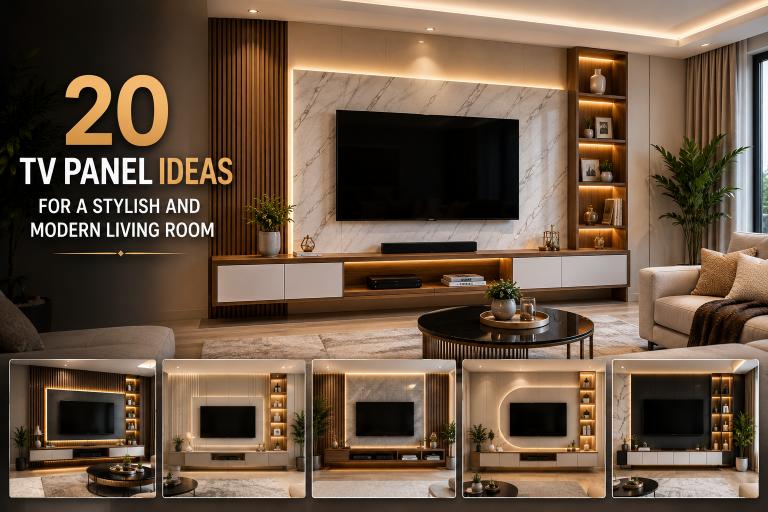
20 TV Panel Ideas for a Stylish and Modern Living Room
Staring at a blank wall behind your TV and wondering why it never looks quite finished is one of the most common living room struggles. Adding a bigger frame or a random shelf usually makes the wall feel more cluttered instead of more put together. That is exactly where tv panel ideas come in, because a well designed panel gives your television a proper backdrop instead of leaving it floating awkwardly on plain drywall.
In this article you will find twenty practical panel styles, from wood slat designs to bold color block layouts, that work in small apartments and larger living rooms alike. Each idea includes how to recreate it so you can pick the one that actually fits your space and budget.
1. Wood Slat TV Panel for Natural Warmth

Vibe: warm and grounded.
Slatted wood panels are one of the most requested tv panel ideas because they add texture without overwhelming the room. The vertical lines draw the eye upward, making low ceilings feel taller, while the natural grain softens an otherwise flat wall.
To recreate it, use unfinished white oak or poplar battens spaced about one inch apart over a painted plywood backer. Keep the wall behind slightly darker than the slats so the texture actually reads from across the room.
Quick Win: Skip full wall coverage. Install slats only behind the TV width plus six inches on each side for a similar look in under a weekend.
If you are also rethinking what sits below the panel, browsing tv stands ideas can help you pair the right console with this style before you commit to the wall design.
2. Board and Batten Panel for Classic Texture

Vibe: refined and understated.
Board and batten brings a slightly more traditional, architectural feel compared to slats. The grid of raised trim pieces catches light differently throughout the day, giving the wall subtle dimension even without color.
Paint the battens and the wall the same shade, ideally a warm white or soft greige, so the texture becomes the focal point rather than contrast. Keep spacing consistent, roughly 16 to 18 inches between vertical pieces, for a balanced grid.
3. Floor to Ceiling Stone Veneer Panel

Vibe: sophisticated and luxurious.
Stone veneer panels turn the TV wall into a genuine architectural feature. This works especially well in living rooms with higher ceilings where a full height treatment does not feel heavy.
Choose a ledger stone veneer in a warm taupe or charcoal tone and run it from floor to ceiling directly behind the mount. Recess the television slightly if possible so the stone frames it like a fireplace surround.
Quick Win: A peel and stick stone veneer panel behind just the TV, rather than the full wall, delivers a similar upscale feel for a fraction of the cost and installation time.
4. Fluted Panel for a Soft Contemporary Look

Vibe: airy and refined.
Fluted or reeded panels have become one of the most searched tv panel ideas for a reason. The repeated vertical grooves create a soft rhythm that feels contemporary without being cold, and the shadow lines add depth even in flat lighting.
MDF fluted panels can be painted any color, but a soft sage or warm taupe tends to photograph and live the best. Extend the panel slightly beyond the TV width so it reads as an intentional design element rather than a frame.
5. Color Block Panel for a Bold Statement

Vibe: playful and confident.
For homeowners who want their living room to feel less neutral, a color block panel introduces personality without permanent commitment. This idea pairs especially well with the growing interest in colorful living room ideas that move away from all white walls.
Paint a rectangular block in a saturated hue like terracotta or deep forest green directly behind the TV, keeping the rest of the wall neutral. Anchor the color with one or two accent pillows in the same tone elsewhere in the room so it feels intentional rather than isolated. You can explore more bold pairings through colorful living room ideas if this direction appeals to you.
6. Open Shelving Panel for Function and Display

Vibe: layered and personal.
If storage is your bigger concern, a panel built with integrated open shelving solves two problems at once. It gives the TV wall structure while creating space for books, plants, and framed photos.
Build shallow floating shelves into the panel on either side of the television, keeping depth under eight inches so the wall does not feel bulky. Style each shelf with varied heights, mixing three items per shelf rather than filling every inch.
Quick Win: Add two floating shelves directly beside an existing flat panel TV mount for an instant upgrade without touching the wall structure.
7. Small Space TV Panel with Hidden Storage

Vibe: efficient and calm.
Small living rooms need panels that pull double duty. A panel with a slim built in cabinet below the TV keeps remotes, cables, and media boxes out of sight while still anchoring the wall visually.
Keep the cabinet depth shallow, around ten to twelve inches, so it does not eat into limited floor space. Choose a cabinet color that matches the wall paint so the whole unit reads as one continuous surface rather than furniture.
8. Wallpapered Panel for Instant Pattern

Vibe: layered and expressive.
Wallpaper behind the TV is one of the easiest tv panel ideas to execute because it requires no carpentry at all. A large-scale botanical or geometric pattern gives the wall energy while the surrounding walls stay quiet.
Frame the wallpapered section with simple wood trim so the edges look finished rather than like an unfinished patch. This also makes it easy to swap the pattern later without repainting the whole room.
Quick Win: Removable wallpaper behind the TV can be installed in an afternoon and fully reversed if you rent your home.
9. Minimalist Recessed Panel for a Built In Look

Vibe: sleek and architectural.
A recessed panel, where the TV sits inside a shallow niche built into the drywall, is the closest you can get to a true built in without full millwork. It hides mounting hardware completely and gives the wall a finished, custom feel.
This requires framing out a recess roughly four to six inches deep during a renovation, then finishing the interior in a slightly darker paint than the surrounding wall to add depth.
10. Neutral Textured Panel for a Calm Backdrop

Vibe: calm and understated.
Not every panel needs a bold color or pattern. A neutral textured panel, using materials like limewash plaster or a subtle grasscloth, gives the wall depth while staying quiet enough to let furniture and art take center stage.
Apply a limewash finish in a warm oatmeal tone across the panel area only, leaving the rest of the wall in flat matte paint so the texture change is felt more than seen.
Quick Win: A textured paint roller can mimic limewash plaster on a budget in a single afternoon.
| Item | What to Look For | Approx. Price Range |
| Limewash paint | Mineral based, matte finish | $40 to $90 per gallon |
| Textured roller | Deep pile for plaster effect | $15 to $25 |
| Floating shelf brackets | Hidden mount, steel core | $20 to $40 each |
11. Herringbone Wood Panel for Pattern and Craft

Vibe: layered and intentional.
Herringbone patterns add movement to a TV wall that flat paneling cannot achieve. The diagonal joints create visual rhythm, making this one of the more design forward tv panel ideas for homeowners who enjoy detail.
Use thin wood strips, roughly two to three inches wide, arranged in a classic zigzag directly behind the television. Stain rather than paint the wood so the joinery pattern stays visible and intentional.
12. Two Tone Panel for Depth Without Clutter

Vibe: sophisticated and layered.
Splitting the panel into two horizontal tones, a darker lower half and lighter upper half, creates depth without adding any extra objects to the wall. This works particularly well in rooms where you want the TV to feel grounded rather than floating.
Paint or panel the lower third in a deep charcoal and the upper two thirds in warm white, dividing the two with a simple trim line at TV height.
13. Modern Bathroom Inspired Tile Panel

Vibe: fresh and unexpected.
Bringing tile out of the bathroom and onto the TV wall is a growing trend that adds a cool, tactile surface most living rooms lack. Large format zellige or subway tile in a soft green or clay tone gives the panel a handmade quality.
If you like how tile transforms a surface, the same material logic used in modern bathroom ideas applies here, just scaled up for a living room wall. Grout in a matching tone to keep the lines subtle rather than graphic.
14. Budget Peel and Stick Panel for Renters

Vibe: fresh and approachable.
Not every panel needs construction. Peel and stick wood look or textured panels have improved enough in quality to genuinely mimic real millwork, making them ideal for renters who cannot alter walls permanently.
Choose a matte finish rather than glossy, since matte reads far more realistic in photos and in person. Apply directly over primed drywall and trim the edges with removable wood molding for a finished frame.
Quick Win: Peel and stick panels can be fully installed and reversed within a single weekend with no wall damage.
15. Curved Panel for a Softer Silhouette

Vibe: soft and sculptural.
Curved wall panels break away from the hard rectangles most TV walls default to. An arched or rounded top panel softens the whole room and pairs especially well with organic modern furniture.
Frame the panel in curved MDF trim, painted the same tone as the wall, with the arch peaking roughly six inches above the television. This works best in rooms already leaning toward soft, rounded furniture shapes.
16. Dark Academia Panel for Moody Depth

Vibe: moody and refined.
A deep, saturated panel color like ink blue or espresso brown makes the television nearly disappear into the wall, which some homeowners actually prefer over drawing attention to the screen.
Paint the panel in a matte deep tone and add a single brass picture light above it, even without art, to give the wall a gallery like focal point. Keep surrounding walls lighter so the room does not feel closed in.
17. Mixed Material Panel for Texture Contrast

Vibe: layered and dynamic.
Combining two materials, such as wood slats on the lower half and painted drywall above, creates a panel with more visual interest than a single finish alone. This is one of the more advanced tv panel ideas but delivers a genuinely custom look.
Run the wood slat portion up to the bottom edge of the TV, then transition to flat paint above, dividing the two with a thin metal trim strip for a clean edge.
18. Seasonal Refresh Panel with Removable Decor

Vibe: adaptable and personal.
If a permanent panel feels like too big a commitment, build one that can change with the seasons using a simple grid of removable wood squares or a pegboard style panel that holds interchangeable decor.
Install a plywood pegboard painted to match the wall directly behind the TV, then rotate small hanging plants, art, or seasonal accents throughout the year without ever repainting.
Quick Win: A single pegboard panel lets you refresh the whole wall’s mood in under ten minutes each season.
19. Symmetrical Built In Panel with Cabinetry

Vibe: polished and permanent.
For a fully custom, high end result, a symmetrical built-in panel with matching cabinets on both sides of the TV creates a true architectural anchor for the whole living room, similar to a fireplace wall.
Build floor to ceiling cabinets on either side with open shelving above and closed storage below, painting everything including the center panel one continuous color for a seamless built in effect.
If you are furnishing the space below, comparing options through tv stands ideas can help you decide whether a floating console or full cabinetry suits your room better.
20. Statement Mirror Panel for a Larger Feeling Room

Vibe: luminous and expansive.
In smaller living rooms, a panel that incorporates a large mirror element beside or above the TV can genuinely make the space feel bigger by bouncing available light around the room.
Mount a large framed mirror on one side of the panel at the same height as the television, balancing the composition rather than centering everything on the screen alone. This also gives the wall a reason to exist beyond just holding the TV.
For more panel layouts specifically built around this kind of balance, the full collection of tv panel ideas covers additional layout variations worth exploring.
Conclusion
A great TV wall does not need to check every box on this list. Pick one or two ideas that genuinely fit your room’s light, layout, and budget rather than trying to combine several styles at once. Whether you lean toward a simple painted color block or a full built in with cabinetry, the goal is a wall that feels intentional instead of accidental. Once your panel is settled, turning your attention to the furniture and accents around it, from consoles to color choices elsewhere in the room, is the natural next step in pulling the whole space together.
FAQs
What is a TV panel in interior design?
A TV panel is a designed wall treatment installed behind a mounted television, using materials like wood slats, tile, or paint to create a finished backdrop instead of a plain empty wall.
How do I choose the right TV panel style for my living room?
Match the panel material and color to your existing furniture tone first, then choose between texture heavy options like slats or stone and flatter options like paint or wallpaper based on how busy your room already feels.
What does a TV panel typically cost to install?
Budget peel and stick or paint based panels can cost under 200 dollars, while custom wood slat or built in cabinetry panels typically range from 500 to 2500 dollars depending on materials and labor.
Can I create a TV panel in a small living room?
Yes, panels sized only slightly wider than the television itself, paired with lighter colors or mirror elements, work especially well in small rooms without overwhelming the space.
What should I buy first when starting a TV panel project?
Start with your primary material, whether that is wood slats, paint, or tile, since this decision determines the trim, mounting hardware, and finishing pieces you will need afterward.


