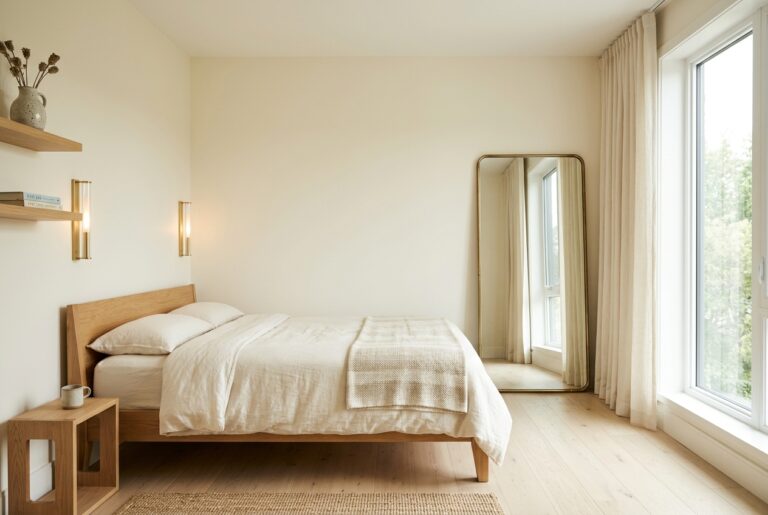

21 Grey Bedroom Ideas That Feel Cozy, Calm, and Stylish
Grey can look effortlessly restful in a bedroom—or flat, chilly, and unfinished. The difference rarely comes down to choosing the “perfect” paint chip. It comes from undertones, texture, lighting, and the colors placed beside it. Without those layers, even an expensive grey scheme can feel more like a showroom than a place where you want to unwind.
The good news is that grey is one of the most flexible foundations you can use. These grey bedroom ideas show you how to warm it with wood, soften it with textiles, brighten a small room, build a dramatic retreat, and add personality without losing that calm feeling. Each approach includes practical details you can adapt to your room and budget. Start with the mood you want, then borrow the elements that make it work.
1. Layer Warm Grey Tones for a Soft, Cocooning Room

Quiet and enveloping, a tonal grey bedroom feels intentional when its shades share warm undertones. Use pale mushroom-grey walls, a slightly deeper upholstered headboard, and charcoal accents in small doses. Linen, boucle, wool, and washed cotton keep similar colors from blending into one flat surface.
Recreate the look by collecting fabric and paint samples before buying anything. View them together in morning and evening light; blue-leaning greys can turn cold beside taupe. Add warm white bedding and medium-oak nightstands to break up the palette. This restrained foundation makes the more colorful combinations ahead easy to imagine.
💡 Quick Win: Replace cool white pillowcases with ivory or oatmeal covers and add one chunky grey throw. The small undertone shift can make existing grey walls feel warmer without repainting.
2. Pair Grey With Natural Oak for Instant Warmth

Grounded and relaxed, grey becomes much more welcoming beside honeyed or medium-toned oak. The wood’s grain supplies movement while its golden undertone balances cooler walls. This is especially effective in modern grey bedroom ideas where clean furniture lines might otherwise feel severe.
Choose one dominant wood tone for the bed, dresser, or floor, then repeat it once in a smaller detail such as a picture frame. Avoid mixing orange, grey-washed, and dark espresso woods in equal amounts. A light-grey wall, oak platform bed, cream duvet, and black reading sconces create a simple scheme with definition.
Shop the Look
| Item | What to Look For | Approx. Price Range |
| Oak bedside table | Simple shape, visible grain, matte finish | $90–$300 |
| Linen duvet cover | Warm white or natural flax | $80–$220 |
| Wall sconce | Black or aged bronze, adjustable arm | $45–$160 |
3. Add Blush Pink Without Making the Room Too Sweet

Soft and refined, blush gives grey a gentle lift without turning the bedroom sugary. The trick is to use dusty, muted pink rather than bright candy tones and to anchor it with charcoal or walnut. Grey remains the main color; blush acts as a measured accent.
Try a rose-toned lumbar pillow, one faded pink throw, and artwork containing both colors. Keep larger surfaces—walls, rug, and bedding—neutral, and choose aged brass over shiny gold for a more grown-up finish. If you enjoy exploring nuanced palettes, these [Internal Link: Bedroom Color Combination Ideas] can help you build the rest of the scheme.
💡 Quick Win: Drape a muted blush throw across the lower third of the bed and echo it with one small ceramic vase. Two controlled repetitions look more polished than pink accents scattered everywhere.
4. Create an Airy Small Grey Bedroom

Luminous and uncluttered, a pale grey palette can help a compact bedroom feel more open. Choose a light warm grey with a high light-reflective value, then reduce sharp color breaks by painting trim in the same shade or a closely related soft white. A leggy bed and wall-mounted lighting reveal more floor area.
Keep the window treatment close to the wall color and hang it near the ceiling so the room reads taller. One large mirror opposite or beside the window can spread daylight, while shallow floating shelves provide display space without a bulky bookcase. More [Internal Link: Small Bedroom Ideas That Maximize Space] can extend this space-saving approach.
💡 Quick Win: Clear the nightstand and mount a plug-in sconce above it. Freeing that small surface creates useful breathing room and makes a tight bedside area feel deliberately designed.
5. Use Charcoal Walls for a Dramatic Retreat

Moody and protective, charcoal walls can make a bedroom feel like a retreat rather than a cave. Success depends on contrast and controlled lighting. A matte finish absorbs glare, while a pale headboard, light bedding, and warm lamps bring key surfaces forward.
Paint all four walls for a cocooning effect, or use charcoal behind the bed if the room has limited daylight. Repeat the dark shade in only a few details, then introduce walnut, cognac leather, or antique brass for warmth. Test a large painted board first—deep greys often reveal blue or green undertones after sunset.
Shop the Look
| Item | What to Look For | Approx. Price Range |
| Bedside lamp | Warm 2700K light, fabric or opal shade | $40–$140 |
| Headboard | Oatmeal fabric or pale wood | $180–$650 |
| Curtain panels | Full-length charcoal velvet or linen blend | $70–$240 per pair |
6. Bring in Sage Green for an Earthy Grey Bedroom

Earthy and restorative, sage green softens grey by connecting it to nature. Both colors are muted, so the room stays calm, but green prevents a neutral scheme from feeling lifeless. Warm grey walls work particularly well with desaturated sage bedding and natural woven materials.
Use sage on one medium-size element—a quilt, bench, or curtains—rather than on every accessory. Add a jute rug, oak furniture, and off-white sheets, then include one or two real plants only if the light suits them. Black accents can sharpen the palette, but keep them slender so the room remains relaxed.
💡 Quick Win: Swap two decorative cushions for sage covers with a linen-like weave. Keep their sizes different and place them against neutral pillows for an instant color layer that still feels restful.
7. Mix Grey With Navy for Tailored Contrast

Polished and composed, navy adds depth to grey without the starkness of black. Because both colors can lean cool, include warm white, tan leather, or medium wood to keep the bedroom comfortable. A subtle stripe or check also gives the pairing a tailored character.
Start with mid-grey walls and white bedding, then add a navy upholstered headboard or full-length curtains as the focal point. Use tan in one deliberate place, such as a leather bench, and repeat navy in a small patterned cushion. Brushed nickel suits a crisp scheme; aged brass makes it feel warmer and more traditional.
8. Make Grey Feel Coastal Without Using Clichés

Breezy and understated, a coastal grey bedroom relies on weathered texture and watery colors rather than shells and nautical signs. Think mist-grey walls, washed linen, pale wood, and a restrained blue accent. The result feels collected and restful, not themed.
Choose a whitewashed or natural ash bedside table, a flax linen duvet, and a faded blue-grey blanket. Woven shades filter strong daylight and add warmth. One large seascape or abstract horizon is enough to suggest the coast; leave surrounding walls quiet so the artwork can breathe. This approach shifts grey from tailored to casually sun-washed.
💡 Quick Win: Replace small themed accessories with one oversized coastal artwork in muted blue and grey. A single confident focal point makes the room feel calmer and more sophisticated.
9. Build a Modern Grey Bedroom With Black Accents

Clean-lined and confident, black gives a pale grey bedroom structure. It works best as a visual outline rather than a dominant color: thin frames, narrow furniture legs, and compact lighting create definition while grey keeps the contrast gentle.
Pair smooth light-grey walls with a low upholstered bed, then add two black sconces, a black-framed print, and a bench with slim metal legs. Keep bedding solid and textural rather than heavily patterned. For a warmer modern look, include an oak dresser or cream rug. These [Internal Link: Modern Bedroom Ideas With Clean Lines] offer more ways to balance simplicity with comfort.
Shop the Look
| Item | What to Look For | Approx. Price Range |
| Wall lights | Slim matte-black profile, warm bulb | $50–$180 each |
| Art frame | Narrow black metal or wood | $25–$100 |
| End-of-bed bench | Open base, upholstered top | $120–$450 |
10. Layer Linen, Wool, and Boucle for Tactile Comfort

Layered and inviting, a mostly neutral grey bedroom becomes interesting through touch. Linen has relaxed movement, wool adds density, and boucle brings a soft sculptural quality. Combining different weaves matters more than adding extra colors.
Use smooth cotton sheets as the base, a rumpled linen duvet, a nubby wool throw, and one boucle chair or cushion. Keep all pieces within a warm grey, cream, and oatmeal range. Vary texture, not clutter: three or four strong surfaces are enough. A low-pile rug under the lower two-thirds of the bed finishes the room and softens the first step in the morning.
💡 Quick Win: Fold a textured wool blanket across the bottom third of a plain duvet. The strong horizontal layer makes the bed look finished in minutes and introduces warmth where it is most visible.
11. Add Grey Wall Paneling for Architectural Depth

Refined and dimensional, wall paneling turns grey into an architectural feature. Applied molding suits classic rooms, while vertical slats or tongue-and-groove boards create a cleaner, contemporary rhythm. Painting the treatment and wall in one color lets shadows define the detail.
Frame the bed with simple rectangular molding, keeping panel widths aligned with the headboard and nightstands. Use an eggshell or satin finish on trim for subtle contrast against matte walls. Renters can mimic the effect with removable pre-cut molding, but should confirm the adhesive is safe for their paint. Keep artwork minimal so the panel proportions remain visible.
12. Soften Grey With Romantic Vintage Details

Collected and graceful, vintage pieces keep grey from feeling overly new or generic. A curved wood dresser, pleated lampshade, faded floral textile, or aged mirror introduces history and irregularity. The goal is a few characterful elements, not a fully themed period room.
Choose a soft putty-grey wall and mix it with warm walnut or antique pine. Add one muted floral cushion or quilt, then pull a dusty rose, cream, or olive tone from its pattern for a second accent. Patinated brass looks more natural here than polished metal. Leave modern bedding simple so the older pieces remain the focus.
💡 Quick Win: Change a plain lamp shade for a pleated fabric version and place a small vintage-style frame beside it. This creates a collected bedside moment without replacing major furniture.
13. Try Grey and Terracotta for a Warm, Earthy Look

Sun-baked and grounded, terracotta brings immediate warmth to grey. Its orange-red undertone is strongest when surrounded by quieter neutrals, so a few concentrated accents make more impact than many small ones.
Against greige or concrete-grey walls, add a rust-colored quilt, clay lamp base, and one patterned cushion containing cream and charcoal. Repeat terracotta no more than three times and include oak or walnut to bridge the warm and cool tones. Choose dusty, brown-based shades instead of vivid orange. The palette works especially well with simple shapes and handmade-looking ceramics.
Shop the Look
| Item | What to Look For | Approx. Price Range |
| Quilt | Washed rust or muted terracotta cotton | $70–$220 |
| Table lamp | Matte clay or ceramic base | $45–$160 |
| Accent cushion | Woven pattern in rust, cream, and charcoal | $25–$80 |
14. Use Wallpaper to Give Grey More Personality

Expressive yet calm, grey wallpaper introduces pattern without demanding a bright palette. A small botanical, loose geometric, or block-print motif gives the eye something to follow while preserving the room’s restful character.
Paper the wall behind the bed and choose a pattern with at least one warm neutral in it—cream, taupe, muted green, or soft brown. Pull the background grey onto the other walls, then keep the headboard and bedding relatively plain. In a small bedroom, a medium-scale motif is often easier to read than a tiny, busy print. Order a full-size sample and view it from across the room before committing.
15. Design a Grey Bedroom With Hidden Storage

Streamlined and practical, concealed storage protects the calm effect of grey by reducing visible clutter. A lift-up storage bed, drawers beneath the frame, or built-ins painted to match the wall can hold bulky linens without adding visual noise.
For small grey bedroom ideas with storage, choose handleless cabinets or low-contrast pulls and take wardrobes to the ceiling. Leave a shallow open niche beside the bed for daily items, then conceal everything else. Match the cabinetry to the wall color so it recedes, and use integrated warm lighting inside niches. Before buying an ottoman bed, measure the clearance needed to lift it fully.
💡 Quick Win: Add matching lidded boxes to an open shelf and label the hidden side rather than the front. Repeated grey or woven containers make assorted small items read as one clean element.
16. Make a Budget Grey Bedroom Look More Finished

Thoughtful and pulled together, an affordable grey bedroom depends on repetition and scale rather than expensive furniture. Matching lamp heights, full-length curtains, and one appropriately sized artwork can make basic pieces look deliberate.
Spend first on what fills the visual field: paint, curtains, bedding, and a large rug. Upgrade flat-pack nightstands with simple new knobs, but keep finishes consistent. Hang curtain rods wider than the window and place the rug under at least the lower two-thirds of the bed. Instead of buying many small accessories, group two books and one vase on a tray. Small corrections often create the biggest transformation.
💡 Quick Win: Move existing curtain rods closer to the ceiling and extend them beyond the window frame. The fabric will hang more cleanly, expose more glass, and make the room appear taller and brighter.
17. Add a Reading Corner to a Grey Bedroom

Restful and personal, a reading corner gives a grey bedroom a purpose beyond sleep. The furniture does not need to match the bed; it simply needs to share one color, material, or shape with the larger room.
Place a compact chair near natural light without blocking curtains or a walkway. Add a floor lamp just behind the chair, a small table within arm’s reach, and a soft rug or throw to define the zone. In a narrow room, choose an armless chair with visible legs. Repeat its upholstery color on one bed cushion so the corner feels connected rather than added later.
Shop the Look
| Item | What to Look For | Approx. Price Range |
| Accent chair | Compact footprint, supportive back | $180–$650 |
| Floor lamp | Adjustable shade, warm light | $70–$260 |
| Side table | 12–18 inches wide, stable base | $50–$220 |
18. Combine Grey With Dark Wood for Hotel-Like Polish

Sophisticated and tailored, dark wood adds weight and richness to grey. Walnut and espresso finishes look especially polished against pale or mid-grey walls, provided the bedding and rug bring enough light back into the room.
Use dark wood on two or three substantial elements—a bed frame and nightstands, for example—rather than every surface. Add an upholstered headboard panel, warm-white sheets, shaded wall lights, and a bench to create a layered hotel arrangement. Keep cords hidden and bedside styling symmetrical. For more elevated details, see [Internal Link: Bedroom Ideas That Look More Expensive].
19. Use Greige for a Softer Neutral Bedroom

Understated and adaptable, greige sits between grey and beige, making it useful in rooms where true grey looks blue. It changes gently with daylight and pairs easily with cream, taupe, oak, and muted black.
Compare samples on every wall because exposure can alter the undertone dramatically. Once you find a balanced greige, use it on walls and repeat a slightly deeper version in the headboard or rug. Choose creamy white—not optic white—for bedding and trim. A few matte black accents keep the palette from becoming hazy, while natural linen adds relaxed movement.
💡 Quick Win: Paint two large sample boards instead of making tiny swatches on the wall. Move them around the room for two days and check them beside your floor, curtains, and bedding before choosing.
20. Paint the Ceiling Grey for a Cocooning Effect

Enveloping and unexpected, a grey ceiling can soften a room’s boundaries and make the bed feel sheltered. This works particularly well in bedrooms with tall ceilings, awkward slopes, or strong architectural lines that you want to unify.
For a gentle effect, take the wall color one or two shades darker overhead. For a true color-drenched room, paint walls, trim, and ceiling the same warm grey, changing only the sheen for subtle definition. Use multiple pools of warm light—bedside lamps, a shaded pendant, and indirect lighting—rather than one harsh ceiling fixture. Keep bedding light so the room retains a clear focal point.
21. Refresh a Grey Bedroom With Seasonal Accent Swaps

Flexible and fresh, grey makes an ideal year-round base because small textile changes can shift the mood without a full redesign. The key is to store a limited, coordinated set rather than accumulating unrelated decor.
For spring and summer, pair grey with washed blue, soft green, or light linen. In autumn and winter, bring in rust, olive, wool, and deeper plaids. Keep the main duvet, curtains, and furniture neutral; rotate a throw, two cushion covers, and one bedside object. This final approach lets your favorite grey bedroom ideas evolve with the light, weather, and way you want the room to feel.
💡 Quick Win: Create two labeled textile sets—warm season and cool season—with one throw and two cushion covers in each. The entire refresh fits in a small storage bag and takes less than ten minutes.
A Grey Bedroom Should Feel Like Yours
The most inviting grey bedrooms are not built from one perfect shade; they are shaped by the materials, light, and personal details around it. You do not need to combine all 21 ideas or replace everything at once.
Choose the approach that solves your room’s biggest issue first—perhaps warmer texture, better storage, stronger contrast, or a more useful layout. Then test one change and live with it before adding another.
Grey gives you room to evolve, so let your space become layered gradually. For your next step, explore [Internal Link: Cozy Bedroom Ideas for a Relaxing Space] or refine your palette with [Internal Link: Bedroom Color Combination Ideas].
Frequently Asked Questions About Grey Bedroom Ideas
1. How do I make a grey bedroom feel warm rather than cold?
Choose a grey with beige, brown, or violet undertones and pair it with oak, walnut, cream, linen, and wool. Warm 2700K lighting also prevents grey walls from taking on a chilly blue cast at night.
2. What colors go best with grey in a bedroom?
Grey works well with warm white, blush, sage, navy, terracotta, dusty blue, and muted olive. Choose one main accent and repeat it in two or three places so the room feels coordinated rather than busy.
3. Is grey still a good bedroom color?
Yes—grey remains a flexible neutral when it is chosen for the room’s actual light and layered with texture. Warmer, nuanced greys and greiges generally feel more current and comfortable than flat, blue-toned schemes.
4. Which shade of grey is best for a small bedroom?
A pale, warm grey can reflect light while adding more softness than pure white. Test the paint beside the floor and curtains, and avoid a cool shade if the room receives mostly north-facing or weak natural light.
5. What color bedding works with grey walls?
Warm white and ivory are easy foundations, while sage, navy, blush, or rust can create a stronger look. Include at least two textures—such as cotton and linen—so solid-colored bedding still has depth.
6. Can I mix different shades of grey in one bedroom?
Yes. Use three clear values, such as pale walls, a medium headboard, and small charcoal accents. Keep their undertones consistent and separate similar shades with cream, wood, or another natural material.
7. What wood tone looks best with grey?
Natural oak brings lightness and warmth, walnut adds sophistication, and dark espresso creates dramatic contrast. Avoid mixing too many competing wood undertones; repeat your dominant finish at least once for continuity.
8. How can I decorate a grey bedroom on a budget?
Prioritize paint, full-length curtains, coordinated bedding, and better furniture placement. Changing hardware, adding one large artwork, and using cushion covers instead of new cushions can refresh the room without major purchases.
9. Should the curtains match grey bedroom walls?
They do not need to match exactly. Curtains one shade lighter or darker create gentle depth, while warm white linen brightens the room. Hanging them high and wide often matters more than choosing an identical color.
10. How do I add color without losing a calm look?
Choose a muted accent and use it on one medium element plus one or two smaller details. Dusty, earthy versions of green, blue, pink, and rust blend more quietly with grey than highly saturated colors.
11. Does dark grey make a bedroom look smaller?
Dark grey can visually draw walls inward, but it can also blur corners and create intentional coziness. Use light bedding, reflective surfaces, and layered warm lighting to maintain contrast and prevent the room from feeling heavy.
12. What lighting is best for a grey bedroom?
Use warm-white bulbs around 2700K and create several light sources at different heights. Bedside lamps, sconces, and a shaded overhead fixture reveal texture more comfortably than one bright, cool ceiling light.
13. How can I stop a grey bedroom from looking boring?
Vary texture, scale, and shape before adding more decor. A linen duvet, wool rug, sculptural lamp, wood grain, and one large artwork create interest while preserving a clean, restful palette.
14. Can grey work in a traditional bedroom?
Absolutely. Choose putty or warm mid-grey and combine it with wall molding, antique wood, pleated shades, aged brass, and a restrained floral textile. These details give the neutral color character and history.
15. Should I paint all four bedroom walls grey?
You can, especially with pale or warm grey. In a dark room, test all four walls before committing; a grey feature wall behind the bed may provide enough depth while allowing lighter walls to reflect more daylight.
21 Grey Bedroom Ideas That Feel Cozy, Calm, and Stylish
Grey can look effortlessly restful in a bedroom—or flat, chilly, and unfinished. The difference rarely comes down to choosing the “perfect” paint chip. It comes from undertones, texture, lighting, and the colors placed beside it. Without those layers, even an expensive grey scheme can feel more like a showroom than a place where you want to unwind.
The good news is that grey is one of the most flexible foundations you can use. These grey bedroom ideas show you how to warm it with wood, soften it with textiles, brighten a small room, build a dramatic retreat, and add personality without losing that calm feeling. Each approach includes practical details you can adapt to your room and budget. Start with the mood you want, then borrow the elements that make it work.
1. Layer Warm Grey Tones for a Soft, Cocooning Room
Quiet and enveloping, a tonal grey bedroom feels intentional when its shades share warm undertones. Use pale mushroom-grey walls, a slightly deeper upholstered headboard, and charcoal accents in small doses. Linen, boucle, wool, and washed cotton keep similar colors from blending into one flat surface.
Recreate the look by collecting fabric and paint samples before buying anything. View them together in morning and evening light; blue-leaning greys can turn cold beside taupe. Add warm white bedding and medium-oak nightstands to break up the palette. This restrained foundation makes the more colorful combinations ahead easy to imagine.
💡 Quick Win: Replace cool white pillowcases with ivory or oatmeal covers and add one chunky grey throw. The small undertone shift can make existing grey walls feel warmer without repainting.
IMAGE PROMPT: Vertical Pinterest composition of a warm tonal grey primary bedroom, pale mushroom-grey walls, medium-grey boucle headboard, ivory linen bedding, charcoal lumbar cushion, medium-oak nightstands, wool rug, soft morning window light, front three-quarter camera angle showing the full bed and balanced bedside styling, calm cocooning mood, clean uncluttered layout, sharp focus, correct exposure, realistic proportions, photorealistic high-resolution interior photography, crisp fabric and wood textures, no people, no text, logos, labels, or watermarks.
2. Pair Grey With Natural Oak for Instant Warmth
Grounded and relaxed, grey becomes much more welcoming beside honeyed or medium-toned oak. The wood’s grain supplies movement while its golden undertone balances cooler walls. This is especially effective in modern grey bedroom ideas where clean furniture lines might otherwise feel severe.
Choose one dominant wood tone for the bed, dresser, or floor, then repeat it once in a smaller detail such as a picture frame. Avoid mixing orange, grey-washed, and dark espresso woods in equal amounts. A light-grey wall, oak platform bed, cream duvet, and black reading sconces create a simple scheme with definition.
Shop the Look
| Item | What to Look For | Approx. Price Range |
| Oak bedside table | Simple shape, visible grain, matte finish | $90–$300 |
| Linen duvet cover | Warm white or natural flax | $80–$220 |
| Wall sconce | Black or aged bronze, adjustable arm | $45–$160 |
IMAGE PROMPT: Vertical editorial photograph of a modern grey bedroom centered on a low natural-oak platform bed, soft light-grey walls, warm white linen bedding, pair of oak nightstands, slim matte-black swing-arm sconces, one framed neutral print, woven cream rug, afternoon natural light from a side window, low corner camera angle emphasizing wood grain and bed profile, spacious clean composition, warm grounded emotion, sharp focus, balanced colors, realistic soft shadows, correct exposure, high-resolution photorealistic interior photography, no clutter, distorted furniture, people, text, logos, or watermarks.
3. Add Blush Pink Without Making the Room Too Sweet
Soft and refined, blush gives grey a gentle lift without turning the bedroom sugary. The trick is to use dusty, muted pink rather than bright candy tones and to anchor it with charcoal or walnut. Grey remains the main color; blush acts as a measured accent.
Try a rose-toned lumbar pillow, one faded pink throw, and artwork containing both colors. Keep larger surfaces—walls, rug, and bedding—neutral, and choose aged brass over shiny gold for a more grown-up finish. If you enjoy exploring nuanced palettes, these [Internal Link: Bedroom Color Combination Ideas] can help you build the rest of the scheme.
💡 Quick Win: Drape a muted blush throw across the lower third of the bed and echo it with one small ceramic vase. Two controlled repetitions look more polished than pink accents scattered everywhere.
IMAGE PROMPT: Vertical Pinterest-friendly view of an elegant grey and blush bedroom, soft dove-grey walls, charcoal velvet headboard, crisp ivory bedding, one dusty-blush lumbar pillow and faded rose throw, walnut nightstands, aged-brass lamps, restrained abstract art with grey and blush marks, diffused daylight, camera positioned slightly above bedside height looking diagonally across the bed, refined balanced styling with generous breathing room, crisp sharp focus, accurate exposure, realistic material textures and proportions, photorealistic high-resolution interior photography, no excessive decor, people, words, logos, or watermarks.
4. Create an Airy Small Grey Bedroom
Luminous and uncluttered, a pale grey palette can help a compact bedroom feel more open. Choose a light warm grey with a high light-reflective value, then reduce sharp color breaks by painting trim in the same shade or a closely related soft white. A leggy bed and wall-mounted lighting reveal more floor area.
Keep the window treatment close to the wall color and hang it near the ceiling so the room reads taller. One large mirror opposite or beside the window can spread daylight, while shallow floating shelves provide display space without a bulky bookcase. More [Internal Link: Small Bedroom Ideas That Maximize Space] can extend this space-saving approach.
💡 Quick Win: Clear the nightstand and mount a plug-in sconce above it. Freeing that small surface creates useful breathing room and makes a tight bedside area feel deliberately designed.
IMAGE PROMPT: Vertical high-resolution interior photo of a small airy grey bedroom, pale warm-grey walls and matching trim, compact bed with raised light-oak legs, white-grey bedding, slim floating nightstand, plug-in wall sconce, full-length mirror reflecting a bright window, ceiling-height sheer curtains, minimal pale rug, camera from the doorway with a wide but realistic lens showing clear walking space, bright natural daylight, soft shadows, crisp focus throughout, clean composition and correct exposure, realistic architecture and furniture scale, fresh spacious mood, no clutter, text, people, logos, or watermarks.
5. Use Charcoal Walls for a Dramatic Retreat
Moody and protective, charcoal walls can make a bedroom feel like a retreat rather than a cave. Success depends on contrast and controlled lighting. A matte finish absorbs glare, while a pale headboard, light bedding, and warm lamps bring key surfaces forward.
Paint all four walls for a cocooning effect, or use charcoal behind the bed if the room has limited daylight. Repeat the dark shade in only a few details, then introduce walnut, cognac leather, or antique brass for warmth. Test a large painted board first—deep greys often reveal blue or green undertones after sunset.
Shop the Look
| Item | What to Look For | Approx. Price Range |
| Bedside lamp | Warm 2700K light, fabric or opal shade | $40–$140 |
| Headboard | Oatmeal fabric or pale wood | $180–$650 |
| Curtain panels | Full-length charcoal velvet or linen blend | $70–$240 per pair |
IMAGE PROMPT: Vertical dramatic interior photograph of a charcoal-grey bedroom with matte walls, tall oatmeal upholstered headboard, layered cream bedding, walnut nightstands, antique-brass lamps glowing at 2700K, cognac leather bench, charcoal curtains, subtle evening ambience balanced with soft window light, symmetrical straight-on camera composition focused on the bed wall, sophisticated cocooning mood without underexposure, sharp details in dark surfaces, realistic shadows, high-resolution photorealistic photography, clean styling, no impossible architecture, people, lettering, logos, or watermarks.
6. Bring in Sage Green for an Earthy Grey Bedroom
Earthy and restorative, sage green softens grey by connecting it to nature. Both colors are muted, so the room stays calm, but green prevents a neutral scheme from feeling lifeless. Warm grey walls work particularly well with desaturated sage bedding and natural woven materials.
Use sage on one medium-size element—a quilt, bench, or curtains—rather than on every accessory. Add a jute rug, oak furniture, and off-white sheets, then include one or two real plants only if the light suits them. Black accents can sharpen the palette, but keep them slender so the room remains relaxed.
💡 Quick Win: Swap two decorative cushions for sage covers with a linen-like weave. Keep their sizes different and place them against neutral pillows for an instant color layer that still feels restful.
IMAGE PROMPT: Vertical realistic photograph of an earthy grey and sage bedroom, warm-grey walls, simple oak spindle bed, off-white sheets, muted sage quilt folded neatly over the bed, woven jute rug, slim black reading lamp, two healthy understated plants near a bright window, natural fiber basket, side-on camera view capturing bed and window, sun-washed morning mood, tidy composition with breathing room, sharp focus and crisp textures, balanced muted colors, correct exposure, high-resolution photorealistic interior design, no excessive plants, clutter, people, text, logo, or watermark.
7. Mix Grey With Navy for Tailored Contrast
Polished and composed, navy adds depth to grey without the starkness of black. Because both colors can lean cool, include warm white, tan leather, or medium wood to keep the bedroom comfortable. A subtle stripe or check also gives the pairing a tailored character.
Start with mid-grey walls and white bedding, then add a navy upholstered headboard or full-length curtains as the focal point. Use tan in one deliberate place, such as a leather bench, and repeat navy in a small patterned cushion. Brushed nickel suits a crisp scheme; aged brass makes it feel warmer and more traditional.
IMAGE PROMPT: Vertical Pinterest editorial image of a tailored grey and navy bedroom, mid-grey walls, tall navy upholstered headboard, crisp warm-white bedding, one navy pinstripe lumbar pillow, tan leather bench, medium-wood bedside chests, aged-brass picture lights, tailored navy curtains, camera centered from the foot of the bed at eye level, clear symmetrical focal point, balanced daylight and warm lamp light, polished but welcoming mood, sharp focus, correct exposure, high-resolution photorealistic textures, realistic scale, no clutter, people, text, logos, or watermarks.
8. Make Grey Feel Coastal Without Using Clichés
Breezy and understated, a coastal grey bedroom relies on weathered texture and watery colors rather than shells and nautical signs. Think mist-grey walls, washed linen, pale wood, and a restrained blue accent. The result feels collected and restful, not themed.
Choose a whitewashed or natural ash bedside table, a flax linen duvet, and a faded blue-grey blanket. Woven shades filter strong daylight and add warmth. One large seascape or abstract horizon is enough to suggest the coast; leave surrounding walls quiet so the artwork can breathe. This approach shifts grey from tailored to casually sun-washed.
💡 Quick Win: Replace small themed accessories with one oversized coastal artwork in muted blue and grey. A single confident focal point makes the room feel calmer and more sophisticated.
IMAGE PROMPT: Vertical interior photography of a restrained coastal grey bedroom, mist-grey walls, pale ash-wood bed and nightstand, rumpled natural-flax linen duvet, faded blue-grey throw, woven Roman shade, one large atmospheric horizon artwork, light oak floor, bright filtered seaside-style daylight without ocean-view cliché, camera angled from beside the window toward the bed and artwork, breezy uncluttered composition, crisp sharp focus, realistic exposure and soft shadow, high-resolution photorealism, no shells, signs, text, people, logos, or watermarks.
9. Build a Modern Grey Bedroom With Black Accents
Clean-lined and confident, black gives a pale grey bedroom structure. It works best as a visual outline rather than a dominant color: thin frames, narrow furniture legs, and compact lighting create definition while grey keeps the contrast gentle.
Pair smooth light-grey walls with a low upholstered bed, then add two black sconces, a black-framed print, and a bench with slim metal legs. Keep bedding solid and textural rather than heavily patterned. For a warmer modern look, include an oak dresser or cream rug. These [Internal Link: Modern Bedroom Ideas With Clean Lines] offer more ways to balance simplicity with comfort.
Shop the Look
| Item | What to Look For | Approx. Price Range |
| Wall lights | Slim matte-black profile, warm bulb | $50–$180 each |
| Art frame | Narrow black metal or wood | $25–$100 |
| End-of-bed bench | Open base, upholstered top | $120–$450 |
IMAGE PROMPT: Vertical modern interior photo of a light-grey bedroom with a low grey upholstered bed, solid white textured bedding, slim matte-black wall sconces, one large black-framed minimalist artwork, narrow black-legged cream bench, warm oak dresser at the side, cream rug, crisp architectural lines, three-quarter view from the foot corner with negative space around furniture, bright balanced daylight, sharp focus throughout, correct neutral exposure, sophisticated clean mood, high-resolution photorealistic materials and proportions, no clutter, people, typography, logo, or watermark.
10. Layer Linen, Wool, and Boucle for Tactile Comfort
Layered and inviting, a mostly neutral grey bedroom becomes interesting through touch. Linen has relaxed movement, wool adds density, and boucle brings a soft sculptural quality. Combining different weaves matters more than adding extra colors.
Use smooth cotton sheets as the base, a rumpled linen duvet, a nubby wool throw, and one boucle chair or cushion. Keep all pieces within a warm grey, cream, and oatmeal range. Vary texture, not clutter: three or four strong surfaces are enough. A low-pile rug under the lower two-thirds of the bed finishes the room and softens the first step in the morning.
💡 Quick Win: Fold a textured wool blanket across the bottom third of a plain duvet. The strong horizontal layer makes the bed look finished in minutes and introduces warmth where it is most visible.
IMAGE PROMPT: Vertical close editorial view of a tactile neutral grey bedroom, focus on a neatly layered bed with white cotton sheets, rumpled warm-grey linen duvet, chunky oatmeal wool throw, cream boucle accent chair nearby, low-pile wool rug visible under lower bed, softly plastered grey wall, natural side light revealing weave and texture, intimate camera angle from the foot-side at mattress height, crisp subject focus with no blur on key details, warm balanced exposure, clean composition, photorealistic high-resolution interior photography, realistic fabrics, no excessive cushions, people, text, logos, or watermarks.
11. Add Grey Wall Paneling for Architectural Depth
Refined and dimensional, wall paneling turns grey into an architectural feature. Applied molding suits classic rooms, while vertical slats or tongue-and-groove boards create a cleaner, contemporary rhythm. Painting the treatment and wall in one color lets shadows define the detail.
Frame the bed with simple rectangular molding, keeping panel widths aligned with the headboard and nightstands. Use an eggshell or satin finish on trim for subtle contrast against matte walls. Renters can mimic the effect with removable pre-cut molding, but should confirm the adhesive is safe for their paint. Keep artwork minimal so the panel proportions remain visible.
IMAGE PROMPT: Vertical straight-on photograph of an elegant bedroom feature wall with warm mid-grey applied box molding, matching grey wall and trim with subtle finish contrast, centered oatmeal bed, white bedding, small dark-wood nightstands, shaded brass sconces placed within panels, minimal art, soft side daylight producing realistic shadows along molding, formal balanced composition, clear architectural subject, sharp focus edge to edge, correct exposure, crisp high-resolution photorealistic interior photography, accurate panel alignment and furniture scale, no visual clutter, people, text, logos, or watermarks.
12. Soften Grey With Romantic Vintage Details
Collected and graceful, vintage pieces keep grey from feeling overly new or generic. A curved wood dresser, pleated lampshade, faded floral textile, or aged mirror introduces history and irregularity. The goal is a few characterful elements, not a fully themed period room.
Choose a soft putty-grey wall and mix it with warm walnut or antique pine. Add one muted floral cushion or quilt, then pull a dusty rose, cream, or olive tone from its pattern for a second accent. Patinated brass looks more natural here than polished metal. Leave modern bedding simple so the older pieces remain the focus.
💡 Quick Win: Change a plain lamp shade for a pleated fabric version and place a small vintage-style frame beside it. This creates a collected bedside moment without replacing major furniture.
IMAGE PROMPT: Vertical romantic vintage-grey bedroom photographed from beside an antique pine dresser, soft putty-grey walls, walnut spindle bed, simple cream bedding with one faded floral quilt folded at the foot, pleated fabric bedside lampshade, aged-brass mirror, small framed botanical, soft late-afternoon window light, layered foreground-to-background composition with the bed as clear subject, calm collected mood, sharp realistic detail, balanced warm colors and correct exposure, high-resolution photorealistic interior photography, no overdecorating, people, text, logos, or watermarks.
13. Try Grey and Terracotta for a Warm, Earthy Look
Sun-baked and grounded, terracotta brings immediate warmth to grey. Its orange-red undertone is strongest when surrounded by quieter neutrals, so a few concentrated accents make more impact than many small ones.
Against greige or concrete-grey walls, add a rust-colored quilt, clay lamp base, and one patterned cushion containing cream and charcoal. Repeat terracotta no more than three times and include oak or walnut to bridge the warm and cool tones. Choose dusty, brown-based shades instead of vivid orange. The palette works especially well with simple shapes and handmade-looking ceramics.
Shop the Look
| Item | What to Look For | Approx. Price Range |
| Quilt | Washed rust or muted terracotta cotton | $70–$220 |
| Table lamp | Matte clay or ceramic base | $45–$160 |
| Accent cushion | Woven pattern in rust, cream, and charcoal | $25–$80 |
IMAGE PROMPT: Vertical photorealistic view of a warm grey and terracotta bedroom, greige plaster-look walls, simple walnut bed, cream sheets, washed terracotta quilt, one woven rust-cream-charcoal cushion, matte clay bedside lamp, handmade ceramics kept minimal, oak floor and neutral rug, warm sunset light from one side balanced to preserve detail, diagonal camera composition emphasizing the color relationship, earthy welcoming mood, sharp focus, correct exposure, crisp high-resolution material texture, realistic proportions, no clutter, people, text, logos, or watermarks.
14. Use Wallpaper to Give Grey More Personality
Expressive yet calm, grey wallpaper introduces pattern without demanding a bright palette. A small botanical, loose geometric, or block-print motif gives the eye something to follow while preserving the room’s restful character.
Paper the wall behind the bed and choose a pattern with at least one warm neutral in it—cream, taupe, muted green, or soft brown. Pull the background grey onto the other walls, then keep the headboard and bedding relatively plain. In a small bedroom, a medium-scale motif is often easier to read than a tiny, busy print. Order a full-size sample and view it from across the room before committing.
IMAGE PROMPT: Vertical bedroom interior centered on a grey botanical wallpaper feature wall behind the bed, medium-scale cream and muted-green leaves on a warm-grey ground, plain taupe upholstered headboard, ivory bedding, light-wood nightstands, simple ceramic lamps, surrounding walls painted to match wallpaper background, camera framed from the doorway with wallpaper as unmistakable focal point, even bright natural light and soft shadows, clean balanced arrangement, sharp focus and correct exposure, high-resolution photorealistic photography, realistic pattern scale and architecture, no text, people, logos, watermarks, or excessive decor.
15. Design a Grey Bedroom With Hidden Storage
Streamlined and practical, concealed storage protects the calm effect of grey by reducing visible clutter. A lift-up storage bed, drawers beneath the frame, or built-ins painted to match the wall can hold bulky linens without adding visual noise.
For small grey bedroom ideas with storage, choose handleless cabinets or low-contrast pulls and take wardrobes to the ceiling. Leave a shallow open niche beside the bed for daily items, then conceal everything else. Match the cabinetry to the wall color so it recedes, and use integrated warm lighting inside niches. Before buying an ottoman bed, measure the clearance needed to lift it fully.
💡 Quick Win: Add matching lidded boxes to an open shelf and label the hidden side rather than the front. Repeated grey or woven containers make assorted small items read as one clean element.
IMAGE PROMPT: Vertical realistic photograph of a compact grey bedroom with smart hidden storage, pale-grey floor-to-ceiling handleless wardrobes blending into the wall, bed with discreet under-frame drawers partly open to show folded linens, one recessed bedside niche with warm integrated light, simple white-grey bedding, uncluttered floor, camera from a high front corner clearly showing storage layout and circulation, bright natural illumination, crisp sharp focus, accurate exposure, functional serene mood, high-resolution photorealistic cabinetry and furniture proportions, no impossible joinery, clutter, people, text, logos, or watermarks.
16. Make a Budget Grey Bedroom Look More Finished
Thoughtful and pulled together, an affordable grey bedroom depends on repetition and scale rather than expensive furniture. Matching lamp heights, full-length curtains, and one appropriately sized artwork can make basic pieces look deliberate.
Spend first on what fills the visual field: paint, curtains, bedding, and a large rug. Upgrade flat-pack nightstands with simple new knobs, but keep finishes consistent. Hang curtain rods wider than the window and place the rug under at least the lower two-thirds of the bed. Instead of buying many small accessories, group two books and one vase on a tray. Small corrections often create the biggest transformation.
💡 Quick Win: Move existing curtain rods closer to the ceiling and extend them beyond the window frame. The fabric will hang more cleanly, expose more glass, and make the room appear taller and brighter.
IMAGE PROMPT: Vertical before-and-after-inspired single finished scene of a polished budget grey bedroom, soft grey painted walls, simple affordable bed dressed in crisp white and grey bedding, full-length curtains hung high and wide, large correctly scaled framed print above bed, upgraded nightstands with matching black knobs, generous neutral rug under bed, small tray with books and vase, camera from the foot corner showing proportion improvements, bright natural daylight, neat realistic styling, sharp focus, balanced exposure, high-resolution photorealistic interior photography, no split screen, price tags, text, logos, people, or watermarks.
17. Add a Reading Corner to a Grey Bedroom
Restful and personal, a reading corner gives a grey bedroom a purpose beyond sleep. The furniture does not need to match the bed; it simply needs to share one color, material, or shape with the larger room.
Place a compact chair near natural light without blocking curtains or a walkway. Add a floor lamp just behind the chair, a small table within arm’s reach, and a soft rug or throw to define the zone. In a narrow room, choose an armless chair with visible legs. Repeat its upholstery color on one bed cushion so the corner feels connected rather than added later.
Shop the Look
| Item | What to Look For | Approx. Price Range |
| Accent chair | Compact footprint, supportive back | $180–$650 |
| Floor lamp | Adjustable shade, warm light | $70–$260 |
| Side table | 12–18 inches wide, stable base | $50–$220 |
IMAGE PROMPT: Vertical lifestyle interior photograph emphasizing a reading corner in a calm grey bedroom, compact oatmeal armchair with visible oak legs beside a window, slim aged-brass floor lamp positioned behind it, small round dark-wood table with one closed book, charcoal throw, edge of a grey upholstered bed visible in background with matching oatmeal cushion, camera from bed level toward the corner, soft afternoon natural light plus warm lamp glow, clear functional layout, sharp focus on chair and supporting room details, correct exposure, high-resolution photorealism, no person, clutter, readable text, logos, or watermarks.
18. Combine Grey With Dark Wood for Hotel-Like Polish
Sophisticated and tailored, dark wood adds weight and richness to grey. Walnut and espresso finishes look especially polished against pale or mid-grey walls, provided the bedding and rug bring enough light back into the room.
Use dark wood on two or three substantial elements—a bed frame and nightstands, for example—rather than every surface. Add an upholstered headboard panel, warm-white sheets, shaded wall lights, and a bench to create a layered hotel arrangement. Keep cords hidden and bedside styling symmetrical. For more elevated details, see [Internal Link: Bedroom Ideas That Look More Expensive].
IMAGE PROMPT: Vertical luxury hotel-inspired bedroom with pale-grey walls, wide walnut bed frame and matching nightstands, inset taupe upholstered headboard panel, immaculate warm-white bedding, pair of shaded brass wall lights, dark-wood bench with cream upholstery, large pale rug, symmetrical styling and concealed cords, camera perfectly centered from the foot of bed with a slightly low viewpoint, balanced ambient and natural lighting, refined welcoming atmosphere, razor-sharp focus, proper exposure in dark wood, high-resolution photorealistic interior photography, realistic dimensions, no people, clutter, text, logos, or watermarks.
19. Use Greige for a Softer Neutral Bedroom
Understated and adaptable, greige sits between grey and beige, making it useful in rooms where true grey looks blue. It changes gently with daylight and pairs easily with cream, taupe, oak, and muted black.
Compare samples on every wall because exposure can alter the undertone dramatically. Once you find a balanced greige, use it on walls and repeat a slightly deeper version in the headboard or rug. Choose creamy white—not optic white—for bedding and trim. A few matte black accents keep the palette from becoming hazy, while natural linen adds relaxed movement.
💡 Quick Win: Paint two large sample boards instead of making tiny swatches on the wall. Move them around the room for two days and check them beside your floor, curtains, and bedding before choosing.
IMAGE PROMPT: Vertical serene greige bedroom in realistic interior photography, balanced grey-beige walls shown in soft changing daylight, deeper greige upholstered headboard, creamy-white linen bedding, pale oak nightstands, natural linen curtains, two small matte-black lamps, textured taupe rug, camera facing an oblique wall angle so undertone and window light are visible, quiet understated mood, clean spacious composition, sharp accurate color rendering, correct exposure and natural shadows, high-resolution photorealistic materials, no clutter, people, text, logos, or watermarks.
20. Paint the Ceiling Grey for a Cocooning Effect
Enveloping and unexpected, a grey ceiling can soften a room’s boundaries and make the bed feel sheltered. This works particularly well in bedrooms with tall ceilings, awkward slopes, or strong architectural lines that you want to unify.
For a gentle effect, take the wall color one or two shades darker overhead. For a true color-drenched room, paint walls, trim, and ceiling the same warm grey, changing only the sheen for subtle definition. Use multiple pools of warm light—bedside lamps, a shaded pendant, and indirect lighting—rather than one harsh ceiling fixture. Keep bedding light so the room retains a clear focal point.
IMAGE PROMPT: Vertical upward-leaning interior composition of a cocooning grey bedroom with warm-grey walls, trim, sloped ceiling painted the same color, subtle sheen difference on woodwork, light oatmeal headboard and ivory bedding as focal point, shaded pendant plus warm bedside lamps creating layered light, small skylight with controlled daylight, camera from low near the foot of bed capturing ceiling architecture and full sleeping area, cozy but correctly exposed, sharp detail, realistic shadows and proportions, high-resolution photorealistic photography, no dark crushed areas, people, text, logos, or watermarks.
21. Refresh a Grey Bedroom With Seasonal Accent Swaps
Flexible and fresh, grey makes an ideal year-round base because small textile changes can shift the mood without a full redesign. The key is to store a limited, coordinated set rather than accumulating unrelated decor.
For spring and summer, pair grey with washed blue, soft green, or light linen. In autumn and winter, bring in rust, olive, wool, and deeper plaids. Keep the main duvet, curtains, and furniture neutral; rotate a throw, two cushion covers, and one bedside object. This final approach lets your favorite grey bedroom ideas evolve with the light, weather, and way you want the room to feel.
💡 Quick Win: Create two labeled textile sets—warm season and cool season—with one throw and two cushion covers in each. The entire refresh fits in a small storage bag and takes less than ten minutes.
IMAGE PROMPT: Vertical editorial grey bedroom styled for a subtle autumn refresh, neutral warm-grey walls and permanent cream bedding, removable rust wool throw, two olive and muted-plaid cushion covers, one amber glass bedside vase, simple oak furniture, storage basket discreetly visible, soft golden morning light, camera at an angled foot-of-bed view showing the easy-to-swap accents clearly, organized inviting composition, sharp focus, correct balanced exposure, crisp high-resolution photorealistic textiles, realistic room design, no holiday clichés, clutter, people, text, logos, or watermarks.
A Grey Bedroom Should Feel Like Yours
The most inviting grey bedrooms are not built from one perfect shade; they are shaped by the materials, light, and personal details around it. You do not need to combine all 21 ideas or replace everything at once.
Choose the approach that solves your room’s biggest issue first—perhaps warmer texture, better storage, stronger contrast, or a more useful layout. Then test one change and live with it before adding another.
Grey gives you room to evolve, so let your space become layered gradually. For your next step, explore [Internal Link: Cozy Bedroom Ideas for a Relaxing Space] or refine your palette with [Internal Link: Bedroom Color Combination Ideas].
Frequently Asked Questions About Grey Bedroom Ideas
1. How do I make a grey bedroom feel warm rather than cold?
Choose a grey with beige, brown, or violet undertones and pair it with oak, walnut, cream, linen, and wool. Warm 2700K lighting also prevents grey walls from taking on a chilly blue cast at night.
2. What colors go best with grey in a bedroom?
Grey works well with warm white, blush, sage, navy, terracotta, dusty blue, and muted olive. Choose one main accent and repeat it in two or three places so the room feels coordinated rather than busy.
3. Is grey still a good bedroom color?
Yes—grey remains a flexible neutral when it is chosen for the room’s actual light and layered with texture. Warmer, nuanced greys and greiges generally feel more current and comfortable than flat, blue-toned schemes.
4. Which shade of grey is best for a small bedroom?
A pale, warm grey can reflect light while adding more softness than pure white. Test the paint beside the floor and curtains, and avoid a cool shade if the room receives mostly north-facing or weak natural light.
5. What color bedding works with grey walls?
Warm white and ivory are easy foundations, while sage, navy, blush, or rust can create a stronger look. Include at least two textures—such as cotton and linen—so solid-colored bedding still has depth.
6. Can I mix different shades of grey in one bedroom?
Yes. Use three clear values, such as pale walls, a medium headboard, and small charcoal accents. Keep their undertones consistent and separate similar shades with cream, wood, or another natural material.
7. What wood tone looks best with grey?
Natural oak brings lightness and warmth, walnut adds sophistication, and dark espresso creates dramatic contrast. Avoid mixing too many competing wood undertones; repeat your dominant finish at least once for continuity.
8. How can I decorate a grey bedroom on a budget?
Prioritize paint, full-length curtains, coordinated bedding, and better furniture placement. Changing hardware, adding one large artwork, and using cushion covers instead of new cushions can refresh the room without major purchases.
9. Should the curtains match grey bedroom walls?
They do not need to match exactly. Curtains one shade lighter or darker create gentle depth, while warm white linen brightens the room. Hanging them high and wide often matters more than choosing an identical color.
10. How do I add color without losing a calm look?
Choose a muted accent and use it on one medium element plus one or two smaller details. Dusty, earthy versions of green, blue, pink, and rust blend more quietly with grey than highly saturated colors.
11. Does dark grey make a bedroom look smaller?
Dark grey can visually draw walls inward, but it can also blur corners and create intentional coziness. Use light bedding, reflective surfaces, and layered warm lighting to maintain contrast and prevent the room from feeling heavy.
12. What lighting is best for a grey bedroom?
Use warm-white bulbs around 2700K and create several light sources at different heights. Bedside lamps, sconces, and a shaded overhead fixture reveal texture more comfortably than one bright, cool ceiling light.
13. How can I stop a grey bedroom from looking boring?
Vary texture, scale, and shape before adding more decor. A linen duvet, wool rug, sculptural lamp, wood grain, and one large artwork create interest while preserving a clean, restful palette.
14. Can grey work in a traditional bedroom?
Absolutely. Choose putty or warm mid-grey and combine it with wall molding, antique wood, pleated shades, aged brass, and a restrained floral textile. These details give the neutral color character and history.
15. Should I paint all four bedroom walls grey?
You can, especially with pale or warm grey. In a dark room, test all four walls before committing; a grey feature wall behind the bed may provide enough depth while allowing lighter walls to reflect more daylight.