
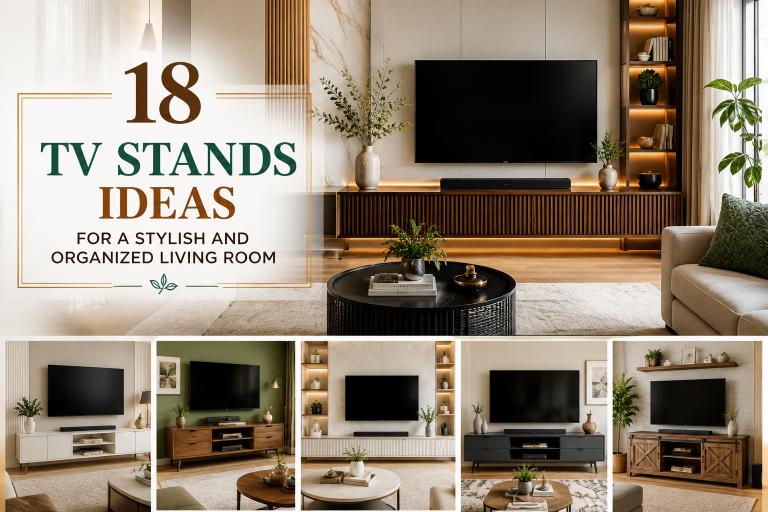
18 TV Stands Ideas for a Stylish and Organized Living Room
A TV can quickly become the visual center of a living room, but the stand underneath it can either pull the whole space together or make it feel crowded. The wrong size, bulky storage, or mismatched finish can make even a well decorated room feel unfinished. The right TV Stands Ideas can solve both problems by giving the television a proper home while adding style, storage, and balance.
You do not need an expensive media wall or a complete living room makeover to get the look right. These 18 ideas cover warm wood finishes, modern low profiles, small space solutions, built in looks, hidden storage, and more, so you can find an approach that fits your room and decorating style.
1. Choose a Warm Oak TV Stand

Warm and grounded, an oak TV stand brings natural texture into the living room without making the space feel heavy. Light or medium oak works especially well with cream walls, soft beige upholstery, woven baskets, and neutral rugs.
The trick is to choose a stand that is slightly wider than the television. This creates visual balance and gives you room for a few carefully chosen accessories without overcrowding the surface.
Quick Win: If your existing stand feels plain, add two woven baskets underneath and one ceramic vase on top. Keeping the accessories in natural materials creates an intentional look without replacing the furniture.
2. Try a Low Profile TV Stand

Clean and airy, a low profile TV stand is ideal when you want the living room to feel open rather than furniture heavy. Its horizontal shape visually stretches the wall while keeping the television area simple.
This approach works particularly well in contemporary rooms with low sofas and simple furniture. Look for a stand with clean lines, concealed storage, and enough width to create a strong horizontal anchor beneath the screen.
3. Use a TV Stand With Closed Storage

Organized and calm, closed storage is one of the easiest ways to keep a television area from becoming visually messy. Cabinets can hide gaming equipment, remote controls, cables, books, and other items that tend to collect around entertainment spaces.
Choose doors with simple fronts rather than heavily detailed designs. A matte painted finish, natural oak, or walnut can make the storage feel like part of the furniture instead of a separate media cabinet.
4. Add a Farmhouse Style TV Stand

Relaxed and textured, a farmhouse TV stand can make a living room feel more welcoming without becoming overly rustic. Look for whitewashed wood, natural oak, simple panel doors, and black or aged metal hardware.
Pair the stand with linen upholstery, a vintage inspired rug, and a few woven accents. The key is restraint. Too many distressed finishes can make the room feel themed rather than comfortably collected.
5. Make a Small Living Room Work Harder

Smart and compact, a narrow TV stand can give a small living room storage without consuming valuable floor space. Choose a piece with a shallow depth and vertical storage if the room is particularly tight.
Wall mounted options can create even more visual openness because the floor remains visible underneath. This is especially useful in apartments and small living rooms where every few inches matter.
6. Go for a Modern Black TV Stand

Refined and graphic, a matte black TV stand can create a strong focal point in a neutral living room. Black works especially well when repeated in small details such as lighting, picture frames, table legs, or hardware.
Keep the surrounding furniture lighter so the stand does not dominate the room. Warm white walls and natural wood accents can soften the contrast and keep the space inviting.
7. Create a Built In Look With Modular Furniture

Layered and architectural, modular cabinets can create the appearance of a custom media wall without requiring a full renovation. Place matching cabinets on both sides of the television stand to create symmetry and additional storage.
For a cohesive result, keep the cabinet fronts and TV stand in the same finish. Warm white, oak, and muted taupe are especially easy to blend with different living room styles.
8. Choose a Mid Century Modern TV Stand

Warm and balanced, a mid century inspired TV stand adds character through tapered legs, walnut or teak tones, and simple geometric storage. This style works because its furniture has visual lightness rather than sitting as one large block.
Keep the rest of the room simple with a low sofa, rounded coffee table, and one statement floor lamp. The result feels intentional without looking overly decorated.
9. Use a Floating TV Console

Airy and streamlined, a floating TV console keeps the floor visible and makes the television wall feel less bulky. This is a particularly useful solution when you want a modern look in a compact room.
Mount the console at a comfortable height and leave enough clearance beneath it for easy cleaning. A warm wood finish can prevent the design from feeling too cold or overly minimal.
10. Add Natural Rattan or Cane Details

Earthy and relaxed, rattan or cane cabinet fronts add texture to a TV stand while keeping the furniture visually interesting. The woven surface works particularly well with neutral interiors, plants, linen, and natural wood.
If your room already has several textures, use cane on the cabinet doors rather than adding more decorative objects. This lets the furniture itself become the main detail.
11. Pick a Neutral Painted TV Stand

Calm and understated, a painted TV stand in warm white, greige, or soft taupe can blend easily into a neutral living room. This is a good option when you want the furniture to support the room rather than become its strongest focal point.
For a more expensive looking finish, choose simple hardware and avoid combining too many decorative colors. Let the upholstery, rug, and artwork provide most of the visual variation.
Quick Win: If your existing wooden TV stand is structurally sound, repainting it in a warm greige can give it a completely different personality. Replace dated handles with simple brushed brass or matte black pulls for an easy update.
12. Style a Long TV Wall

Balanced and expansive, a long TV wall gives you an opportunity to use a wider console instead of placing the television on a small piece of furniture. The longer horizontal line helps connect the television area with the rest of the living room.
A useful design rule is to let the console extend beyond the television on both sides. This creates visual breathing room and prevents the screen from appearing oversized.
13. Try a Dark Wood TV Stand

Rich and grounded, dark walnut can bring depth to a living room filled with lighter fabrics and walls. The contrast makes the television area feel intentional while adding warmth to a modern space.
Balance dark furniture with cream, ivory, or warm taupe upholstery. Metallic accents should stay limited so the room feels sophisticated rather than overly formal.
14. Add Open Shelving Around the TV

Layered and personal, open shelving can turn a plain television wall into a display area for books, ceramics, framed photographs, and small plants. The shelves also give you a chance to introduce color and personality around the screen.
Keep some shelf space empty. A useful styling approach is to group objects in small clusters rather than filling every section from edge to edge.
Quick Win: Start with only three categories of objects: books, ceramics, and greenery. Place them at different heights and leave at least a little empty space between groups so the shelves remain easy to read visually.
15. Hide Cables for a Cleaner Look

Clean and polished, cable management can make an ordinary TV stand look considerably more intentional. Visible cords interrupt the clean horizontal lines of the furniture and can make the entire entertainment area feel messy.
Use cable clips, cord covers, or concealed channels to guide wires toward the back of the furniture. Keep routers and gaming devices in ventilated cabinets rather than tightly enclosed spaces.
16. Use a Corner TV Stand

Practical and space saving, a corner TV stand can make an awkward living room layout much easier to furnish. It works especially well when windows, doors, or architectural features prevent the television from sitting on the longest wall.
Choose a triangular or compact corner console and keep the surrounding furniture slightly open. Avoid filling the corner with extra decor because the television already creates a strong focal point.
17. Combine a TV Stand With a Gallery Wall

Personal and collected, a gallery wall can soften the visual dominance of a television. Place artwork around the screen while keeping enough breathing room so the arrangement does not compete with the television.
Black frames create a more graphic appearance, while natural wood frames feel softer. Keep the artwork varied in size but connected through a consistent color palette.
18. Make the TV Stand the Main Focal Point

Refined and intentional, a statement TV stand can become the anchor of the entire living room. Choose a distinctive finish such as fluted oak, textured plaster, dark walnut, or softly curved cabinetry, then keep the surrounding decor quieter.
This approach works best when the stand has enough visual interest to carry the wall on its own. A few simple accessories are usually more effective than a crowded arrangement.
Quick Win: If replacing the furniture is not practical, create the focal point with one large piece of artwork beside the television, a textured rug underneath the seating area, and one statement object on the console. Keep everything else restrained.
How to Choose the Right TV Stand for Your Living Room
The best TV stand is one that fits the television, leaves enough circulation space, provides the storage you actually need, and supports the style of the room. Before buying one, measure the television width, available wall space, furniture depth, and distance between the screen and seating.
For a small living room, prioritize shallow furniture and concealed storage. For a larger room, a wider console can create better visual balance. If the room already contains lots of wood, consider a painted or textured finish to prevent the space from feeling overly matched.
A simple starting checklist is:
- Measure the wall and television first.
- Decide how much closed storage you actually need.
- Choose a finish that works with your existing furniture.
- Leave enough floor and walking space around the stand.
- Plan cable management before styling the surface.
For more ideas about creating a colorful and welcoming seating area, you can also explore colorful living room ideas for inspiration on combining furniture, artwork, and accent colors.
Shop the Look
| Item | What to Look For | Approx. Price Range |
| TV console | Oak, walnut, or painted finish with closed storage | $150 to $700 |
| Cable management kit | Adhesive clips or concealed cord channel | $10 to $40 |
| Woven baskets | Natural rattan or seagrass | $20 to $80 |
| Ceramic vase | Simple neutral handmade finish | $15 to $60 |
| Textured rug | Wool, jute, or low pile neutral design | $100 to $600 |
If your living room needs more space for storage or you are working with an unusual layout, basement remodel ideas can also offer useful inspiration for built-in cabinetry, media zones, and flexible storage.
A TV stand does not have to be expensive to look intentional. Proportion, finish, storage, and cable control usually make a bigger difference than the price of the furniture itself.
Final Thoughts
The right TV stand can do much more than hold a television. It can add storage, introduce natural texture, balance a large wall, hide everyday clutter, and help the entire living room feel more finished.
You do not need to copy one complete look from these TV Stands Ideas. Instead, choose the elements that solve your biggest problem, whether that is limited space, visible cables, insufficient storage, or a room that simply feels unfinished.
A warm oak console may be perfect for one room, while a floating cabinet or dark walnut piece may work better somewhere else. Start with your measurements, existing furniture, and daily storage needs, then choose a design that supports the way you actually use the room.
If you are working with an unusual room or want to create a productive space elsewhere in the home, attic office design ideas can also provide inspiration for using furniture strategically in rooms with challenging layouts.
Frequently Asked Questions
What size TV stand should I choose?
A TV stand should generally be wider than the television so the screen does not visually overpower the furniture. A wider console also provides more space for storage and styling while creating a stronger horizontal balance on the wall.
What is the best TV stand for a small living room?
A shallow or floating TV console is usually a practical choice for a small living room because it uses less floor space. Closed storage can also reduce visual clutter and keep everyday items hidden.
How can I make my TV stand look more expensive?
Use a simple styling approach with quality looking materials such as natural oak, walnut, linen, ceramic, or aged metal. Keep accessories limited and focus on proportion, symmetry, texture, and clean cable management.
Should a TV stand be wider than the TV?
Yes, a TV stand that extends beyond the television usually creates better visual balance. The extra width gives the screen a stable base and provides room for small accessories without making the arrangement feel cramped.
What should I put on a TV stand?
Start with only a few useful or decorative pieces such as a ceramic vase, small plant, books, framed photograph, or woven basket. Leave some empty surface area so the stand does not compete with the television.


