
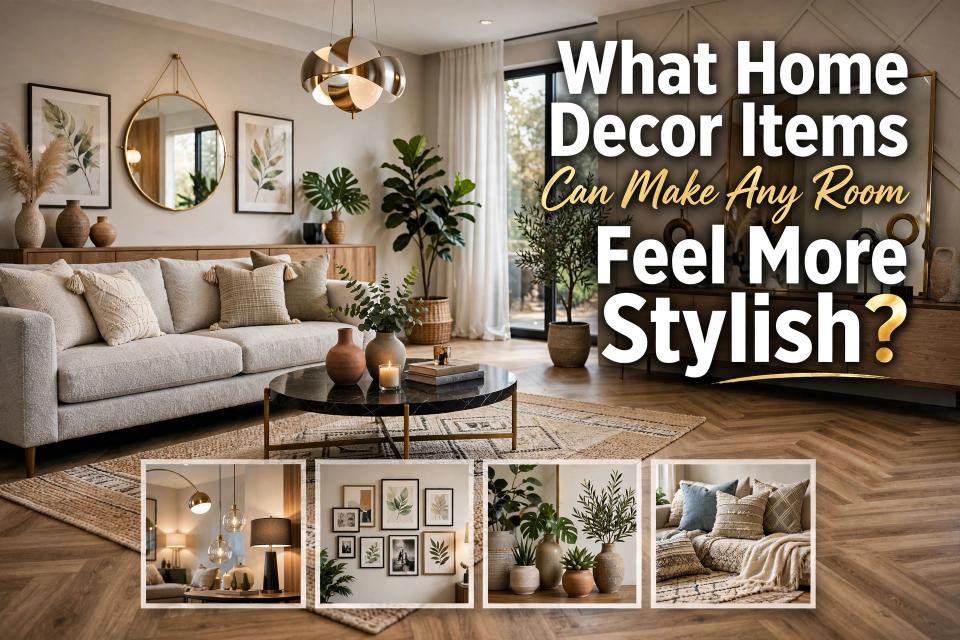
What Home Decor Items Can Make Any Room Feel More Stylish?
A room can feel a little flat even when the furniture is right. Often, the missing piece is not a major renovation but a few well chosen home decor items that add texture, color, warmth, and personality. The trick is knowing what actually changes the room instead of adding more things that create clutter.
From layered rugs and oversized mirrors to art, lighting, greenery, and thoughtful accessories, these ideas can give your space a more finished look. You do not need to use all 20. Choose the pieces that solve a real need in your room and fit your style.
1. Layered Area Rugs for Instant Warmth

Grounded is the feeling layered rugs bring to a room. A natural jute base adds visible texture while a smaller wool or cotton rug creates a softer surface underfoot. The different materials give the room depth without relying on lots of accessories.
For a balanced look, let the larger rug extend beyond the main furniture grouping. Try warm ivory, taupe, oatmeal, or muted gray rather than several competing colors. This is especially useful in open plan rooms where a rug can visually define the seating area.
Quick Win: If you already own a small rug that feels too small, place a larger natural fiber rug underneath it. Keep both rugs in related neutral tones so the layering looks intentional rather than crowded.
2. An Oversized Mirror to Reflect Light

Airy mirrors can change how a room feels because they reflect both light and surrounding space. A large mirror is particularly effective when positioned opposite or near a window, where it can bounce daylight deeper into the room.
Choose a frame that supports the existing design. Dark wood works well with earthy interiors, aged brass suits, warmer traditional rooms, and thin black frames can reinforce a modern look. Avoid placing a mirror where it reflects a cluttered corner.
A carefully positioned mirror can also help a narrow hallway or compact dining area feel more open without changing the floor plan.
3. Statement Lighting That Becomes a Focal Point

Luminous lighting can make ordinary furniture feel more intentional. A sculptural pendant, oversized floor lamp, or distinctive table lamp gives the eye a clear focal point while also improving the atmosphere after sunset.
Use different levels of lighting instead of depending on one ceiling fixture. Combine overhead lighting with a floor lamp and a small table lamp where possible. Warm white bulbs around 2700K usually create a softer residential atmosphere than very cool lighting.
If your room already has strong furniture, choose a simple fixture with an interesting shape rather than adding another competing statement.
4. Decorative Baskets for Texture and Storage

Textured baskets are useful because they combine decoration with practical storage. Woven seagrass, rattan, water hyacinth, and natural jute can introduce organic texture while hiding blankets, toys, magazines, or everyday clutter.
Choose one larger basket instead of several tiny containers when the room already contains many objects. A tall basket beside a sofa can soften an empty vertical corner, while a low basket can work beneath a console.
For more inspiration on organizing your media area, explore these TV stands ideas for practical furniture and styling solutions.
5. Framed Artwork That Adds Personality

Layered artwork gives a room a sense of personality that furniture alone often cannot provide. One large framed piece can anchor a sofa wall, while a small collection can create a more collected gallery effect.
Look for artwork that repeats one or two colors already present in the room. This creates connection without requiring everything to match. For a calm interior, muted landscapes, abstract forms, botanical prints, or monochrome photography can work particularly well.
Hang larger artwork close enough to the furniture grouping that it feels connected. Too much empty wall between the artwork and sofa can make both elements feel disconnected.
6. Cushions in Mixed Textures

Cozy cushions can change the character of a sofa or bed without requiring new furniture. The key is mixing texture rather than buying several cushions that look identical.
Combine linen, boucle, cotton, velvet, or woven fabric in a controlled palette. Two or three related colors are usually enough. Vary the sizes so the arrangement has depth, but avoid filling every available space.
For a more polished appearance, repeat one cushion color somewhere else in the room through artwork, a rug, a vase, or a small decorative object.
7. Indoor Plants for a Fresh Natural Layer

Fresh greenery introduces natural color and organic shapes that can soften hard furniture lines. Plants also work across many decorating styles because the container can change the overall character.
Use a taller plant to fill an empty corner and smaller plants on shelves, consoles, or side tables. Choose containers in materials that suit the room, such as terracotta for earthy interiors or matte ceramic for a cleaner modern look.
If natural light is limited, select plants that tolerate lower light rather than placing a sun loving plant in a dark corner simply for appearance.
8. A Console Table to Finish an Empty Wall

Refined console tables are especially helpful on empty walls that need function without bulky furniture. A narrow console can create a landing zone for keys, lighting, books, or decorative objects while keeping the walkway clear.
Choose a depth that leaves comfortable circulation space. In a hallway, a slim profile is often more practical than a deep cabinet. Add one lamp, a tray, and one or two decorative objects rather than covering the entire surface.
If the wall feels visually unfinished, pair the console with a mirror or artwork that is proportionate to the table below.
9. Decorative Trays to Organize Small Objects

Organized trays turn scattered small objects into one intentional visual group. On coffee tables, dressers, or consoles, a tray can create boundaries that make everyday items feel less random.
Try travertine, wood, marble, metal, or woven trays depending on the room. Keep the contents limited to a few useful or decorative pieces. The goal is not to fill the tray but to create a small composition.
This simple technique is particularly helpful for open surfaces where remote controls, candles, books, and small accessories can otherwise create visual noise.
10. A Large Floor Lamp for Height and Warmth

Warm floor lamps add height while creating another layer of illumination. They are especially useful beside reading chairs, sofas, beds, or empty corners that need a functional purpose.
A curved arc lamp can reach over a sofa or chair without requiring a ceiling installation. A tripod lamp adds more visual structure, while a slim metal lamp can suit a smaller room.
Choose a shade that directs light where you need it. For a relaxing room, warmer light and fabric shades usually create a softer atmosphere than exposed cool bulbs.
11. Textured Curtains for a Softer Room

Soft curtains can make a room feel more finished because they frame the windows and add vertical texture. Full length curtains hung closer to the ceiling can also emphasize the height of the room.
Linen or linen blend panels work well for relaxed interiors because they filter daylight while maintaining visible texture. Choose warm white, ivory, oatmeal, or soft taupe when you want a calm backdrop.
Avoid stopping curtains exactly at the window sill in rooms where you want a more elevated appearance. Letting panels fall toward the floor usually creates a more continuous visual line.
12. A Sculptural Vase for a Simple Focal Point

Understated vases can add shape without overwhelming a room. A sculptural ceramic vase works particularly well when the surrounding furniture has simple lines and the space needs one distinctive object.
Choose a form that contrasts with nearby shapes. A rounded vase can soften a rectangular table, while a tall narrow vessel can add vertical interest to a console.
You do not always need flowers. A few branches, dried stems, or even an empty sculptural vessel can create a complete composition when the shape itself is strong.
Quick Win: Remove several small accessories from one surface and replace them with one larger vase. The room can immediately feel calmer because the eye has one clear focal point instead of many competing objects.
13. Coffee Table Books for a Collected Look

Collected coffee table books add height, color, and visual interest to a seating area. They can also introduce subjects that reflect your interests, making the room feel more personal.
Use two or three books with different dimensions rather than a tall unstable stack. Place a small bowl, candle, or decorative object on the top book to create a simple layered arrangement.
Neutral covers work well in calm interiors, while colorful books can become an easy way to introduce accent colors without changing larger furniture pieces.
14. Wall Shelves for Display and Storage

Functional shelves give vertical space a purpose while keeping useful objects visible. Floating wood shelves can work in home offices, kitchens, bedrooms, and living rooms when carefully styled.
The trick is leaving some open space. Mix books with ceramics, small artwork, plants, and objects of different heights rather than lining every inch with matching accessories.
For a cohesive look, repeat the same wood tone or one accent color across several objects. This helps the shelf feel curated rather than randomly filled.
15. Decorative Throw Blankets for Layered Comfort

Relaxed throw blankets add softness and make seating feel inviting. A chunky knit, cotton weave, brushed wool, or linen throw can introduce another texture without requiring a large decorative purchase.
Drape one throw over the sofa arm or fold it loosely in a basket. Keep the color related to the existing palette so the blanket feels integrated.
This is especially useful in neutral rooms where texture is more important than strong color. A simple cream or oatmeal throw can create depth through its surface alone.
16. Decorative Wall Panels for Architectural Interest

Architectural wall panels can give a room a stronger focal point without filling it with accessories. Vertical wood slats can emphasize height, while simple fluted panels add shadow and texture.
Use this approach on one feature wall rather than every wall. Natural oak creates warmth, while painted panels can blend more quietly into the room.
If you want a stronger media wall, combine paneling with carefully planned furniture and lighting. For more inspiration, see these TV panel ideas for ways to create a defined focal wall.
17. Accent Chairs to Add Color and Shape

Distinctive accent chairs can add a new color, silhouette, or material without replacing the main sofa. A curved chair can soften a room filled with rectangular furniture, while a wooden framed chair can reinforce an organic style.
Keep the accent color connected to another element such as artwork, cushions, or a rug. This creates repetition and makes the chair feel intentional.
Before buying, check the scale. A large chair can overwhelm a compact room, while a very small chair may look disconnected from a substantial sofa.
18. A Large Clock for Practical Wall Decor

Timeless wall clocks combine function with visual structure. A large round clock can fill an empty wall while adding a strong geometric shape to the room.
Black metal works well with farmhouses and modern interiors, while natural wood can create a softer organic appearance. Keep the surrounding wall relatively simple so the clock remains readable as the focal point.
This is a useful option for homeowners who want practical decoration rather than objects that simply occupy a surface.
19. Ceramic Accessories for a Handmade Feel

Earthy ceramics bring subtle variation through handmade shapes, matte finishes, and natural colors. Unlike highly polished accessories, slightly irregular pottery can make a room feel more personal and less staged.
Use a small group of vessels with different heights but similar tones. Cream, warm taupe, clay, terracotta, and muted olive can work well with natural wood and linen.
For a cohesive room, repeat one ceramic color in another location. The repetition connects separate surfaces without making them look like a matching set.
Quick Win: Group three ceramics in different heights on a console or dresser. Keep the tallest piece slightly off center rather than placing everything in a straight line.
20. A Personal Gallery of Meaningful Objects

Personal spaces feel more convincing when the decoration tells a story. Instead of buying every accessory from the same collection, mix meaningful photographs, artwork, travel finds, inherited objects, and small decorative pieces.
The key is creating visual order around the variety. Use related frame colors, consistent spacing, or a simple grid to keep different objects connected.
If you prefer a stronger color, repeat two or three shades across the collection. For colorful room inspiration, these colorful living room ideas can help you think about using art and accessories without overwhelming the space.
Shop the Look
| Item | What to Look For | Approx. Price Range |
| Area rug | Natural fibers or low pile neutral texture | $50 to $300 |
| Oversized mirror | Large scale with wood, brass, or slim metal frame | $60 to $350 |
| Table lamp | Warm light with ceramic, linen, or textured base | $30 to $180 |
| Woven basket | Natural material with sturdy construction | $25 to $100 |
| Decorative vase | Handmade look in ceramic or stoneware | $20 to $120 |
When choosing home decor items, prioritize pieces that solve a specific visual or functional need. A rug can define a seating area, a mirror can reflect light, a lamp can create atmosphere, and a basket can hide everyday clutter. The strongest rooms usually combine useful pieces with a few objects that show personality.
For bathroom spaces, the same principle applies. Choosing practical pieces with coordinated finishes can create a cleaner look, and these modern bathroom ideas can provide additional inspiration for balancing function and style.
The goal is not to make your home look like a showroom. Choose pieces that fit the way you live, then repeat colors, materials, and shapes so the rooms feel connected. A thoughtful selection of home decor items can make a space feel more complete without requiring a major makeover.
Final Thoughts
You do not need to redo an entire room to make it feel more stylish. A handful of well chosen home decor items, layered textures, better lighting, a few sculptural pieces, can shift a space from flat to finished. Pick two or three ideas here that genuinely fit your room, your style, and your budget rather than trying to do everything at once. Small, intentional changes tend to make the biggest visible difference, and they are also the easiest to update again later as your taste evolves.
FAQs
1. What are the easiest home decor items to start with on a small budget?
Throw pillow covers, a small vase, and cabinet hardware swaps are inexpensive home decor items that make a noticeable difference without a big spend.
2. How many home decor items should I add to one room at once?
Start with two or three focused changes rather than styling everything at once, so the room feels intentional instead of overdone.
3. Can these home decor items ideas work in a small space?
Yes, layered rugs, sculptural vases, and lighting swaps work especially well in small rooms since they add depth without taking up floor space.
4. What home decor items make the biggest visual impact for the cost?
Lighting fixtures and hardware finishes, like aged brass, tend to give the most noticeable upgrade relative to their price.
5. Do I need to match every home decor item to one specific style?
No, mixing textures and finishes within a consistent color palette usually looks more collected than matching every single piece.


